 Levantine
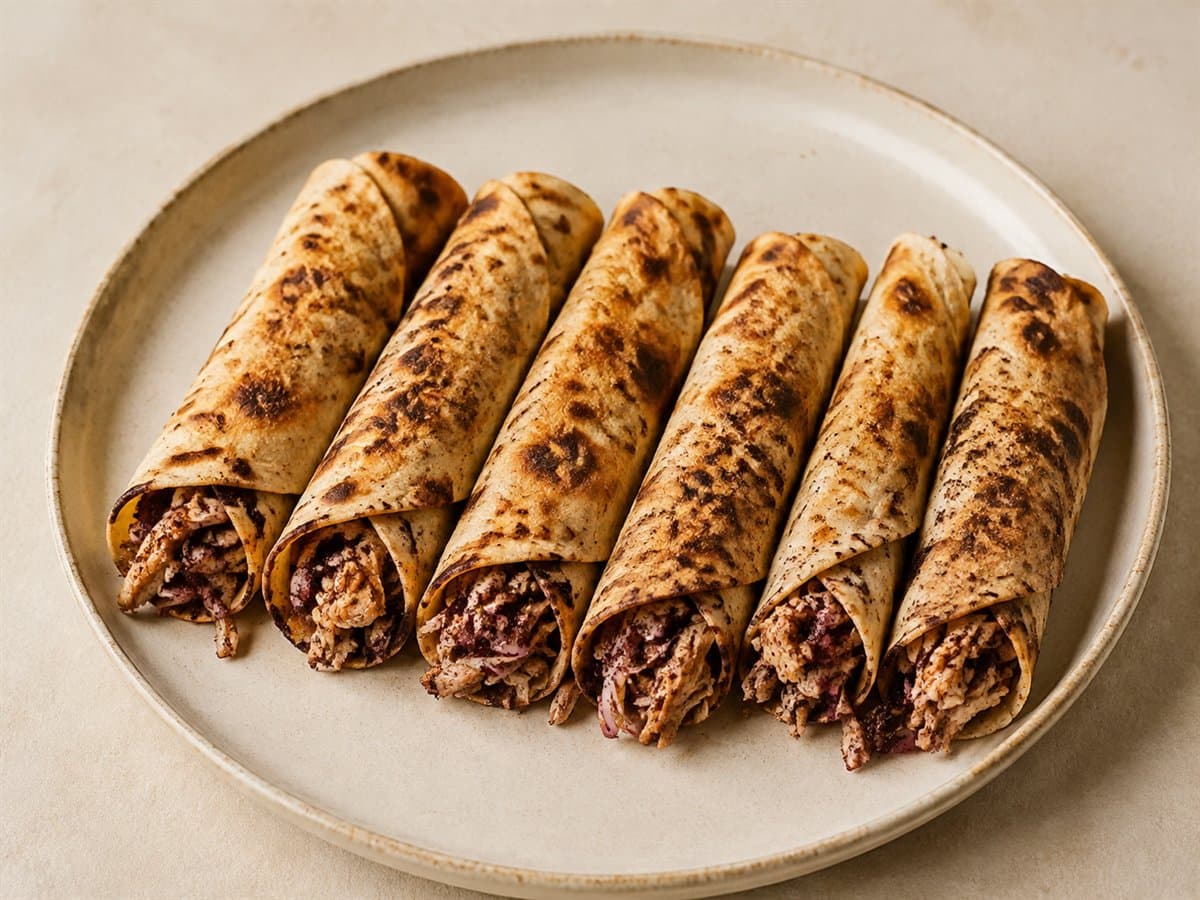
Palestinian Musakhan Chicken Rolls
Shredded chicken with onions cooked slowly in olive oil, sumac, allspice and pine nuts, rolled in thin saj bread and baked until crisp.
Method
Read the full method before starting. Cooking times are guides; check texture and doneness as you cook.
Shows the steps one at a time, with a timer for each timed step.
Heavy skillet, Oven and tray, Tongs and thermometer, Sharp knife and board
Measure, cut, and arrange every ingredient in order of use. Read the full method and keep finishing ingredients separate.
- 01
Onions
20 minutesLow heatCook the thinly sliced onions in 90 ml of the olive oil over medium-low heat for 20 minutes, stirring now and then.
Show photoHide photo
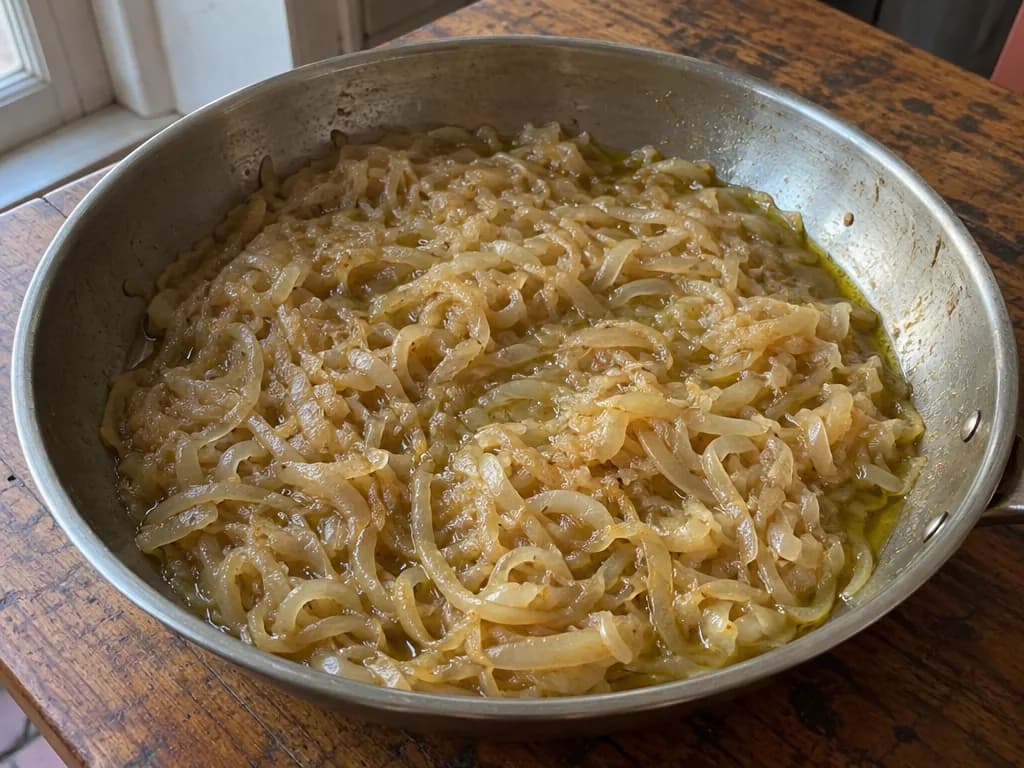 Success cue
The onions are very soft and sweet but not browned.
- 02
Pine nuts
4 minutesLow heatMeanwhile, toast the pine nuts in a dry pan over medium-low heat for 3 to 4 minutes, stirring.
Success cueThe pine nuts are light golden.
Watch outThey burn within seconds once golden.
- 03
Filling
3 minutesMedium heatAdd the shredded chicken, the sumac, the allspice, the pine nuts and a little salt to the onions and stir for 3 minutes.
Show photoHide photo
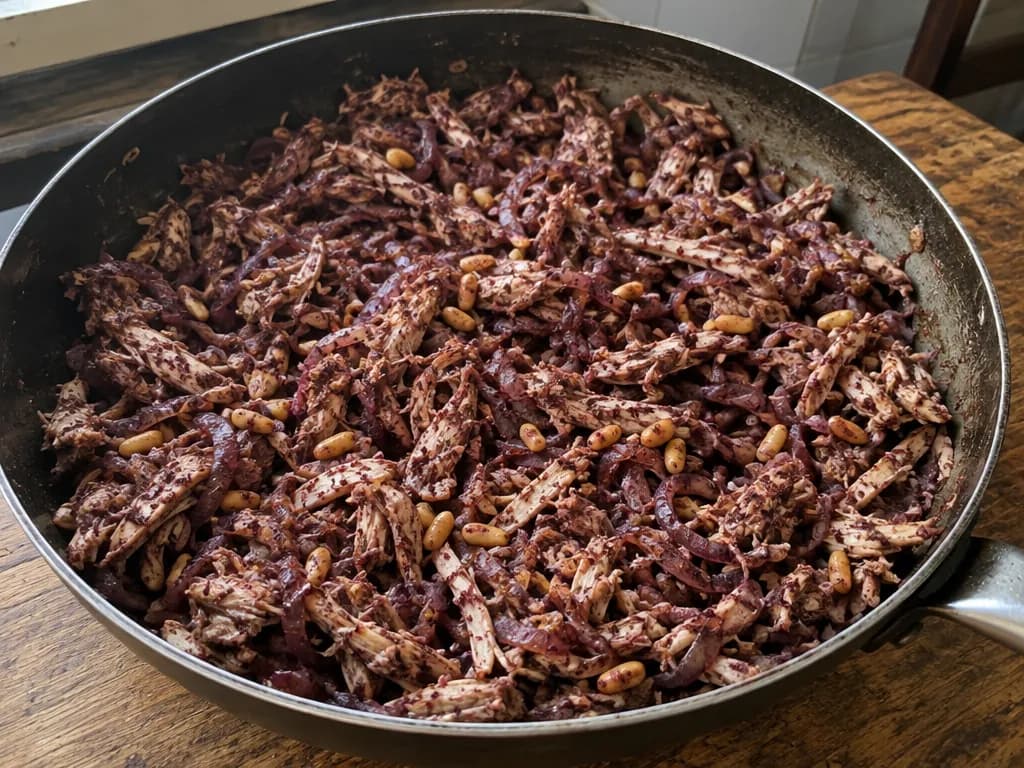 Success cue
The filling is deep red and hot through.
- 04
Rolling
12 minutesHeat the oven to 200°C. Cut the saj bread into large triangles and brush with the oil from the onions. Put a line of filling along the wide edge and roll up tightly.
Show photoHide photo
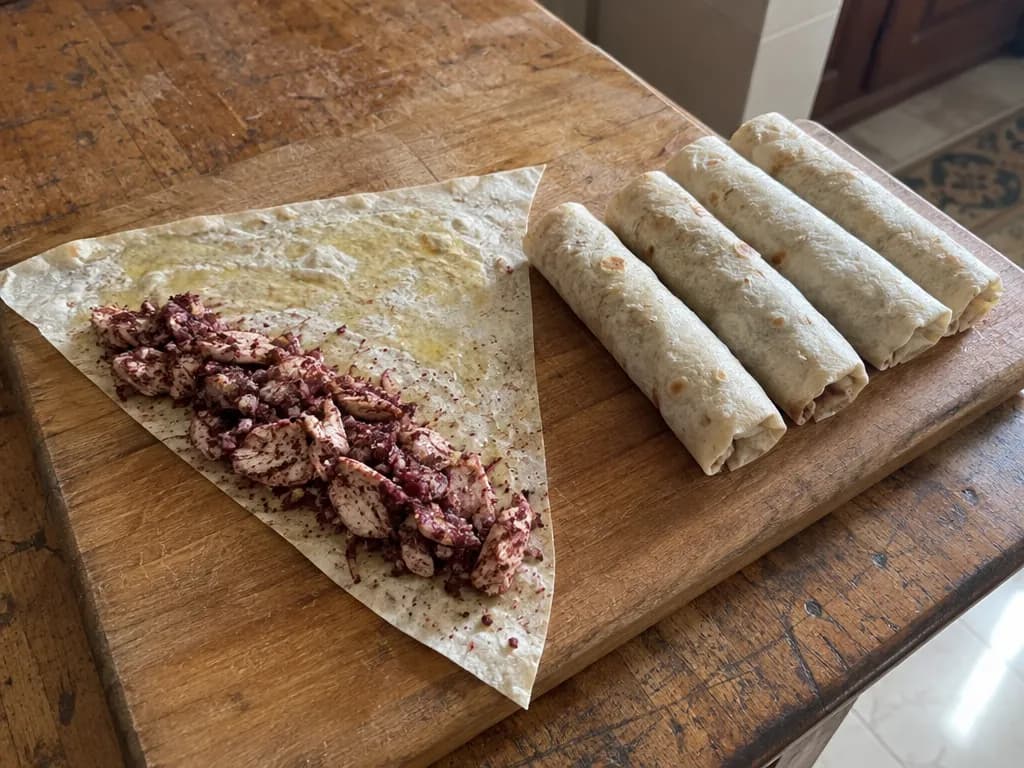 Success cue
The rolls are tight and do not unroll.
- 05
Baking
10 minutesOven heatArrange the rolls on a tray, brush with the remaining 20 ml of olive oil and bake for 10 minutes.
Success cueThe bread is crisp and browned.
PlateMap is still in testing. Quantities and results may vary with ingredients and equipment. Please check food safety yourself, especially with meat and poultry.
Cooking tips
Good sumac gives enough natural sourness that no lemon is needed.
- • Cooking the onions slowly until soft and sweet, without browning, is the heart of musakhan.
Common mistakes
- • Frying the onions on high heat until brown; for musakhan they cook slowly until soft, sweet and translucent, and take their colour from the sumac.
- • Rolling the filling while it is still wet with onion juices; drain the excess oil into a bowl and use it to brush the bread, or the rolls turn soggy.
- • Rolling the saj bread dry; brush it with the onion oil first so it bends without cracking.
- • Overfilling the rolls so they split in the oven.
Substitutions
- • Instead of saj bread: large flour tortillas or lavash, or pita split into two thin rounds
- • Instead of pine nuts: slivered almonds fried in a little olive oil
- • Instead of boiled chicken breast: roast chicken thigh meat, which stays juicier
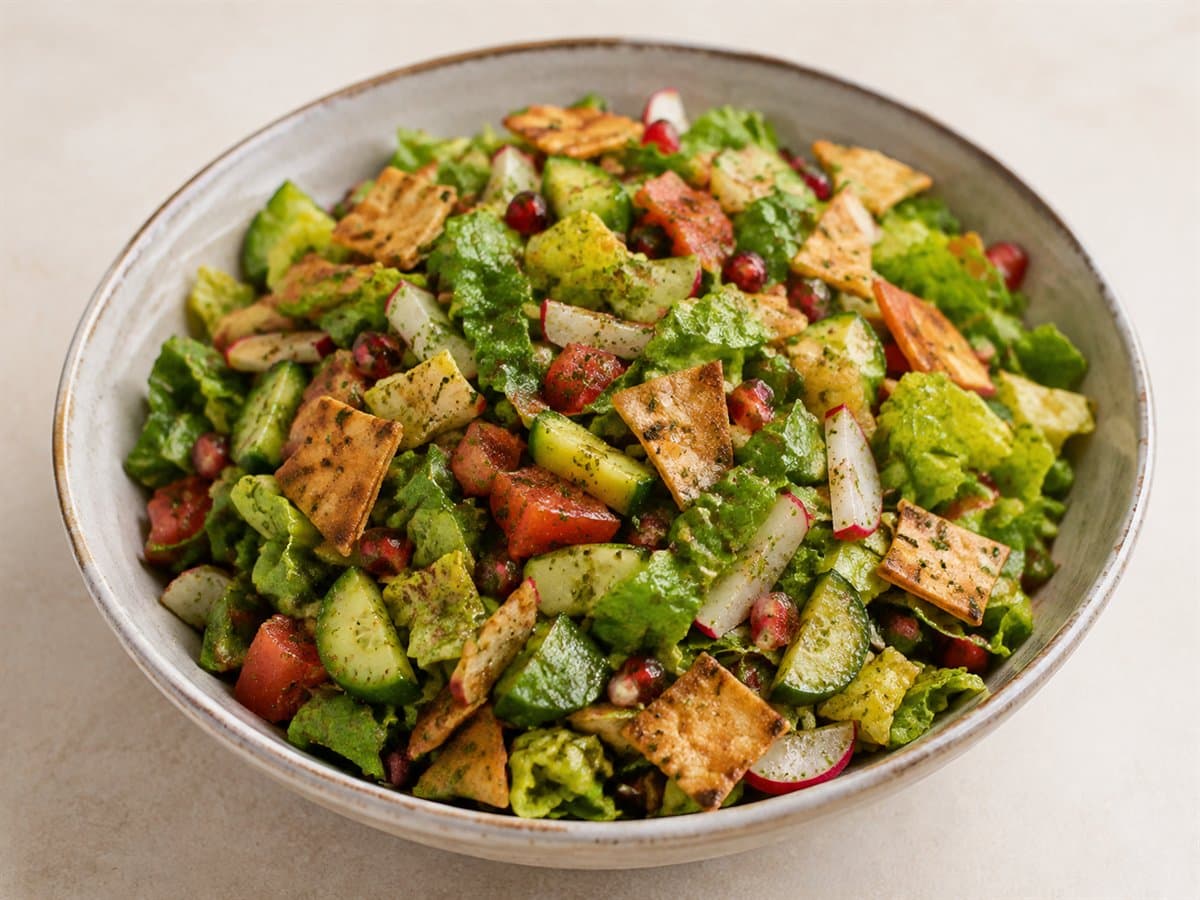
Serving ideasServe warm with plain yogurt or a cucumber and yogurt salad, plus a chopped salad or fattoush.
Estimated nutrition per serving
Calculated estimate per serving from the listed quantities. Product choice and retained cooking fat affect the result; this is not a laboratory analysis.
- Calories
- ≈ 895
- Protein
- 65.1g
- Carbs
- 62.1g
- Fat
- 41.8g
Calculation source and assumptions
Values use USDA data and linked product labels, adjusted for edible quantities and base servings. Brands, ingredient varieties, and cooking methods can change the result.
Wheat / gluten, Tree nuts
Compound ingredients vary by product; check labels and possible cross-contact.
Frequently Asked Questions
Is musakhan always made as rolls?
No. The traditional dish is a round of taboon bread soaked in the onion oil, covered with sumac onions and roasted chicken, then baked and eaten by hand. The rolls are a newer way to serve the same filling, popular in Palestine and Jordan for gatherings.
Why does musakhan use so much olive oil?
Musakhan is a dish of the olive harvest, traditionally made with the first oil of the season, and the bread is meant to soak it up. Use a fresh extra virgin oil you like the taste of; with less oil the bread bakes dry and brittle.
How do I know my sumac is good?
Good sumac is deep burgundy, slightly moist and clearly sour on the tongue. A bright red, very fine powder with salt or colouring high on the label gives colour but little tang. Taste the filling and add more sumac rather than lemon.
Can I make the rolls ahead?
Make the filling up to 2 days ahead and keep it in the fridge. Roll and bake just before serving so the bread stays crisp.
Can I freeze them?
Freeze the rolled, unbaked rolls for up to 2 months. Bake them from frozen at 200°C for about 15 minutes.
You May Also Love