 Levantine
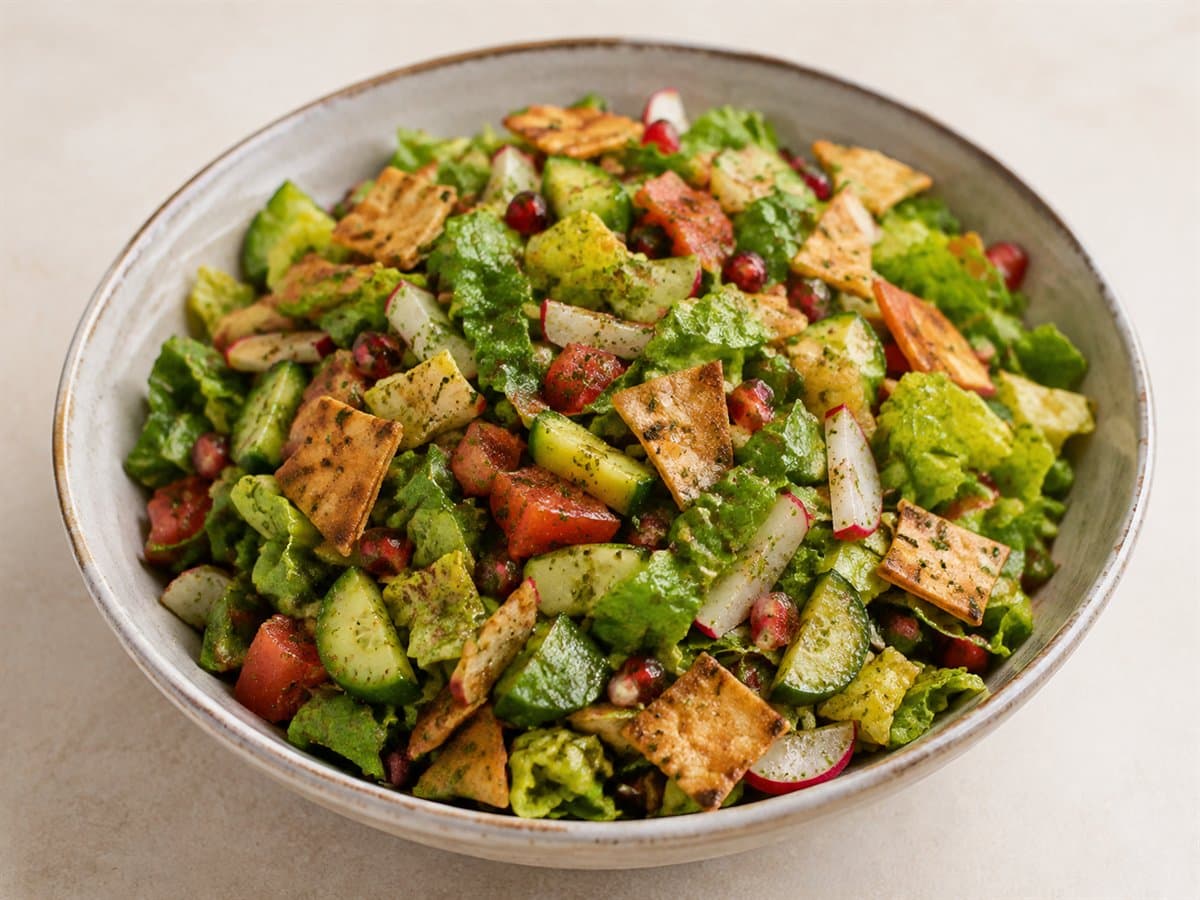
Crispy Lebanese Fattoush Salad
Crisp vegetables tossed with toasted pita, fresh mint and a sumac and pomegranate molasses dressing.
Method
Read the full method before starting. Cooking times are guides; check texture and doneness as you cook.
Shows the steps one at a time, with a timer for each timed step.
Heavy skillet, Sharp knife and board
Measure, cut, and arrange every ingredient in order of use. Read the full method and keep finishing ingredients separate.
- 01
Pita
7 minutesMedium heatCut the pita into 2 cm squares and toss with 2 tablespoons of the olive oil. Toast in a skillet over medium heat for 6 to 8 minutes, stirring.
Success cueThe squares are golden and crisp.
- 02
Vegetables
8 minutesCut the cucumber, tomatoes, radishes and romaine into bite-size pieces.
Success cueThe pieces are even in size.
- 03
Sauce
2 minutesWhisk the rest of the olive oil with the lemon juice, pomegranate molasses, sumac, 1 crushed garlic clove and a pinch of salt.
Success cueThe dressing is glossy and well mixed.
- 04
Tossing
1 minuteToss the vegetables and the mint leaves with the dressing.
Success cueEvery piece is lightly coated.
- 05
Serve
1 minuteScatter the toasted pita on top just before serving.
Success cueThe pita is still crisp when served.
PlateMap is still in testing. Quantities and results may vary with ingredients and equipment. Please check food safety yourself, especially with meat and poultry.
Cooking tips
Pomegranate molasses adds a fruity sourness with a little sweetness that lemon juice alone cannot give.
- • Add the toasted pita only at the last moment so it stays crisp.
Common mistakes
- • Dressing the salad long before serving, so the lettuce wilts and the bread goes soft.
- • Using wet vegetables, which water down the dressing.
- • Skipping the sumac; it gives fattoush its tang and colour.
Substitutions
- • Instead of pita: any thin Arabic bread, toasted the same way
- • Instead of pomegranate molasses: a little more lemon juice with half a teaspoon of honey
Serving ideasServe as part of a mezze spread, or alongside grilled chicken, kebabs or fish.
Estimated nutrition per serving
Calculated estimate per serving from the listed quantities. Product choice and retained cooking fat affect the result; this is not a laboratory analysis.
- Calories
- ≈ 260
- Protein
- 4.6g
- Carbs
- 31.0g
- Fat
- 13.6g
Calculation source and assumptions
Values use USDA data and linked product labels, adjusted for edible quantities and base servings. Brands, ingredient varieties, and cooking methods can change the result.
Wheat / gluten
Compound ingredients vary by product; check labels and possible cross-contact.
Frequently Asked Questions
Fried or toasted bread?
Both are traditional. Frying in oil gives the crunchiest, richest bread; toasting in a pan or oven with a little olive oil, as here, is lighter.
What is purslane and do I need it?
Purslane (baqleh, also called farfhine) is a lemony leafy green used in traditional Lebanese fattoush. Add a handful if you find it; without it the salad is still fattoush.
Can I make it ahead?
Chop the vegetables and mix the dressing up to a few hours ahead and keep them apart in the fridge. Toss them and add the bread just before eating.
What is the difference between fattoush and tabbouleh?
Tabbouleh is mostly finely chopped parsley with a little bulgur and tomato. Fattoush is a chunky salad of mixed vegetables with crisp bread and a sumac and pomegranate dressing.
You May Also Love