 Asian
Tonkotsu Ramen
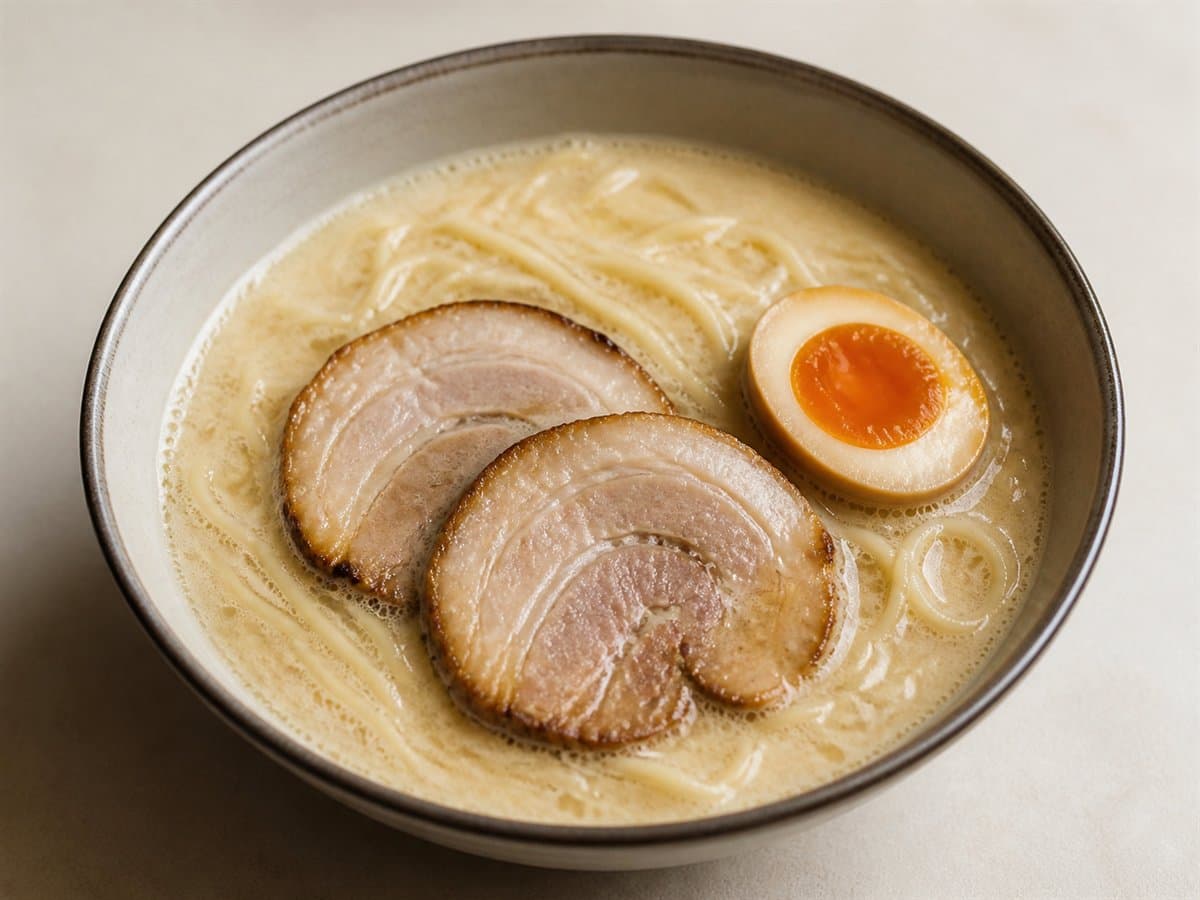
Ramen in a rich, milky pork bone broth with fresh noodles, rolled chashu pork belly, a soy-marinated soft-boiled egg, scallions, nori and sesame.
Method
Read the full method before starting. Cooking times are guides; check texture and doneness as you cook.
Shows the steps one at a time, with a timer for each timed step.
Saucepan or pot, Sharp knife and board
Measure, cut, and arrange every ingredient in order of use. Read the full method and keep finishing ingredients separate.
- 01
Bone broth
15 minutesHigh heatCover the bones with water, boil for 10 minutes, then drain and rinse the bones and the pot.
Success cueThe bones are clean, with no grey foam.
- 02
Bone broth
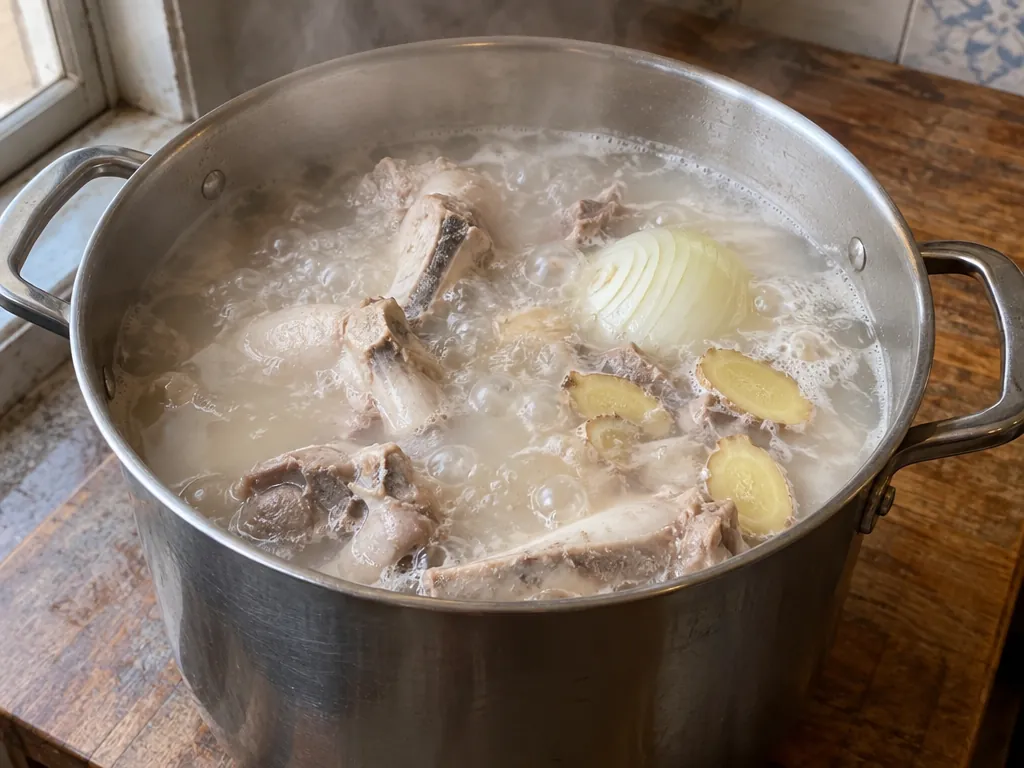
12 hoursHigh heatCover the bones with the 3 liters of fresh water, add the onion, ginger and garlic and keep at a strong rolling boil, uncovered, for 12 hours. Top up with boiling water to keep the bones covered.
Show photoHide photo
 Success cue
The broth turns opaque and cloudy, pale cream to light beige.
Watch outA gentle simmer gives a clear broth; keep the boil strong for a cloudy one.
- 03
Chashu
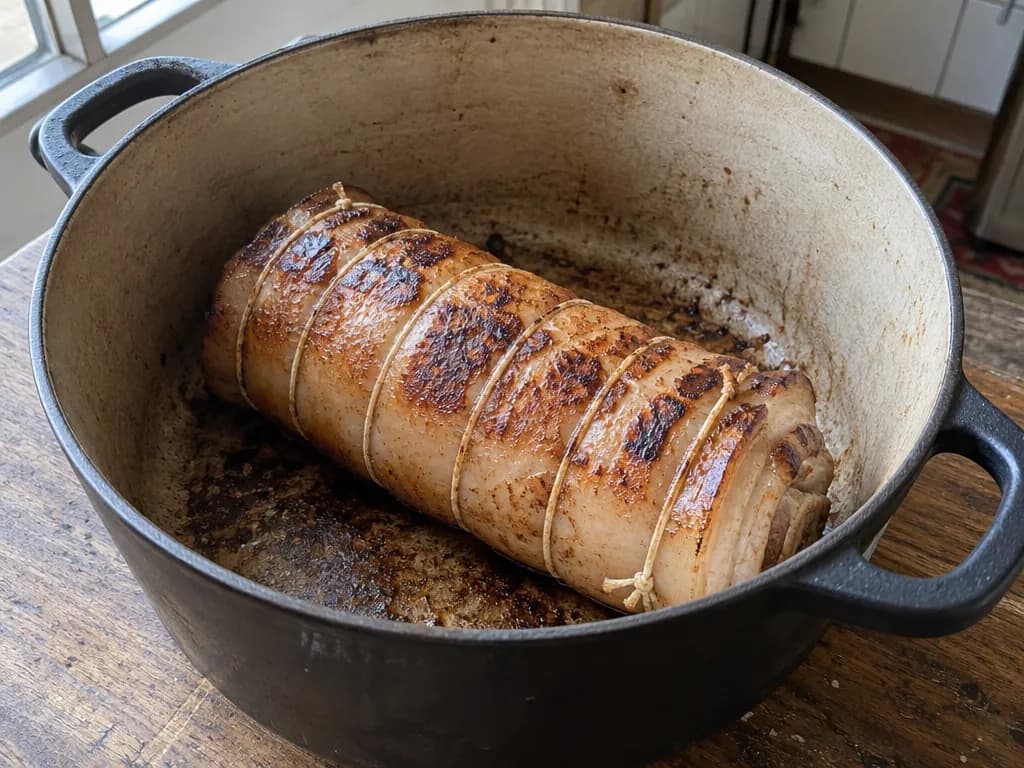
15 minutesHigh heatWhile the broth boils, roll the pork belly tightly with the skin outside and tie it with kitchen string every 3 cm. Brown it on all sides in a dry pot over medium-high heat for 10 minutes.
Show photoHide photo
 Success cue
The roll is browned on every side.
- 04
Chashu
2 hours and 30 minutesGentle simmerAdd the soy sauce, sake, mirin, sugar and water for the chashu, bring to a simmer, then cover with the lid ajar and cook on low heat for 2½ hours, turning the roll every 30 minutes.
Success cueA fork slides into the roll with no resistance.
- 05
Chashu
2 hoursLet the chashu cool in its liquid, then chill it for at least 2 hours so it slices cleanly. Remove the string and cut 8 slices 1 cm thick.
Success cueThe slices hold their spiral shape.
- 06
Bone broth
5 minutesStrain the broth, measure 1.2 liters and season with salt.
Success cueYou have 1.2 liters of smooth, milky broth.
- 07
Marinated eggs
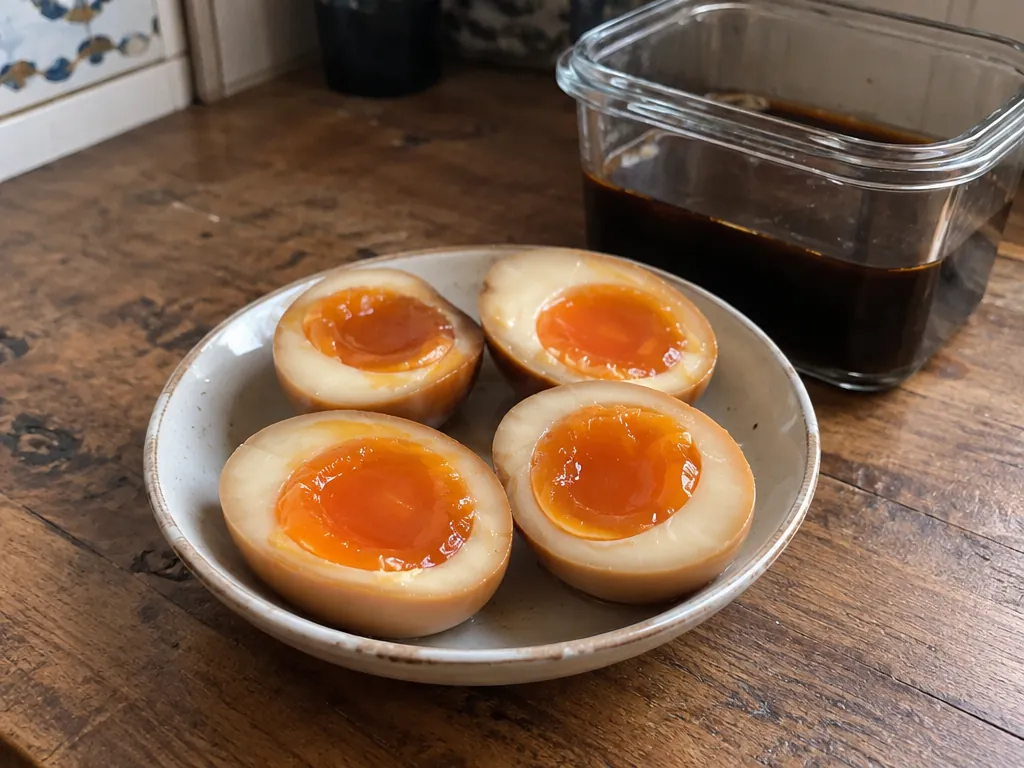
2 hours and 12 minutesHigh heatWhile the broth cooks, boil the eggs for 6½ minutes, cool them in iced water for 5 minutes and peel. Marinate them in 15 ml of the soy sauce, 15 ml of the mirin and 60 ml of water in the fridge for 2 hours.
Show photoHide photo
 Success cue
The whites are set and the yolks are soft and jammy.
- 08
Tare
1 minuteMix the remaining soy sauce and mirin and divide between 2 bowls.
Success cueEach bowl has an equal amount of tare.
- 09
Noodles
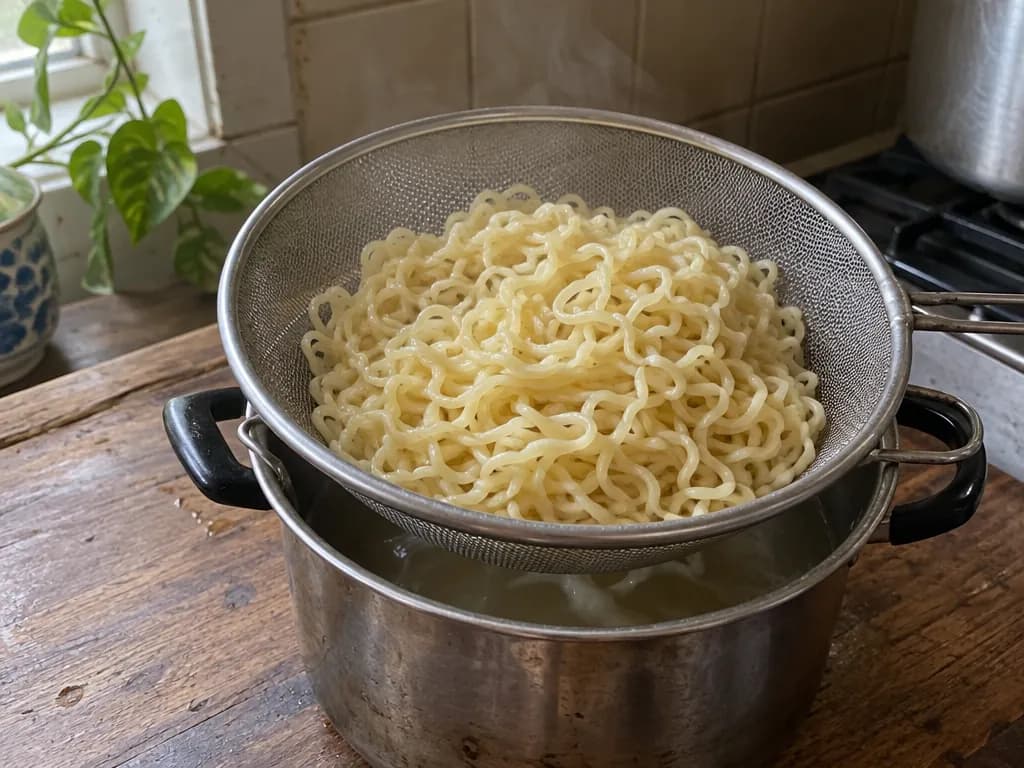
2 minutesHigh heatBoil the fresh noodles for 90 seconds and drain them well.
Show photoHide photo
 Success cue
The noodles are springy, not soft.
- 10
Serve
2 minutesLadle the hot broth over the tare and stir, then add the noodles, 4 slices of chashu, the halved eggs, scallions, nori and sesame seeds.
Success cueThe broth is steaming hot and the toppings sit on top.
PlateMap is still in testing. Quantities and results may vary with ingredients and equipment. Please check food safety yourself, especially with meat and poultry.
Cooking tips
The milky color comes from fat and gelatin emulsified by a hard, rolling boil.
- • Boil the noodles for 90 seconds only; the hot broth finishes cooking them.
Common mistakes
- • Skipping the first 10-minute boil and rinse, so blood and scum turn the broth grey.
- • Keeping the broth at a gentle simmer, so it stays thin and clear instead of milky.
- • Cooking the noodles in the broth, which clouds it with starch; boil them separately.
- • Seasoning the pot heavily: the tare (seasoning sauce) in each bowl carries most of the salt, so the broth itself needs only a little.
Substitutions
- • Instead of fresh ramen noodles: dried ramen, boiled 30 seconds less than the packet says
Serving ideasServe straight away while the noodles are springy, with extra scallions, a few drops of chili oil and toasted sesame on the side.
Estimated nutrition per serving
Calculated estimate per serving from the listed quantities. Product choice and retained cooking fat affect the result; this is not a laboratory analysis.
- Calories
- ≈ 1350
- Protein
- 48.5g
- Carbs
- 103.9g
- Fat
- 83.1g
Calculation source and assumptions
Values use USDA data and linked product labels, adjusted for edible quantities and base servings. Brands, ingredient varieties, and cooking methods can change the result.
Egg, Wheat / gluten, Soy, Sesame, Celery
Compound ingredients vary by product; check labels and possible cross-contact.
Frequently Asked Questions
What makes it tonkotsu?
Tonkotsu means pork bone. Trotters and neck bones boiled hard for 12 hours give up their fat and collagen until the broth turns milky, and slices of braised pork belly (chashu) go on top. For a pork-free bowl, turn on the halal version above the ingredients: beef bones boiled the same way, close to the beef-bone ramen (gyukotsu) of Tottori, with braised beef brisket.
Which bones make the creamiest broth?
Pork trotters, for their collagen, with neck or back bones for meaty flavour. For the halal version use beef knuckle and joint bones, and feet if you can get them. Ask the butcher to cut the bones so the inside is exposed.
Why is my broth clear instead of milky?
The boil was too gentle. The fat and gelatin only emulsify into a white broth at a strong rolling boil; keep it bubbling hard and top up with boiling water, not cold.
Can I make the broth ahead?
Yes. Cool it quickly and keep it 3 days in the fridge or 3 months in the freezer. It sets to a firm jelly when cold, a sign of plenty of collagen; bring it back to a strong boil before serving so it turns milky again.
How long should the eggs marinate?
At least 2 hours and up to 2 days. The longer they sit, the more deeply the white is seasoned and the firmer and jammier the yolk becomes.
You May Also Love