 Asian
Japanese Miso Soup
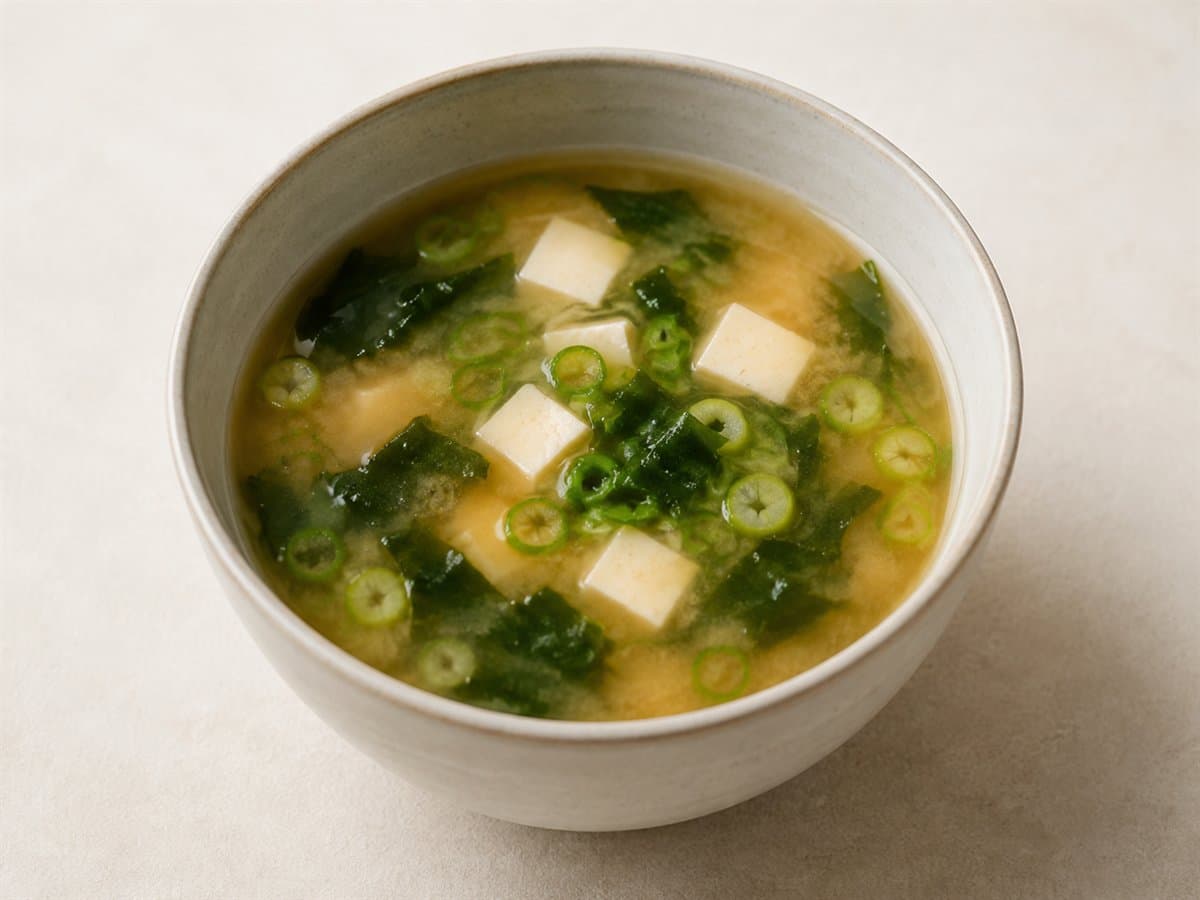
A light Japanese soup of dashi, white miso, silken tofu and wakame seaweed.
- Prep:
- 5 minutes
- Cook:
- 20 minutes
- Waiting:
- 30 minutes (soaking the kombu, 30 minutes)
Method
Read the full method before starting. Cooking times are guides; check texture and doneness as you cook.
Shows the steps one at a time, with a timer for each timed step.
Heavy skillet, Saucepan or pot, Sharp knife and board
Measure, cut, and arrange every ingredient in order of use. Read the full method and keep finishing ingredients separate.
- 01
Dashi
45 minutesMedium heatSoak the kombu in the water for 30 minutes. Heat over medium heat until just below a boil, about 10 minutes, and remove the kombu. Add the bonito flakes, simmer for 1 minute, take off the heat for 3 minutes and strain.
Success cueThe broth is clear and pale gold and smells of the sea.
Watch outBoiling the kombu makes the broth bitter.
- 02
Heating
3 minutesMedium heatBring 1 liter of the dashi to a gentle simmer over medium heat.
Success cueSmall bubbles appear at the edge.
- 03
Tofu and wakame
2 minutesGentle simmerAdd the cubed silken tofu and the wakame seaweed and simmer for 2 minutes.
Success cueThe tofu is hot and the seaweed has opened up.
- 04
Miso
1 minuteDissolve the miso paste in a ladle of the hot broth, then stir it into the pot.
Success cueNo lumps of miso remain.
Watch outDo not let the soup boil from now on.
- 05
Serve
1 minuteTurn off the heat, sprinkle with the green onions and serve hot.
Success cueThe soup is steaming but not boiling.
PlateMap is still in testing. Quantities and results may vary with ingredients and equipment. Please check food safety yourself, especially with meat and poultry.
Cooking tips
Mixing white miso with a little red miso gives a deeper, more rounded taste than either alone.
- • Do not boil the soup after adding the miso; boiling dulls its flavor.
Common mistakes
- • Boiling the kombu, which makes the dashi slimy and bitter; take it out just before the water boils.
- • Dropping the miso straight into the pot, where it clumps; dissolve it in a ladle of broth first.
- • Using too much dried wakame; it expands about ten times in the hot broth.
Substitutions
- • Instead of bonito flakes: dried shiitake mushrooms soaked with the kombu, for a vegetarian dashi
- • Instead of silken tofu: firm tofu, cut smaller
Serving ideasServe in small bowls alongside steamed rice and grilled fish, as part of a Japanese meal.
Estimated nutrition per serving
Calculated estimate per serving from the listed quantities. Product choice and retained cooking fat affect the result; this is not a laboratory analysis.
- Calories
- ≈ 75
- Protein
- 6.4g
- Carbs
- 6.2g
- Fat
- 3.4g
Calculation source and assumptions
Values use USDA data and linked product labels, adjusted for edible quantities and base servings. Brands, ingredient varieties, and cooking methods can change the result.
Wheat / gluten, Soy, Fish
Compound ingredients vary by product; check labels and possible cross-contact.
Frequently Asked Questions
White or red miso?
White (shiro) miso is fermented for a short time and tastes mild and slightly sweet. Red (aka) miso is aged longer and is saltier and stronger, so use about a third less of it.
Can I use instant dashi?
Yes. Dissolve the granules in hot water following the packet; it is saltier than homemade dashi, so add the miso a little at a time and taste.
Can I make it without fish?
Yes. Make the dashi with kombu alone, or kombu and a few dried shiitake mushrooms soaked together, and skip the bonito flakes.
Why should miso not boil?
Boiling drives off its aroma and leaves the soup flat and grainy. Dissolve it off a hard boil and keep the soup just steaming when you reheat it.
You May Also Love