 Asian
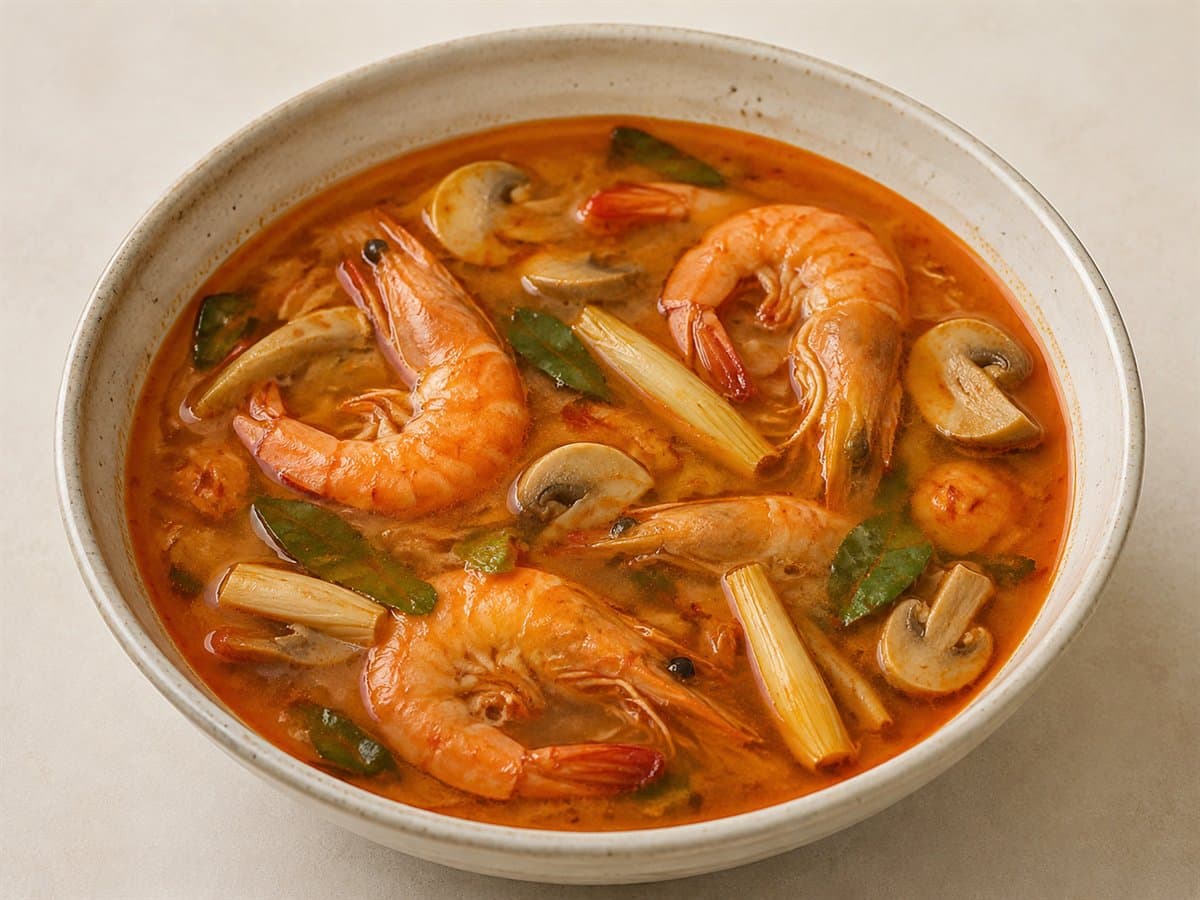
Thai Tom Yum Soup
A hot and sour Thai shrimp soup scented with lemongrass, galangal and lime leaves, with mushrooms, chili and fresh lime juice.
Method
Read the full method before starting. Cooking times are guides; check texture and doneness as you cook.
Shows the steps one at a time, with a timer for each timed step.
Saucepan or pot, Tongs and thermometer, Sharp knife and board
Measure, cut, and arrange every ingredient in order of use. Read the full method and keep finishing ingredients separate.
- 01
Preparation
5 minutesCut the lemongrass into 5 cm pieces and bruise them with the back of a knife. Slice the galangal, tear the lime leaves and lightly crush the chilies.
Success cueThe lemongrass is bruised and smells strongly.
- 02
Broth
8 minutesGentle simmerBring the water to a boil, add the lemongrass, galangal and lime leaves and simmer for 8 minutes.
Success cueThe broth smells strongly of lemongrass.
- 03
Mushrooms
2 minutesGentle simmerAdd the halved mushrooms and the chilies and simmer for 2 minutes.
Success cueThe mushrooms are soft.
- 04
Shrimp
3 minutesGentle simmerAdd the peeled shrimp and cook for 2 to 3 minutes.
Success cueThe shrimp are pink, opaque and curled.
Watch outLonger cooking makes the shrimp tough.
- 05
Finish
1 minuteTake the pot off the heat and stir in the fish sauce and lime juice to taste. The lemongrass, galangal and lime leaves are for flavor and are not eaten.
Success cueThe soup tastes sour, salty and hot in balance.
PlateMap is still in testing. Quantities and results may vary with ingredients and equipment. Please check food safety yourself, especially with meat and poultry.
Cooking tips
Bruising the lemongrass and tearing the lime leaves by hand releases more of their aroma into the broth than slicing them.
- • Add the lime juice off the heat; boiling makes it bitter.
Common mistakes
- • Overcooking the shrimp; they need only 2 to 3 minutes and turn rubbery after that.
- • Boiling the broth after the lime juice goes in, which dulls it and can make it bitter.
- • Slicing the lemongrass into small rings, which leaves woody bits throughout the soup.
Substitutions
- • Instead of shrimp: thinly sliced chicken thigh, simmered for 5 minutes (tom yum gai)
- • Instead of lime leaves: a strip of lime zest, without the white pith
Serving ideasServe hot with jasmine rice on the side, as part of a Thai meal.
Estimated nutrition per serving
Calculated estimate per serving from the listed quantities. Product choice and retained cooking fat affect the result; this is not a laboratory analysis.
- Calories
- ≈ 155
- Protein
- 33.1g
- Carbs
- 4.8g
- Fat
- 1.0g
Calculation source and assumptions
Values use USDA data and linked product labels, adjusted for edible quantities and base servings. Brands, ingredient varieties, and cooking methods can change the result.
Fish, Shellfish
Compound ingredients vary by product; check labels and possible cross-contact.
Frequently Asked Questions
Clear or creamy tom yum?
This is the clear version (tom yum nam sai). The creamy one (nam khon) adds evaporated milk or coconut milk and roasted chili paste at the end for a richer, orange broth.
Can I use ginger instead of galangal?
In a pinch, but the taste changes: galangal is piney and peppery, ginger is warmer and sweeter. Frozen or dried galangal from Asian shops is closer than ginger.
Are the lemongrass and leaves eaten?
No. They are tough and only flavour the broth; in Thailand they are left in the bowl and eaten around.
How do I balance the flavours?
Tom yum should taste sour first, then salty and hot. Add the fish sauce and lime juice off the heat a little at a time and taste between additions.
You May Also Love