 Italian
Roman Spaghetti Carbonara
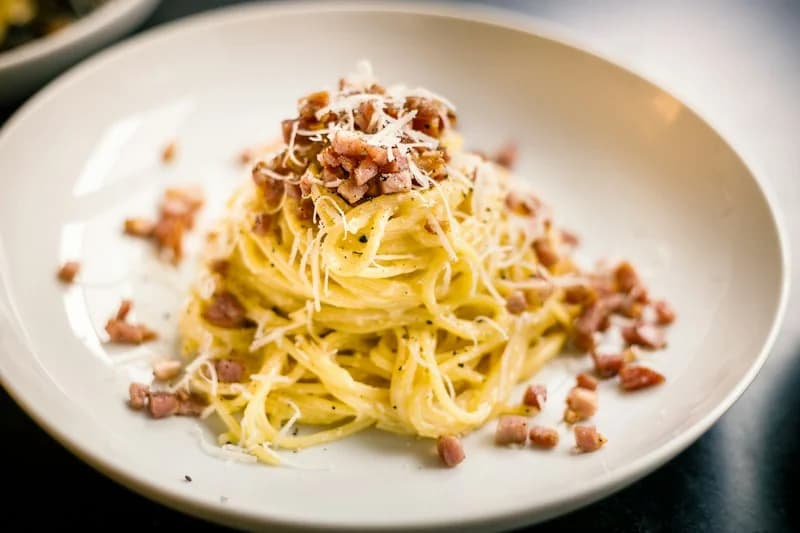
Spaghetti coated in a creamy sauce made only from eggs, grated Pecorino Romano, crisp guanciale and starchy pasta water, with no cream.
Method
Read the full method before starting. Cooking times are guides; check texture and doneness as you cook.
Shows the steps one at a time, with a timer for each timed step.
Heavy skillet, Sharp knife and board
Measure, cut, and arrange every ingredient in order of use. Read the full method and keep finishing ingredients separate.
- 01
Pasta
10 minutesHigh heatBring 4 liters of water to a boil with 1 tablespoon of salt. Cook the spaghetti 2 minutes less than the package time, then keep 1 cup of the cooking water.
Success cueThe pasta bends but still has a firm center.
- 02
Guanciale
7 minutesLow heatCut the guanciale into strips about 1 cm thick and cook them in a wide dry skillet over medium-low heat for 6 to 8 minutes, until crisp and the fat has melted.
Success cueThe guanciale is golden and crisp, sitting in its melted fat.
- 03
Egg and cheese
3 minutesWhisk the eggs with the grated Pecorino Romano and the black pepper into a thick paste.
Success cueThe mixture is thick and smooth, with no dry cheese.
- 04
Combine
1 minuteLow heatMove the hot spaghetti into the skillet with a quarter cup of the cooking water and toss for 1 minute over low heat.
Success cueEvery strand is coated with a thin, shiny layer of fat.
- 05
Sauce
1 minuteTake the skillet off the heat and wait 30 seconds. Add the egg mixture and toss quickly for 1 minute, adding a splash of cooking water if the sauce is too thick.
Success cueThe sauce is creamy and glossy, with no scrambled bits.
Watch outIf the pan is still very hot, the eggs will scramble.
PlateMap is still in testing. Quantities and results may vary with ingredients and equipment. Please check food safety yourself, especially with meat and poultry.
Cooking tips
Starchy pasta water binds the rendered fat and the egg proteins into a glossy emulsion.
- • Do not add cream; the eggs and pasta water make the sauce.
- • Take the skillet off the heat before adding the egg mixture.
Common mistakes
- • Draining the spaghetti completely and throwing away the water, which leaves nothing to loosen the sauce.
- • Using pre-grated cheese, which contains anti-caking agents and turns grainy instead of melting.
- • Cooking the guanciale too fast, so it burns before its fat melts out.
Substitutions
- • Instead of Pecorino Romano: Parmesan, milder and less salty, or half of each
Serving ideasServe at once in warm bowls, with extra grated cheese and black pepper at the table.
Estimated nutrition per serving
Calculated estimate per serving from the listed quantities. Product choice and retained cooking fat affect the result; this is not a laboratory analysis.
- Calories
- ≈ 740
- Protein
- 28.1g
- Carbs
- 66.9g
- Fat
- 38.9g
Calculation source and assumptions
Values use USDA data and linked product labels, adjusted for edible quantities and base servings. Brands, ingredient varieties, and cooking methods can change the result.
Milk, Egg, Wheat / gluten
Compound ingredients vary by product; check labels and possible cross-contact.
Frequently Asked Questions
Guanciale or pancetta?
Roman carbonara is made with guanciale, cured pork cheek, which renders more fat and tastes stronger. Pancetta is the closest swap; smoked bacon changes the flavour noticeably. For a pork-free carbonara, turn on the halal version above the ingredients: it uses smoked beef bacon.
Why did my eggs scramble?
The pan was too hot. Take it off the heat, wait 30 seconds, then add the egg mixture and keep tossing; the heat of the pasta is enough to thicken the eggs into a sauce.
Whole eggs or only yolks?
Both are traditional. More yolks give a richer, deeper yellow sauce; whole eggs give a lighter one. A common Roman ratio is one whole egg plus one yolk per person.
Does carbonara have cream or garlic?
Not in the Roman version. The creaminess comes from egg, cheese, pork fat and pasta water, and garlic is not part of it.
You May Also Love