 Italian
Classic Roman Cacio e Pepe
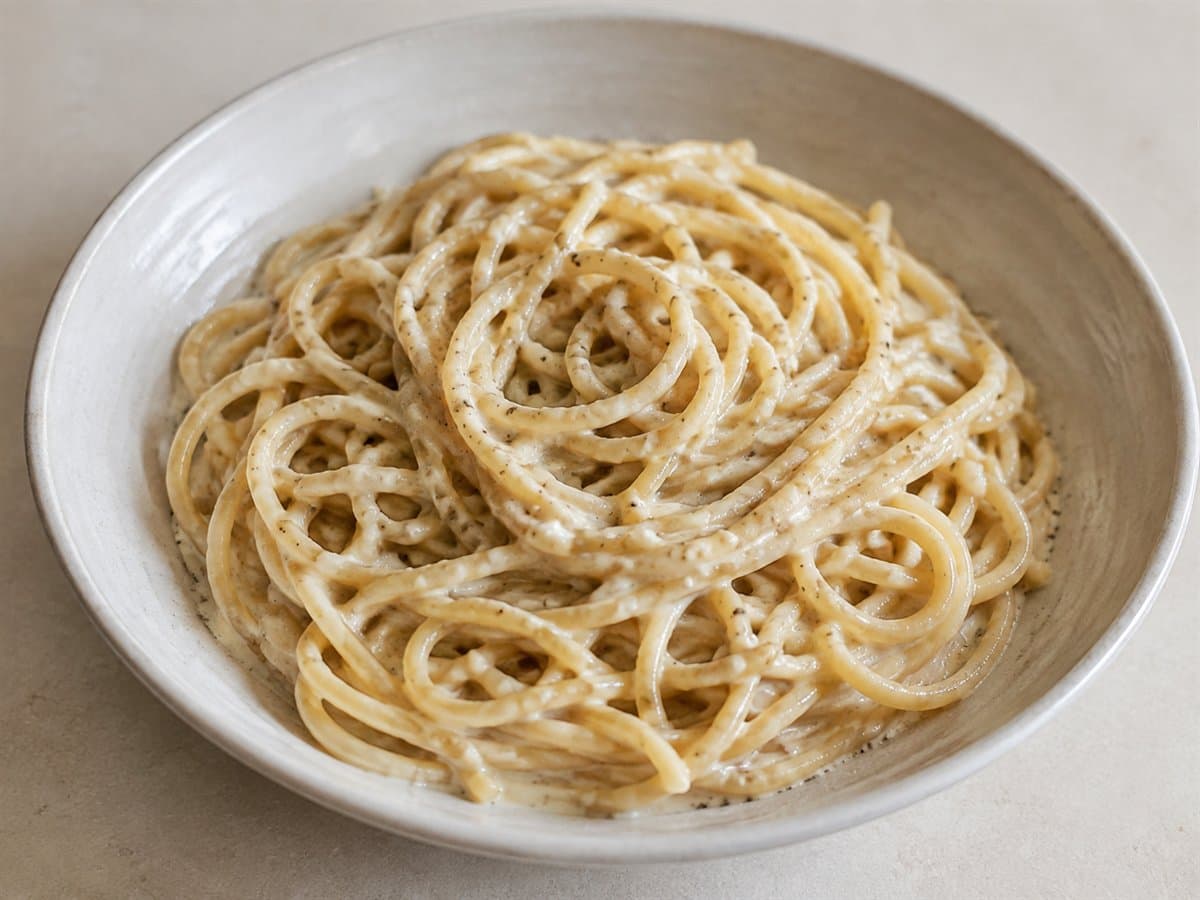
Spaghetti tossed with toasted black pepper and a creamy Pecorino sauce made only with the starchy pasta water.
Method
Read the full method before starting. Cooking times are guides; check texture and doneness as you cook.
Shows the steps one at a time, with a timer for each timed step.
Heavy skillet, Sharp knife and board
Measure, cut, and arrange every ingredient in order of use. Read the full method and keep finishing ingredients separate.
- 01
Preparation
3 minutesFinely grate the pecorino and coarsely crush the black pepper.
Success cueThe cheese is fine and fluffy.
- 02
Pepper
1 minuteMedium heatToast the pepper in a wide dry pan over medium heat for 1 minute.
Success cueThe pepper smells strong.
- 03
Pasta
9 minutesHigh heatBoil the spaghetti in about 1.5 litres of salted water until 1 minute short of al dente. Keep 1 cup of the pasta water.
Success cueThe pasta is still firm in the center.
- 04
Cheese paste
2 minutesMix the pecorino with 3 to 4 tablespoons of the warm pasta water into a smooth paste.
Success cueThe paste is smooth with no lumps.
- 05
Tossing
1 minuteMedium heatAdd half a cup of the pasta water to the pepper pan, add the spaghetti and cook for 1 minute, then take the pan off the heat.
Success cueThe water has thickened slightly around the pasta.
- 06
Sauce
1 minuteAdd the cheese paste and toss hard for 1 minute, adding a splash of pasta water if it gets too thick. Serve at once.
Success cueThe sauce is creamy and glossy with no clumps.
Watch outIf the pan is too hot the cheese clumps; keep it off the heat.
PlateMap is still in testing. Quantities and results may vary with ingredients and equipment. Please check food safety yourself, especially with meat and poultry.
Cooking tips
Boiling the pasta in less water concentrates the starch that binds cheese and water into a creamy sauce.
- • Mixing the cheese into a paste first stops it clumping.
Common mistakes
- • Boiling the pasta in a large pot of water, which dilutes the starch the sauce needs.
- • Using pre-grated cheese, which will not melt smoothly.
- • Letting it sit before serving; the sauce tightens within minutes, so serve straight away.
Substitutions
- • Instead of Pecorino Romano: half Pecorino and half Parmesan, for a milder sauce
- • Instead of spaghetti: tonnarelli or bucatini
Serving ideasServe at once in warm bowls, with more black pepper ground over the top.
Estimated nutrition per serving
Calculated estimate per serving from the listed quantities. Product choice and retained cooking fat affect the result; this is not a laboratory analysis.
- Calories
- ≈ 530
- Protein
- 25.9g
- Carbs
- 77.1g
- Fat
- 12.3g
Calculation source and assumptions
Values use USDA data and linked product labels, adjusted for edible quantities and base servings. Brands, ingredient varieties, and cooking methods can change the result.
Milk, Wheat / gluten
Compound ingredients vary by product; check labels and possible cross-contact.
Frequently Asked Questions
Why did my cheese clump?
The pan was too hot or the cheese went in dry. Pecorino seizes into strings above about 70°C, so take the pan off the heat and add the cheese as a paste loosened with warm, not boiling, pasta water.
Can I use Parmesan instead of Pecorino?
It works, but the dish changes: Parmesan is milder and nuttier, while Pecorino Romano gives the sharp, salty taste Romans expect. Many cooks use half and half.
Which pasta is traditional?
In Rome it is often made with tonnarelli, a thick square fresh egg pasta, or spaghetti. A rough, bronze-cut pasta releases more starch and helps the sauce cling.
Why toast the pepper?
A minute in a dry pan wakes up its aroma and takes the raw edge off its heat, so the pepper tastes warm and fragrant rather than just hot.
You May Also Love