 Asian
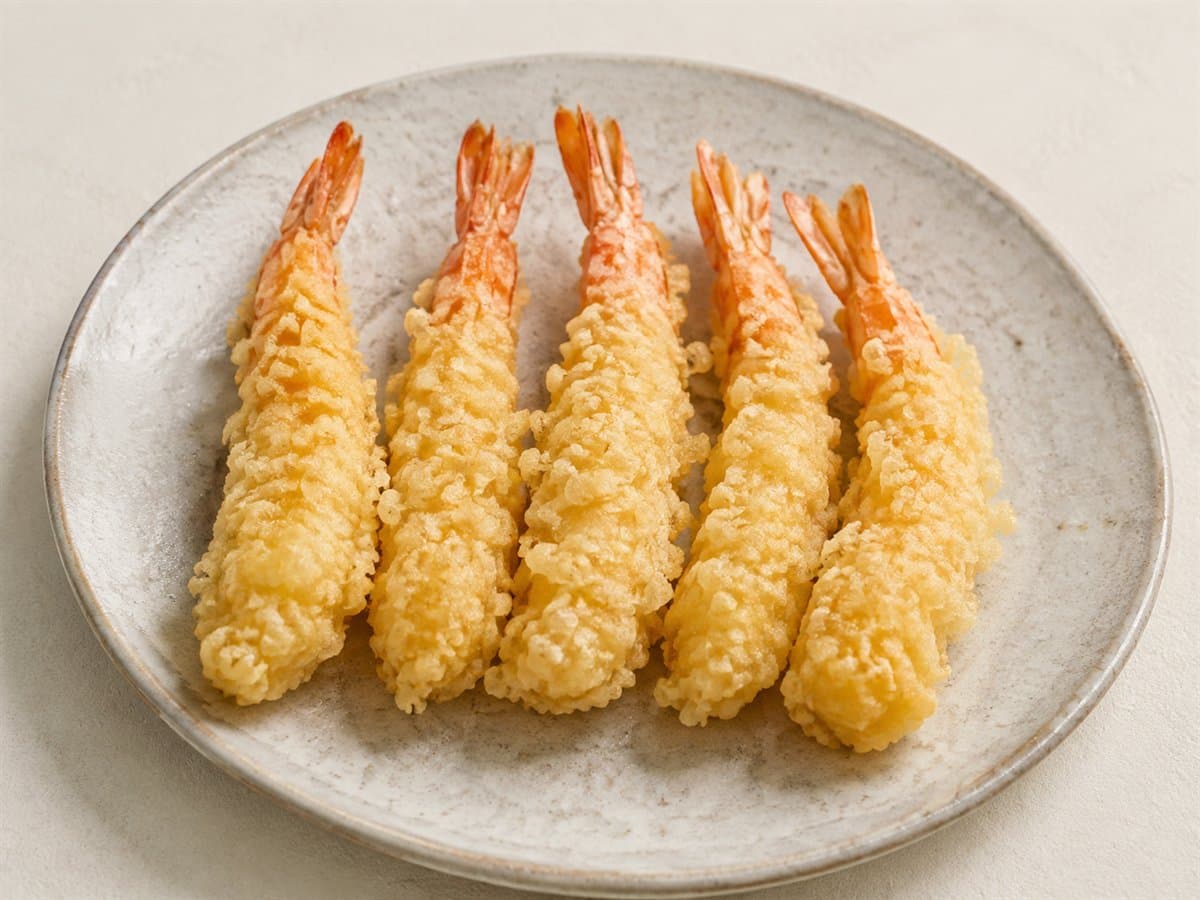
Crispy Japanese Shrimp Tempura
Large shrimp in a light, crisp Japanese tempura batter, served with tentsuyu dipping sauce.
Method
Read the full method before starting. Cooking times are guides; check texture and doneness as you cook.
Shows the steps one at a time, with a timer for each timed step.
Heavy skillet, Saucepan or pot, Sharp knife and board
Measure, cut, and arrange every ingredient in order of use. Read the full method and keep finishing ingredients separate.
- 01
Tentsuyu
3 minutesGentle simmerSimmer the dashi with the soy sauce and mirin for 2 minutes, then let it cool.
Success cueThe sauce is evenly brown and smells sweet and salty.
- 02
Shrimp
10 minutesPeel the shrimp, leaving the tails, and remove the vein. Make 3 shallow cuts along the belly, press them straight and pat dry.
Success cueThe shrimp lie flat and straight.
- 03
Oil
10 minutesHigh heatHeat the oil to 180°C in a deep pot.
Success cueA drop of batter rises to the surface at once.
- 04
Batter
1 minuteJust before frying, beat the egg with the ice water, add the flour and mix briefly with chopsticks, leaving lumps.
Success cueThe batter is thin and lumpy.
Watch outOvermixing makes the coating heavy.
- 05
Frying
3 minutesHigh heatDust the shrimp with cornstarch, dip them in the batter and fry 4 or 5 at a time for 2 to 3 minutes.
Success cueThe coating is pale golden and crisp and the shrimp are opaque.
Watch outToo many pieces at once cools the oil and makes them greasy.
- 06
Serve
1 minuteDrain on a wire rack and serve right away with the tentsuyu.
Success cueThe shrimp are still crackling crisp.
PlateMap is still in testing. Quantities and results may vary with ingredients and equipment. Please check food safety yourself, especially with meat and poultry.
Cooking tips
Flick a few drops of batter onto the shrimp while it fries; they catch and puff into extra crunchy bits.
- • Ice-cold water slows gluten from forming, which keeps the batter light and crisp.
- • Mix the batter as little as possible; small lumps of flour are what you want.
Common mistakes
- • Making the batter ahead; it must be mixed seconds before frying while the water is still ice cold.
- • Leaving the shrimp wet, so the batter slides off; dry them and dust them with cornstarch first.
- • Draining on paper towels, where the underside steams and softens; use a wire rack.
Substitutions
- • Instead of ice water: ice-cold sparkling water, for an even lighter batter
Serving ideasServe straight away with the tentsuyu and a little grated daikon or ginger, and steamed rice.
Estimated nutrition per serving
Calculated estimate per serving from the listed quantities. Product choice and retained cooking fat affect the result; this is not a laboratory analysis.
- Calories
- ≈ 510
- Protein
- 36.8g
- Carbs
- 46.4g
- Fat
- 19.1g
Calculation source and assumptions
Values use USDA data and linked product labels, adjusted for edible quantities and base servings. Brands, ingredient varieties, and cooking methods can change the result.
Egg, Wheat / gluten, Soy, Shellfish
Compound ingredients vary by product; check labels and possible cross-contact.
Frequently Asked Questions
Why is my tempura greasy or heavy?
Either the oil cooled below 170°C or the batter was overmixed. Fry only 4 or 5 pieces at a time, let the oil return to 180°C between batches and mix the batter just before frying.
Why cut the belly of the shrimp?
The shallow cuts break the fibres so the shrimp stays straight instead of curling in the hot oil. Straight shrimp cook evenly and look like the tempura in Japanese restaurants.
Can I use the same batter for vegetables?
Yes. Sweet potato, aubergine, mushrooms and green beans are classic; slice the harder vegetables thin so they cook in the same 2 to 3 minutes.
Where does tempura come from?
Battered frying is usually traced to Portuguese missionaries and traders in Nagasaki in the 16th century. Japanese cooks made it lighter, and it became a classic of Tokyo street stalls.
You May Also Love