 Middle Eastern
Saudi Masoub (Mashed Banana and Wholemeal Bread with Ghee and Honey)
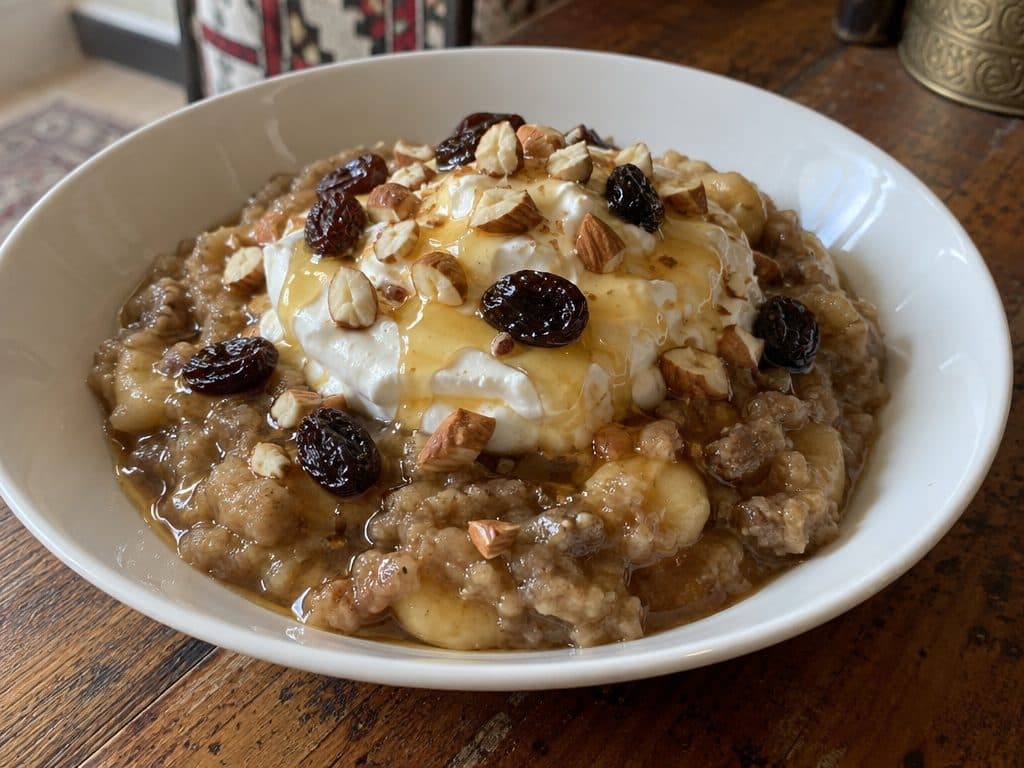
Wholemeal flatbread torn into crumbs and mashed with very ripe banana and ghee, then topped with cream, honey, raisins and almonds. A filling breakfast from the south and west of Saudi Arabia, also loved in Yemen and the Emirates.
Method
Read the full method before starting. Cooking times are guides; check texture and doneness as you cook.
Shows the steps one at a time, with a timer for each timed step.
Heavy skillet, Blender or processor, Sharp knife and board
Measure, cut, and arrange every ingredient in order of use. Read the full method and keep finishing ingredients separate.
- 01
Bread
4 minutesMedium heatWarm the whole wheat pita in a dry pan for 1 minute per side, then tear it into small pieces and pulse it in a food processor into coarse crumbs.
Success cueCoarse, slightly warm crumbs.
- 02
Banana
3 minutesLow heatMelt the ghee in a wide pan on low heat, add the bananas and mash them with a fork for 2 minutes until soft and creamy.
Success cueSmooth, glossy banana mash.
- 03
Mashing
3 minutesLow heatAdd the bread crumbs and mash and stir for 3 minutes until the bread and banana become one soft, thick mass.
Success cueA soft mass with no dry crumbs left.
- 04
Serving
3 minutesSpoon into bowls, top with the cream, drizzle with the honey and scatter the raisins and chopped almonds over. Serve warm.
Success cueWarm masoub with cream and honey running down the sides.
PlateMap is still in testing. Quantities and results may vary with ingredients and equipment. Please check food safety yourself, especially with meat and poultry.
Cooking tips
Grinding the bread to coarse crumbs, not fine powder, keeps a little texture in the mash.
- • Use bananas with brown spots; they mash easily and sweeten the dish without sugar.
- • Mash while the bread is warm so it soaks up the banana.
Common mistakes
- • Using firm, under-ripe bananas, which stay lumpy and taste starchy.
- • Grinding the bread to dust, so the mash turns gluey.
Substitutions
- • Instead of heavy cream (qeshta): thick yogurt for a lighter bowl
- • Instead of honey: date syrup
Serving ideasServe warm for breakfast with Arabic coffee or tea.
Estimated nutrition per serving
Calculated estimate per serving from the listed quantities. Product choice and retained cooking fat affect the result; this is not a laboratory analysis.
- Calories
- ≈ 615
- Protein
- 10.2g
- Carbs
- 87.1g
- Fat
- 29.1g
Calculation source and assumptions
Values use USDA data and linked product labels, adjusted for edible quantities and base servings. Brands, ingredient varieties, and cooking methods can change the result.
Wheat / gluten, Milk, Tree nuts
Compound ingredients vary by product; check labels and possible cross-contact.
Frequently Asked Questions
Where does masoub come from?
It is a breakfast of the Hejaz and southern Saudi Arabia with roots in Yemen, where a similar dish is called malakia. It is now served across the Gulf.
Can I use white bread?
You can, but wholemeal bread is the traditional choice and gives a nuttier taste and firmer mash.
Is there a savoury masoub?
Some cafes in Saudi Arabia add grated cheddar on top for a salty contrast with the honey. The banana base stays the same.
You May Also Love