 Levantine
Mfarakeh (Palestinian Potatoes and Eggs with Sumac)
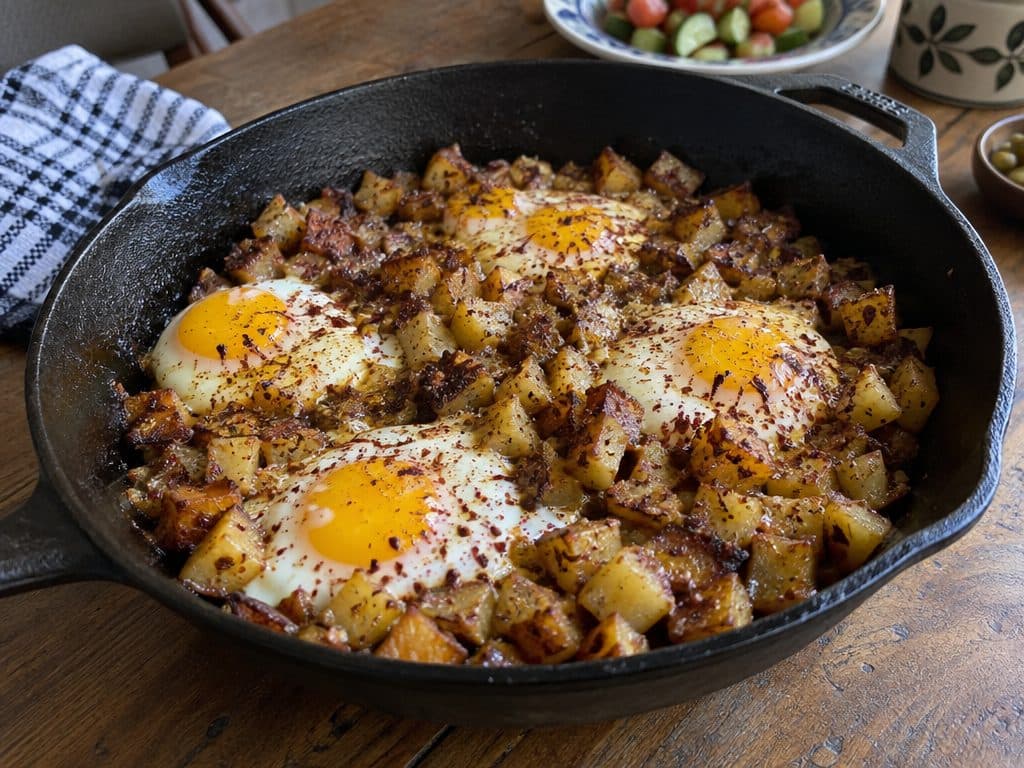
Small potato cubes cooked slowly in olive oil until tender and golden, seasoned with allspice and sumac, with eggs set in the pan on top. A Palestinian breakfast eaten with bread and tea.
Method
Read the full method before starting. Cooking times are guides; check texture and doneness as you cook.
Shows the steps one at a time, with a timer for each timed step.
Heavy skillet, Saucepan or pot, Sharp knife and board
Measure, cut, and arrange every ingredient in order of use. Read the full method and keep finishing ingredients separate.
- 01
Potatoes
8 minutesPeel the potatoes, cut them into 1 cm cubes, rinse and pat them dry.
Success cueEven, dry cubes.
- 02
Cooking
15 minutesLow heatHeat the olive oil in a wide pan on medium-low heat, add the potatoes and salt, cover and cook for 15 minutes, stirring now and then, until tender.
Success cuePotatoes that break when pressed with a spoon.
- 03
Browning
8 minutesMedium heatUncover, raise the heat to medium and cook for 5 to 8 minutes more until golden at the edges. Stir in the allspice and sumac.
Success cueGolden cubes with crisp edges.
- 04
Eggs
4 minutesLow heatMake 4 wells in the potatoes and crack an egg into each. Cover and cook on low heat for 3 to 4 minutes until the whites are set. Serve straight from the pan.
Success cueSet whites and soft yolks.
Watch outCook longer if you want firm yolks; eggs for small children should be fully set.
PlateMap is still in testing. Quantities and results may vary with ingredients and equipment. Please check food safety yourself, especially with meat and poultry.
Cooking tips
Covering the pan first cooks the potatoes through in their own steam; uncovering at the end browns them.
- • Dry potatoes brown better; wet cubes steam and stick.
- • Many families beat the eggs and scramble them through the potatoes instead; both are mfarakeh.
Common mistakes
- • Cooking on high heat from the start, so the cubes brown outside and stay raw inside.
- • Cutting the cubes in different sizes, so some burn while others stay hard.
Substitutions
- • Instead of olive oil: ghee, used by some families in the north of Palestine
- • Instead of sumac: a squeeze of lemon at the end
Serving ideasServe hot with warm bread, olives and sweet tea.
Estimated nutrition per serving
Calculated estimate per serving from the listed quantities. Product choice and retained cooking fat affect the result; this is not a laboratory analysis.
- Calories
- ≈ 435
- Protein
- 9.4g
- Carbs
- 27.1g
- Fat
- 32.6g
Calculation source and assumptions
Values use USDA data and linked product labels, adjusted for edible quantities and base servings. Brands, ingredient varieties, and cooking methods can change the result.
Egg
Compound ingredients vary by product; check labels and possible cross-contact.
Frequently Asked Questions
What does mfarakeh mean?
It comes from the Arabic for rubbing or crumbling, because the ingredients are stirred and broken together in the pan. There are also mfarakeh with zucchini or fava beans.
Can I fry the potatoes in more oil?
You can deep-fry them and drain, then finish with the eggs. The home version cooks them slowly in a measured amount of olive oil.
Is mfarakeh a breakfast dish?
Mostly, yes, with bread, olives and tea, but it is also a quick light supper across Palestine and Jordan.
You May Also Love