 Middle Eastern
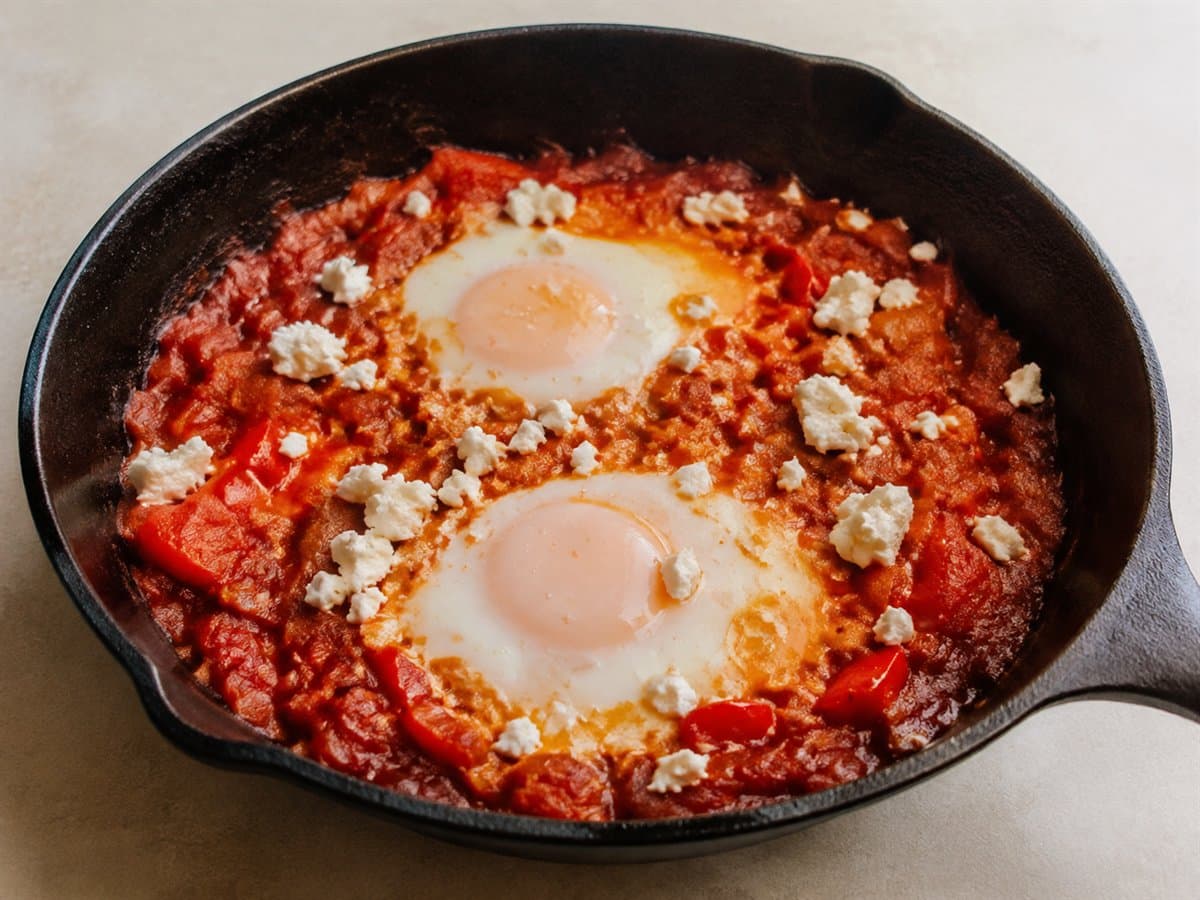
North African Shakshuka with Feta
Eggs gently cooked in a thick tomato and sweet pepper sauce with cumin and paprika, finished with feta and parsley.
Method
Read the full method before starting. Cooking times are guides; check texture and doneness as you cook.
Shows the steps one at a time, with a timer for each timed step.
Heavy skillet, Sharp knife and board
Measure, cut, and arrange every ingredient in order of use. Read the full method and keep finishing ingredients separate.
- 01
Preparation
10 minutesDice the onion and bell peppers, mince the garlic and finely chop the tomatoes.
Success cueEverything is chopped and ready.
- 02
Vegetables
8 minutesMedium heatHeat the olive oil in a wide skillet over medium heat and cook the onion and bell peppers for 8 minutes.
Success cueThey are soft and lightly browned at the edges.
- 03
Spices
1 minuteMedium heatAdd the garlic, cumin and paprika and stir for 1 minute.
Success cueThe spices smell strong.
Watch outKeep stirring; the spices burn quickly.
- 04
Sauce
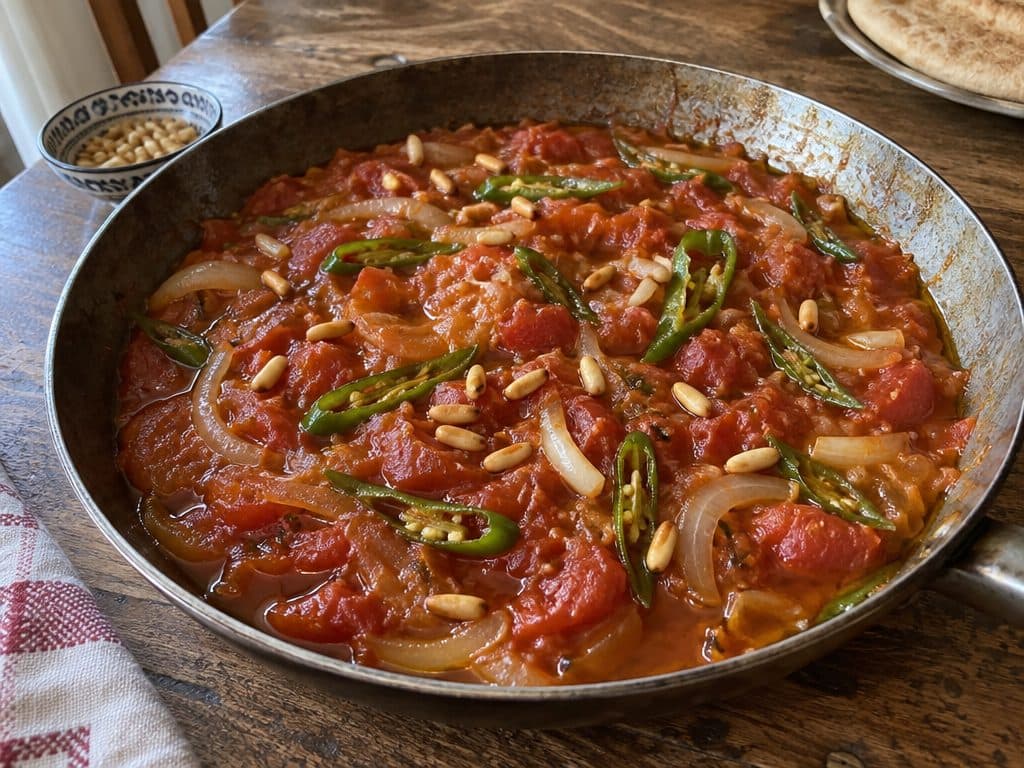
10 minutesGentle simmerAdd the tomatoes and 1 teaspoon of salt and simmer uncovered for 10 minutes.
Success cueThe sauce is thick and a spoon leaves a trail in it.
- 05
Eggs
2 minutesLow heatMake 8 wells in the sauce with the back of a spoon and gently crack an egg into each.
Success cueEach egg sits in its own well.
- 06
Cooking the eggs
6 minutesLow heatCover and cook on low heat for 5 to 7 minutes.
Success cueThe whites are set and the yolks still runny.
- 07
Serve
1 minuteScatter the crumbled feta and chopped parsley and serve in the skillet.
Success cueThe feta softens slightly from the heat.
PlateMap is still in testing. Quantities and results may vary with ingredients and equipment. Please check food safety yourself, especially with meat and poultry.
Cooking tips
Crumbled salty feta balances the natural sweetness of slowly simmered bell peppers and tomatoes.
- • Keep the heat low after adding the eggs so the yolks stay runny.
- • Serve straight from the cast-iron skillet.
Common mistakes
- • Adding the eggs to a thin sauce, so they sink and spread; the sauce should be thick enough to hold a well.
- • Cooking on high heat after the eggs go in, which turns the yolks hard and the bottom scorched.
- • Salting the eggs directly, which leaves white spots; season the sauce instead.
Substitutions
- • Instead of feta: crumbled white cheese, or leave it out for the classic version
- • Instead of bell peppers: roasted peppers from a jar, added with the tomatoes
Serving ideasServe straight from the pan with warm bread for dipping.
Estimated nutrition per serving
Calculated estimate per serving from the listed quantities. Product choice and retained cooking fat affect the result; this is not a laboratory analysis.
- Calories
- ≈ 360
- Protein
- 19.7g
- Carbs
- 19.9g
- Fat
- 23.4g
Calculation source and assumptions
Values use USDA data and linked product labels, adjusted for edible quantities and base servings. Brands, ingredient varieties, and cooking methods can change the result.
Milk, Egg
Compound ingredients vary by product; check labels and possible cross-contact.
Frequently Asked Questions
Where does shakshuka come from?
It comes from North Africa, especially Tunisia, and spread across the region and beyond. Feta is a later addition; the classic version is just the spiced tomato and pepper sauce with eggs.
How do I get set whites and runny yolks?
Keep the heat low and the lid on: the steam sets the tops of the whites while the yolks stay soft. Check after 5 minutes; the whites should be opaque with no clear patches.
Can I use canned tomatoes?
Yes, 800 g of crushed or chopped canned tomatoes. They are often more flavourful than pale winter tomatoes; simmer them a few minutes longer until thick.
How spicy is shakshuka?
This version is mild. In Tunisia it is often made with harissa or fresh hot peppers; stir in a teaspoon of harissa with the spices if you like heat.
You May Also Love