 Levantine
 Manakeesh Za'atar
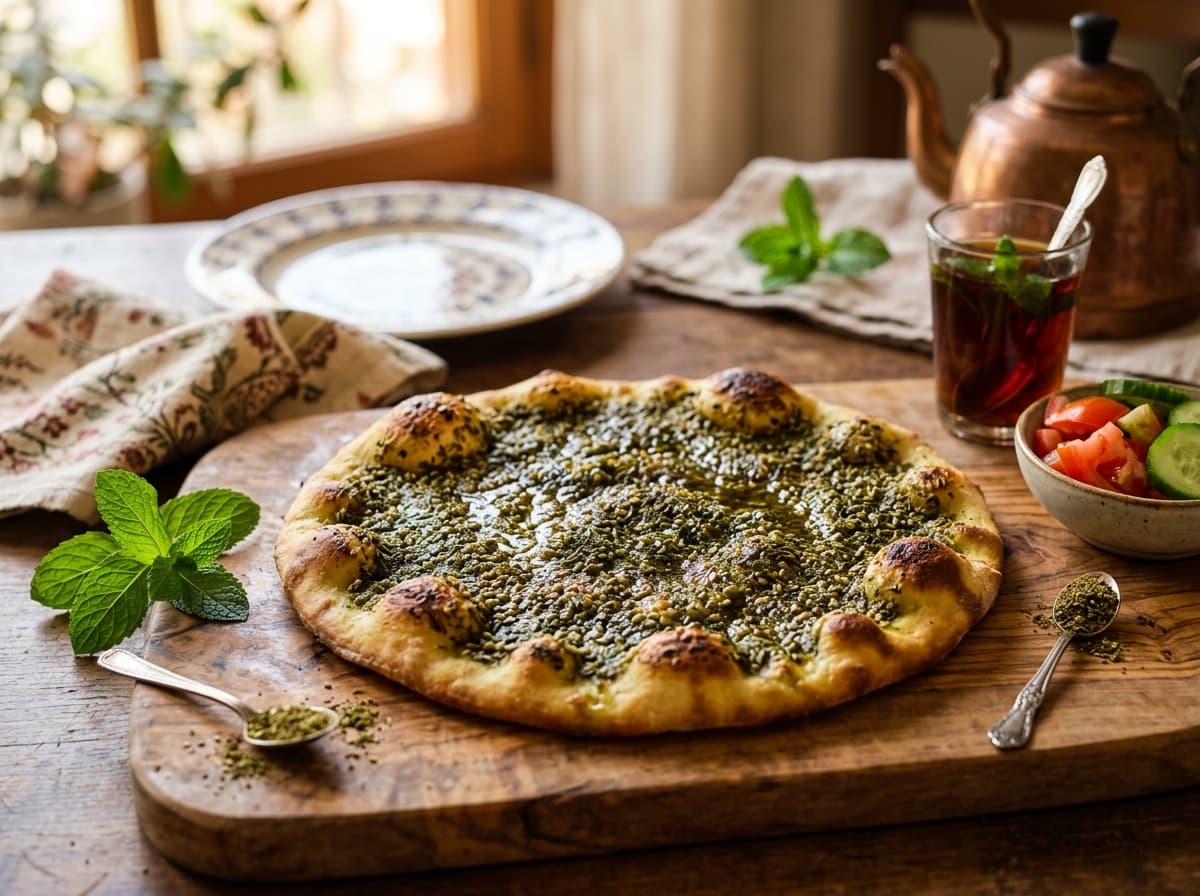
Soft Levantine flatbreads dimpled with the fingertips and spread with za'atar (the dried herb with sumac and sesame) mixed with olive oil, baked in a very hot oven.
- Prep:
- 25 minutes
- Cook:
- 35 minutes
- Waiting:
- 1 hour and 10 minutes (rising, 1 hour, and resting the balls, 10 minutes)
Method
Read the full method before starting. Cooking times are guides; check texture and doneness as you cook.
Shows the steps one at a time, with a timer for each timed step.
Oven and tray, Sharp knife and board
Measure, cut, and arrange every ingredient in order of use. Read the full method and keep finishing ingredients separate.
- 01
Making the dough
10 minutesMix the flour, yeast and salt, then add the warm water and 3 tablespoons of the olive oil. Knead for 10 minutes.
Success cueThe dough is smooth and elastic.
- 02
Making the dough
1 hourCover and leave to rise for 1 hour.
Success cueThe dough has doubled in size.
- 03
Oven
30 minutesOven heatWhile the dough rises, heat the oven with a pizza stone or heavy tray inside at 240°C for 30 minutes.
Success cueThe oven has reached 240°C.
- 04
Za'atar paste
2 minutesMix the za'atar and sesame with the rest of the olive oil.
Success cueThe paste is thick but spreads easily.
- 05
Shaping
10 minutesDivide the dough into 8 balls and rest them for 10 minutes. Roll each into a 20 cm round, press dimples with your fingertips and spread the za'atar paste, leaving a 1 cm border.
Success cueThe rounds are even, with dimples across the surface.
- 06
Baking
8 minutesOven heatBake two at a time for 7 to 8 minutes.
Success cueThe edges are puffed and the base is golden.
PlateMap is still in testing. Quantities and results may vary with ingredients and equipment. Please check food safety yourself, especially with meat and poultry.
Cooking tips
Use a good extra virgin olive oil you like the taste of; the oven heat brings out its aroma in the za'atar.
- • Pressing dimples into the dough with your fingertips holds the oil and za'atar in place so they do not run off the edges.
Common mistakes
- • Rolling the dough too thick, so the bread turns bready instead of soft with crisp edges.
- • Spreading the za'atar right to the edge, where it burns.
- • Baking in an oven that is not fully hot, so the base stays pale and the topping dries out.
Substitutions
- • Instead of za'atar: dried oregano with sumac, toasted sesame and a pinch of salt
- • Instead of za'atar topping: white cheese (akkawi) or a mix of za'atar and cheese
Serving ideasServe warm for breakfast with labneh, sliced tomatoes, cucumbers, olives and fresh mint.
Estimated nutrition per serving
Calculated estimate per serving from the listed quantities. Product choice and retained cooking fat affect the result; this is not a laboratory analysis.
- Calories
- ≈ 755
- Protein
- 15.8g
- Carbs
- 103.0g
- Fat
- 31.4g
Calculation source and assumptions
Values use USDA data and linked product labels, adjusted for edible quantities and base servings. Brands, ingredient varieties, and cooking methods can change the result.
Wheat / gluten, Sesame
Compound ingredients vary by product; check labels and possible cross-contact.
Frequently Asked Questions
What is za'atar?
Za'atar is both a wild herb of the oregano family and the blend made from it: the dried, crushed leaves mixed with sumac, toasted sesame and salt. Blends vary from family to family and country to country.
Can I bake them without a pizza stone?
Yes. Heat a heavy baking tray upside down in the oven for 30 minutes and slide the breads onto it; the hot metal gives a crisp, browned base.
Why is my za'atar bitter or burnt?
There was too little oil or the oven was too hot for too long. The za'atar should be a loose paste, fully coated in oil, and the breads come out after 7 to 8 minutes.
Can I freeze manakeesh?
Yes, once baked and cooled. Freeze them for up to 2 months and reheat in a hot oven or a dry pan for a few minutes.
You May Also Love