 Indian
Khichdi (Indian Rice and Moong Dal Porridge)
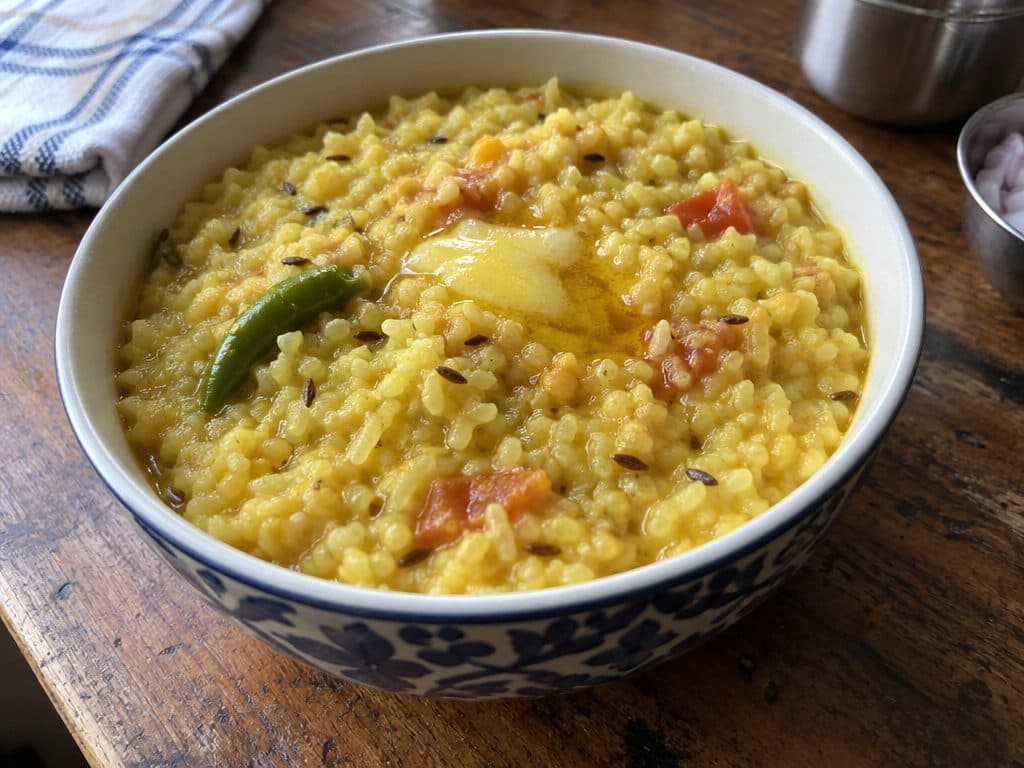
Rice and split yellow moong dal cooked together with cumin, ginger, tomato and turmeric into a soft, savoury porridge, finished with a spoon of ghee. The comfort food of every Indian home, and the dish that gave Egyptian koshari its name.
- Prep:
- 10 minutes
- Cook:
- 45 minutes
- Waiting:
- 30 minutes (The rice and dal soak for 30 minutes)
Method
Read the full method before starting. Cooking times are guides; check texture and doneness as you cook.
Shows the steps one at a time, with a timer for each timed step.
Saucepan or pot, Sharp knife and board
Measure, cut, and arrange every ingredient in order of use. Read the full method and keep finishing ingredients separate.
- 01
Soaking
32 minutesRinse the rice and moong dal together until the water runs clear, cover with fresh water and soak for 30 minutes. Drain.
Success cuePlump, pale grains.
- 02
Tempering
7 minutesMedium heatHeat 40 g of the ghee in a heavy pot on medium heat and fry the cumin and bay leaves for 30 seconds. Add the grated ginger, chopped onion and slit green chilies and cook for 3 minutes, then the chopped tomatoes and turmeric for 3 minutes until soft.
Success cueSoft tomato and onion in fragrant ghee.
- 03
Cooking
38 minutesGentle simmerAdd the drained rice and moong dal, the salt and the water. Bring to a boil, then cover and simmer on low heat for 30 to 35 minutes, stirring every 10 minutes, until the rice and dal are completely soft and the khichdi is like a thick porridge.
Success cueGrains that break when stirred into a soft porridge.
Watch outIt catches easily at the end; stir and add hot water if it gets too thick.
- 04
Serving
2 minutesTake out the bay leaves, spoon into bowls and top each with the rest of the ghee.
Success cueSoft porridge with melting ghee on top.
PlateMap is still in testing. Quantities and results may vary with ingredients and equipment. Please check food safety yourself, especially with meat and poultry.
Cooking tips
The ghee on top at the end, not just the ghee in the pot, is what gives khichdi its rich, buttery smell.
- • In a pressure cooker, use half the water and cook for 3 to 4 whistles.
- • Khichdi thickens as it cools; loosen it with hot water before serving.
Common mistakes
- • Skipping the soak, so the dal stays firm while the rice turns to mush.
- • Cooking on high heat, which scorches the bottom.
Substitutions
- • Instead of moong dal: red lentils, cooked 5 minutes less
- • Instead of ghee: butter, or oil for a vegan pot
Serving ideasServe hot with plain yogurt, a pickle and papad.
Estimated nutrition per serving
Calculated estimate per serving from the listed quantities. Product choice and retained cooking fat affect the result; this is not a laboratory analysis.
- Calories
- ≈ 500
- Protein
- 16.5g
- Carbs
- 76.3g
- Fat
- 15.0g
Calculation source and assumptions
Values use USDA data and linked product labels, adjusted for edible quantities and base servings. Brands, ingredient varieties, and cooking methods can change the result.
Milk
Compound ingredients vary by product; check labels and possible cross-contact.
Frequently Asked Questions
Is khichdi related to Egyptian koshari?
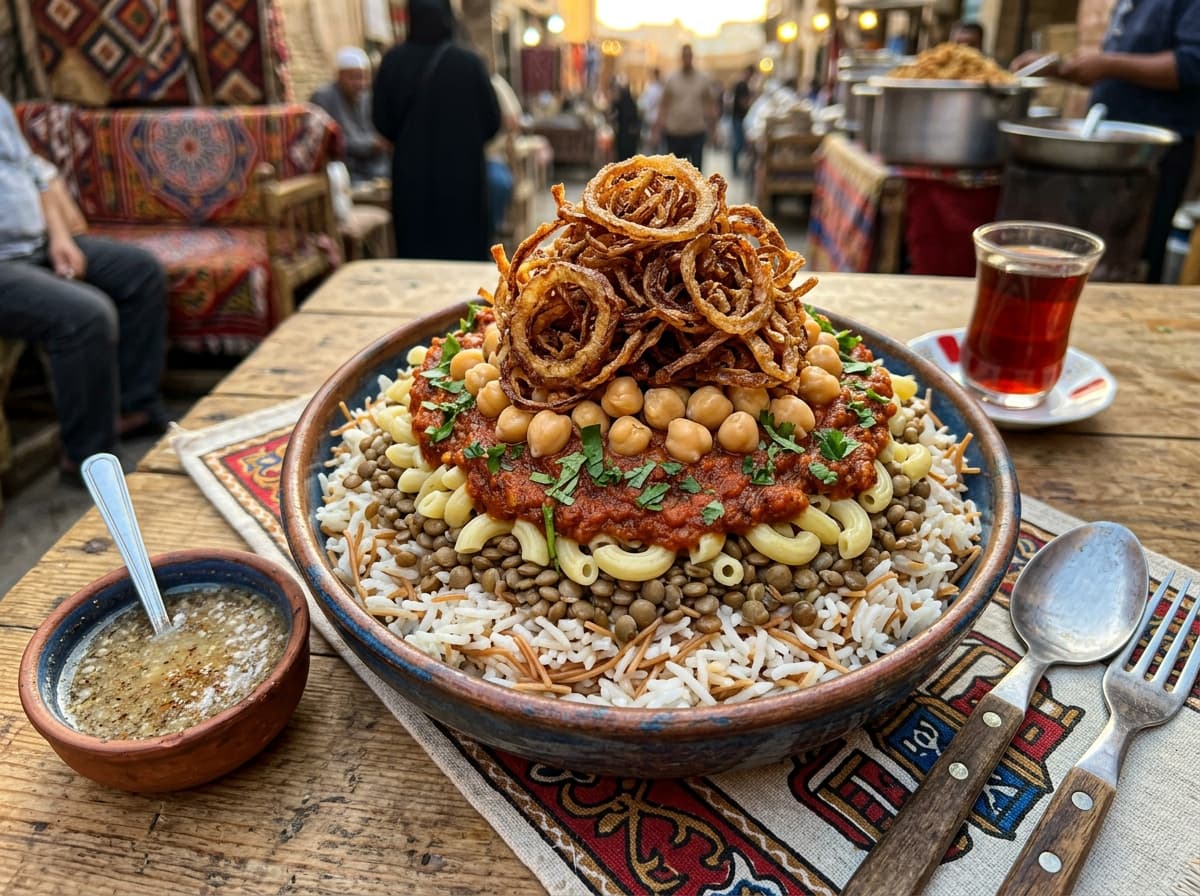
Yes. Koshari is widely believed to take its name from khichdi, brought to Egypt by Indian soldiers and traders in the 19th or early 20th century. Egypt then built its own dish with lentils, rice, pasta and tomato sauce.
Why is khichdi given to people who are unwell?
Rice and split moong dal cooked soft are gentle and easy to digest, so Indian families serve it plainly seasoned when someone is recovering.
Can I use whole green mung beans?
Yes, but soak them for at least 4 hours and cook 15 minutes longer; the khichdi will be darker and coarser.
You May Also Love