 Egyptian
 Koshari
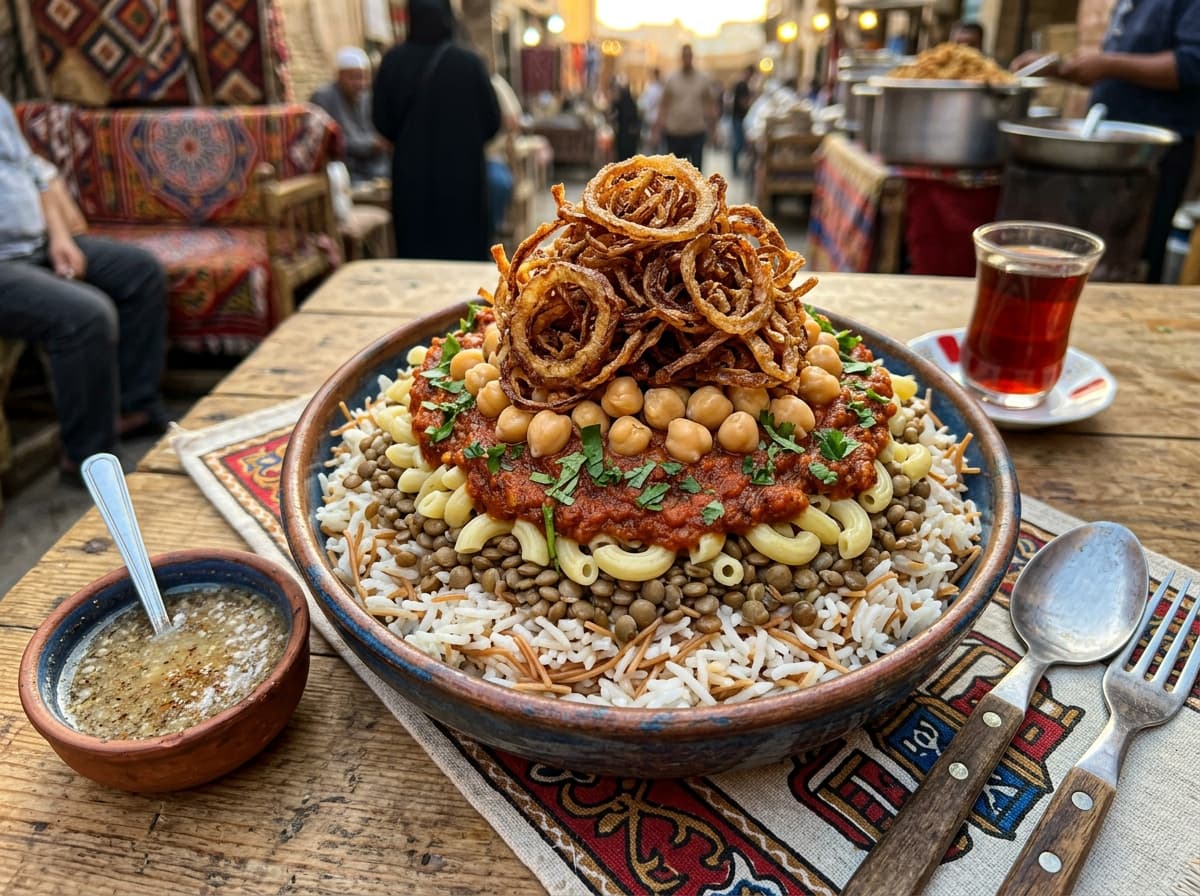
Egypt's beloved national street food: comforting layers of rice with vermicelli, mixed pasta and brown lentils, spiced tomato salsa, garlicky vinegar daqqa, and crispy caramelized fried onions (ward).
Method
Read the full method before starting. Cooking times are guides; check texture and doneness as you cook.
Shows the steps one at a time, with a timer for each timed step.
Sharp knife and board
Measure, cut, and arrange every ingredient in order of use. Read the full method and keep finishing ingredients separate.
- 01
Crispy onions
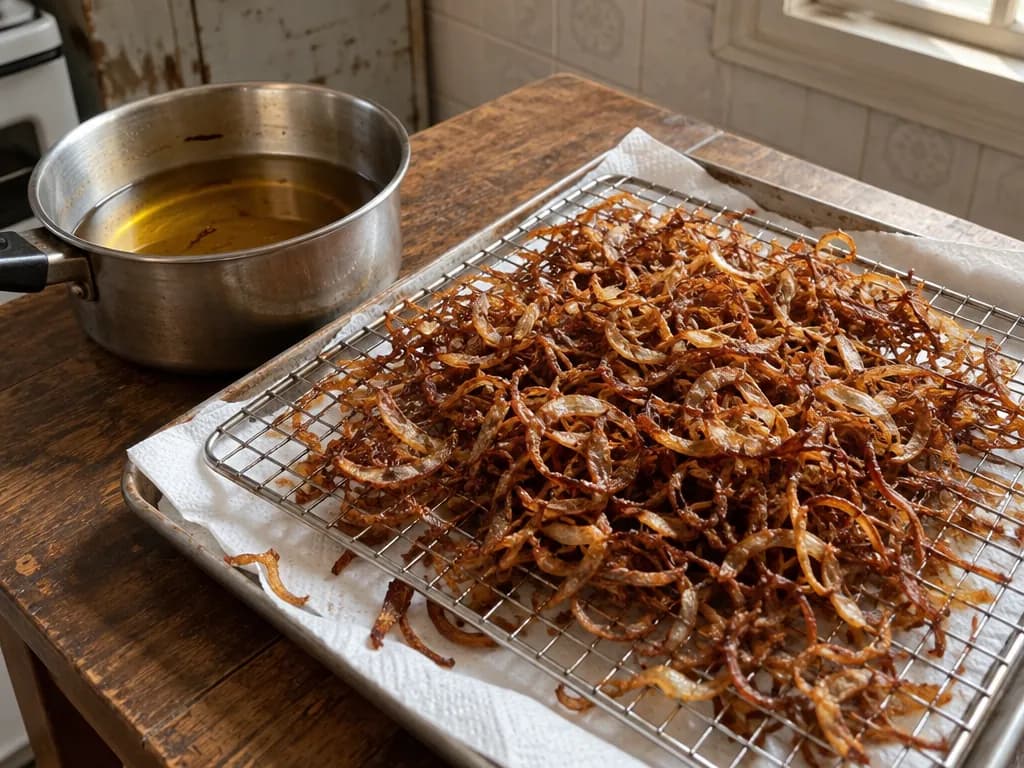
20 minutesMedium heatSlice the onions thinly and toss them with 2 tablespoons of flour. Fry in batches in the oil over medium-high heat for 8 to 10 minutes per batch, drain on paper and keep the oil.
Show photoHide photo
 Success cue
The onions are deep golden and turn crisp as they cool.
Watch outThey darken quickly at the end of each batch.
- 02
Lentils
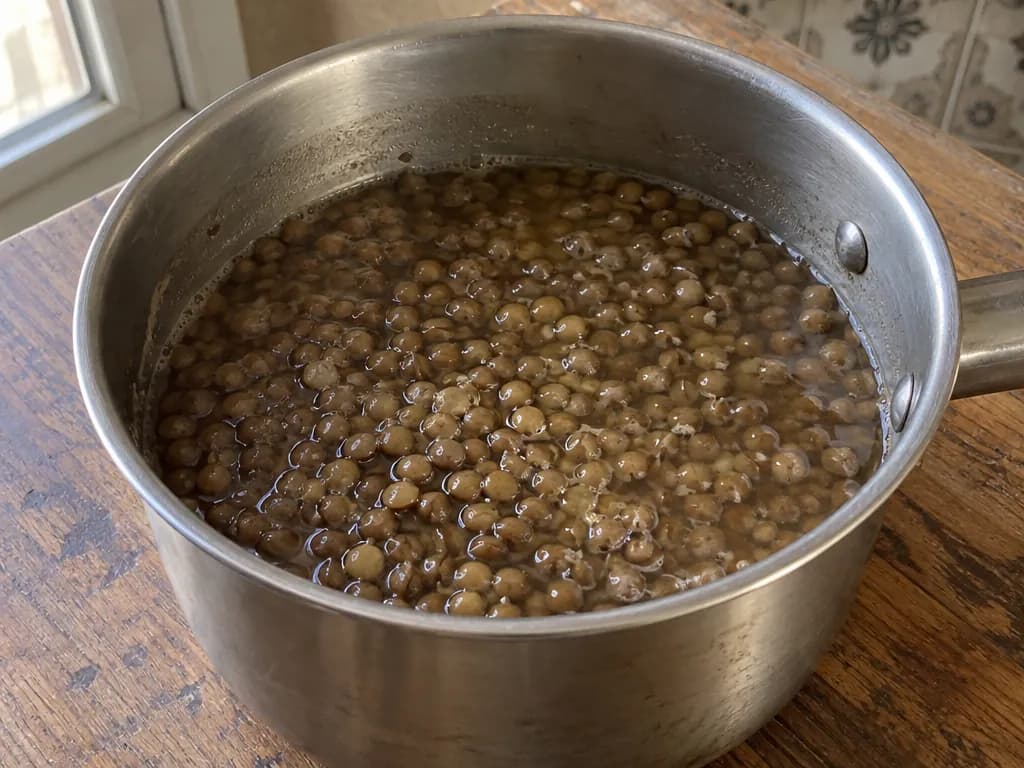
25 minutesGentle simmerRinse the lentils, cover with 1 litre of water and simmer for 20 to 25 minutes until tender but still whole. Add 1 teaspoon of salt in the last 5 minutes, drain and toss with 1 tablespoon of the onion oil and half of the cumin.
Show photoHide photo
 Success cue
The lentils are tender but whole, not split or mushy.
- 03
Rice
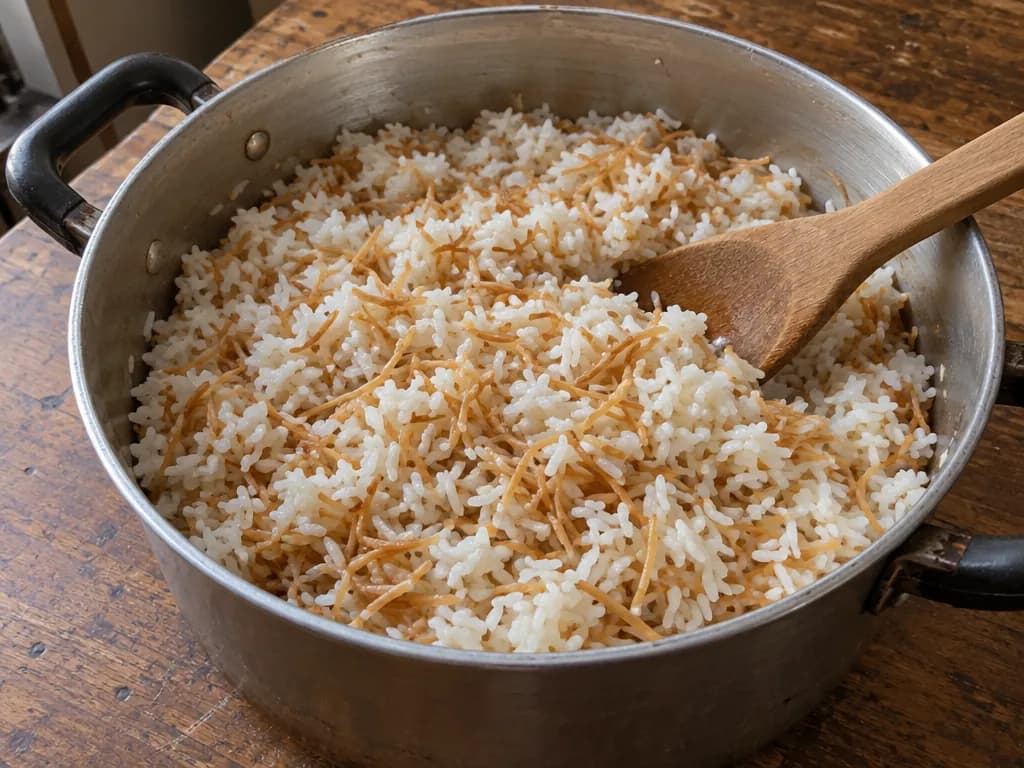
24 minutesLow heatHeat 2 tablespoons of the onion oil and toast the vermicelli for 2 to 3 minutes until golden. Add the rinsed rice and stir for 1 minute, then add 600 ml of boiling water and salt. Bring to a boil, cover and cook on low heat for 15 minutes, then rest for 5 minutes.
Show photoHide photo
 Success cue
The water is absorbed and the grains are tender and separate.
- 04
Pasta
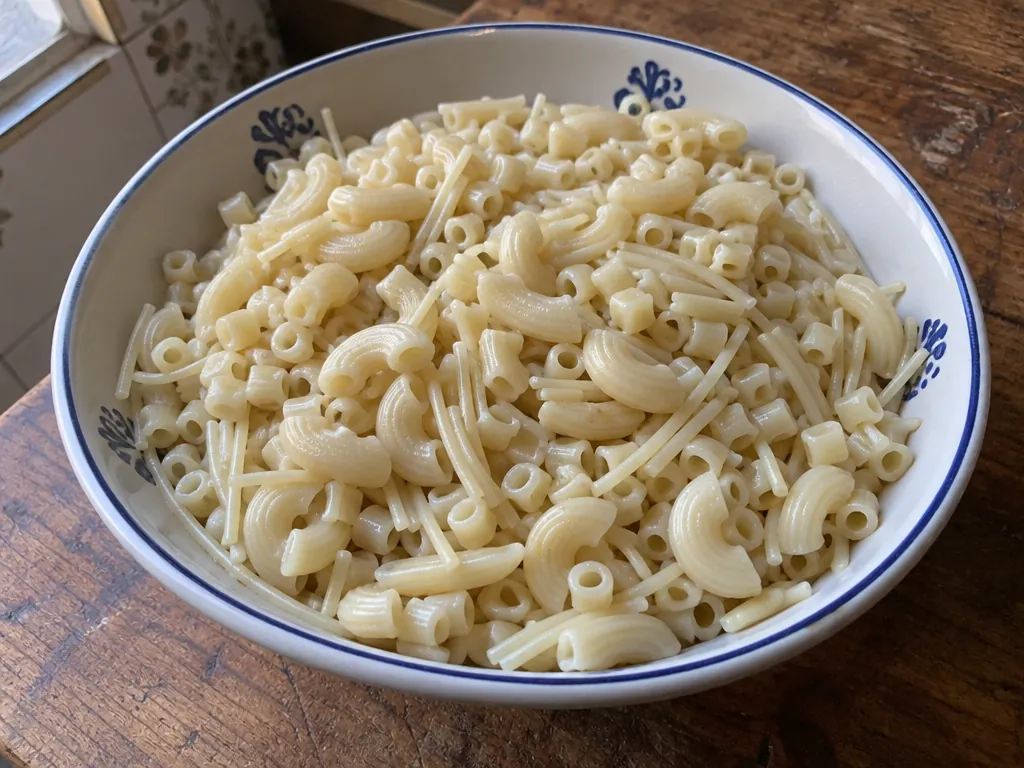
9 minutesHigh heatBreak the spaghetti into 3 to 4 cm pieces. Boil it with the elbow macaroni in plenty of salted water for 8 to 10 minutes, drain and toss with 1 tablespoon of the onion oil.
Show photoHide photo
 Success cue
The pasta is tender and still pale.
- 05
Tomato sauce
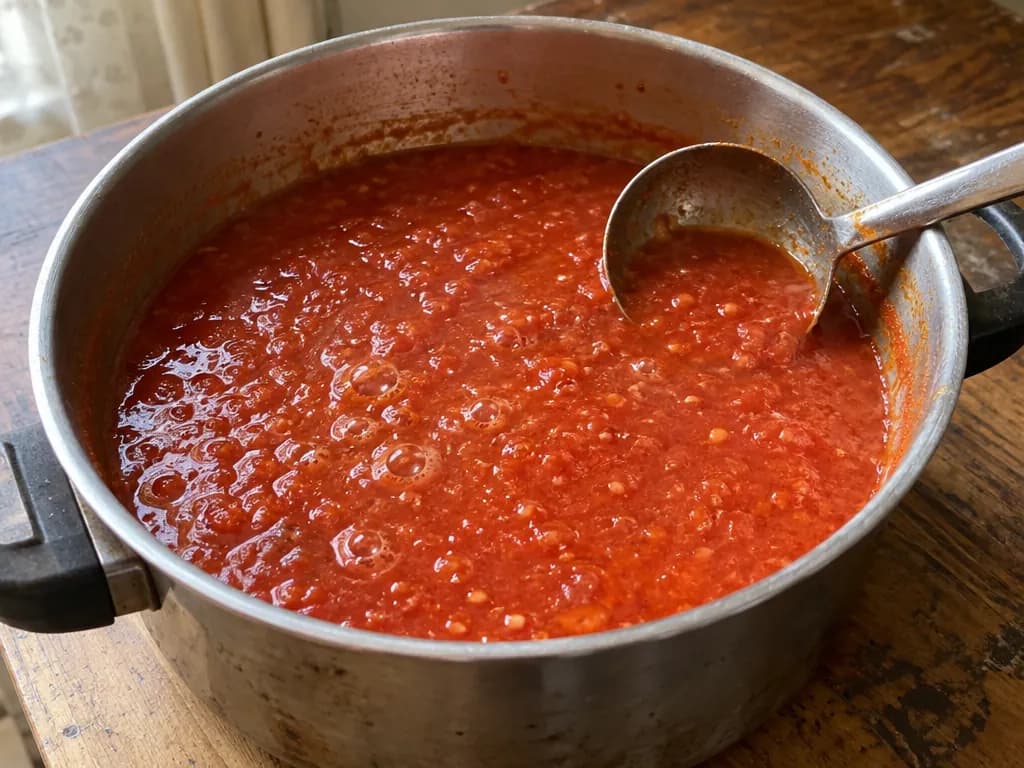
13 minutesGentle simmerHeat 2 tablespoons of the onion oil over medium heat and fry 20 g of the garlic for 1 minute. Add the tomato paste for 1 minute, then the grated tomatoes, 30 ml of the vinegar, the rest of the cumin, 1 teaspoon of hot chili powder and salt. Simmer for 10 to 12 minutes.
Show photoHide photo
 Success cue
The sauce thickens slightly but stays loose and pourable, with a light sheen of oil.
- 06
Daqqa
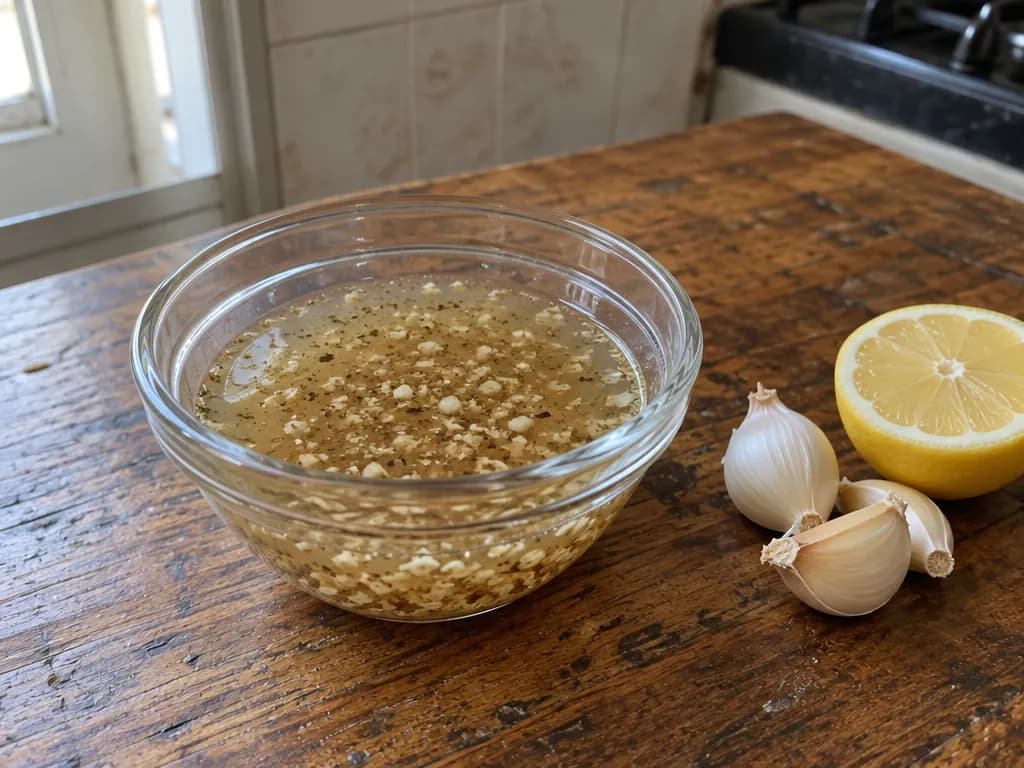
3 minutesMix the remaining crushed garlic with the remaining 60 ml of vinegar, the lemon juice, coriander, a pinch of cumin, salt and 180 ml of water.
Show photoHide photo
 Success cue
The daqqa is well mixed and smells sharp of garlic and vinegar.
- 07
Serve
3 minutesIn each bowl, layer the rice, then the pasta, then the lentils and the warm chickpeas. Top with the tomato sauce, the daqqa and a pile of crispy onions.
Success cueEach bowl has every layer, topped with crispy onions.
PlateMap is still in testing. Quantities and results may vary with ingredients and equipment. Please check food safety yourself, especially with meat and poultry.
Cooking tips
Daqqa, the garlic and vinegar dressing, cuts through the starch; spoon it on after the tomato sauce, not instead of it, so each bite gets both.
- • Using the onion frying oil for the rice, pasta and sauce carries the flavour of the fried onions through the whole dish.
Common mistakes
- • Frying all the onions at once, so they turn soft instead of crisp.
- • Boiling the lentils hard or too long, so they split and turn to mush; simmer gently and drain them as soon as they are tender.
- • Adding too much water to the rice: 600 ml for 400 g of Egyptian rice keeps the grains separate instead of soft and sticky.
- • Throwing away the onion oil, which gives the rice, pasta and sauce their flavour.
Substitutions
- • Instead of home-cooked chickpeas: canned chickpeas, rinsed well and warmed in a little salted water
- • Instead of fresh tomatoes: 800 g of canned crushed tomatoes
- • Instead of broken spaghetti: small macaroni (short tubes), or use only elbow macaroni
Serving ideasServe with extra daqqa and chili sauce on the side so everyone sets their own heat and sourness.
Estimated nutrition per serving
Calculated estimate per serving from the listed quantities. Product choice and retained cooking fat affect the result; this is not a laboratory analysis.
- Calories
- ≈ 1100
- Protein
- 32.1g
- Carbs
- 174.7g
- Fat
- 30.8g
Calculation source and assumptions
Values use USDA data and linked product labels, adjusted for edible quantities and base servings. Brands, ingredient varieties, and cooking methods can change the result.
Wheat / gluten
Compound ingredients vary by product; check labels and possible cross-contact.
Frequently Asked Questions
Which lentils does koshari use?
Whole brown lentils, sold in Egypt as ads bigba (often called black lentils). They hold their shape when boiled, so they sit on the rice and pasta as their own layer. Yellow split lentils are used in a different dish, yellow koshari, which is popular in Alexandria and the Delta.
Is koshari vegan?
Yes. Nothing in it comes from animals, which is why it is a staple during Coptic fasts. Just fry the onions in plain vegetable oil.
What is the difference between daqqa and shatta?
Daqqa is the thin garlic, vinegar and cumin dressing; shatta is a fiery chili sauce. Koshari shops put both on the table so everyone sets their own sourness and heat.
How do I store leftover koshari?
Keep the rice, pasta, lentils, sauce and daqqa in separate boxes in the fridge for up to 3 days. Keep the crispy onions in a dry jar at room temperature for up to 1 week. Reheat the rice with a spoon of water until it is steaming hot.
Why are my onions not crispy?
Too many onions in the oil at once lowers its heat, so they steam. Fry small batches and spread them on paper in one layer.