 Middle Eastern
Emirati Harees (Slow-Cooked Wheat and Lamb Porridge)
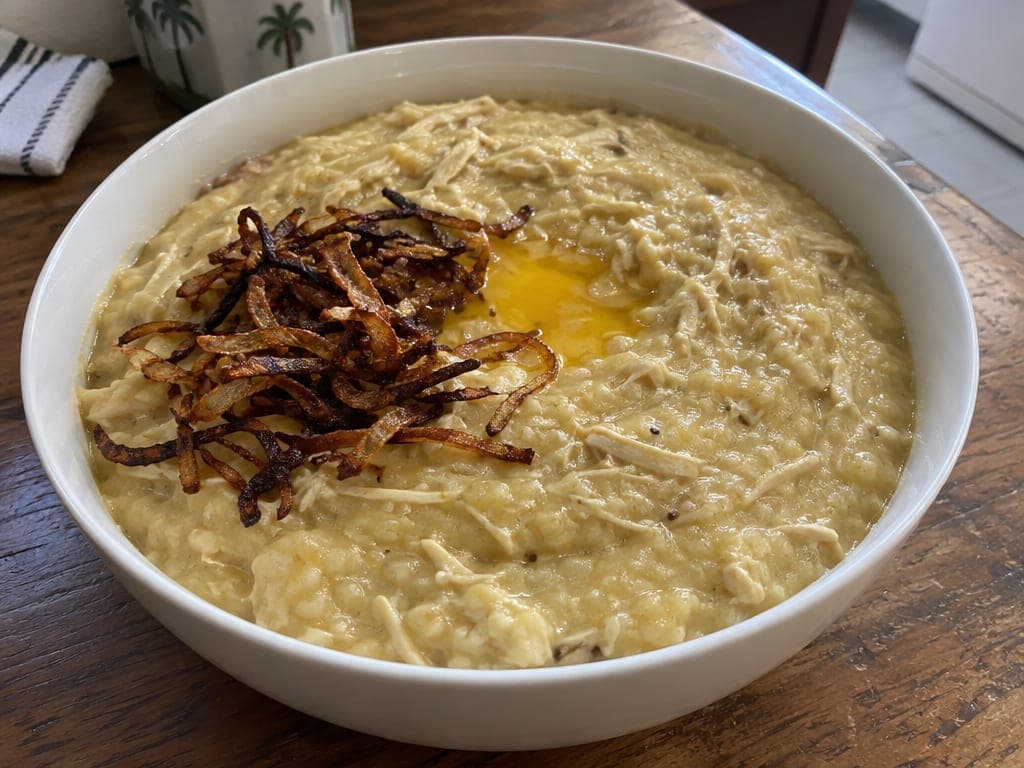
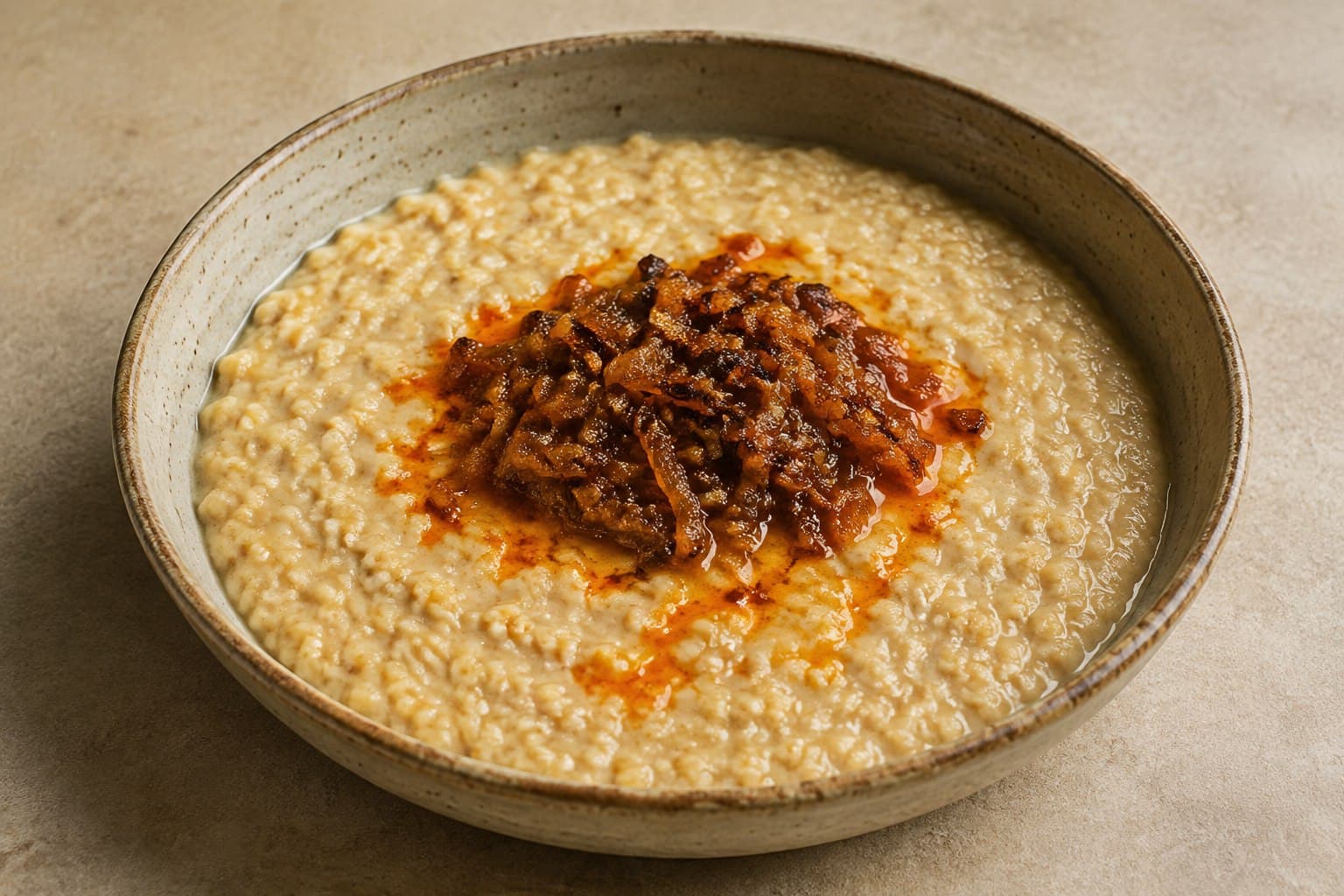
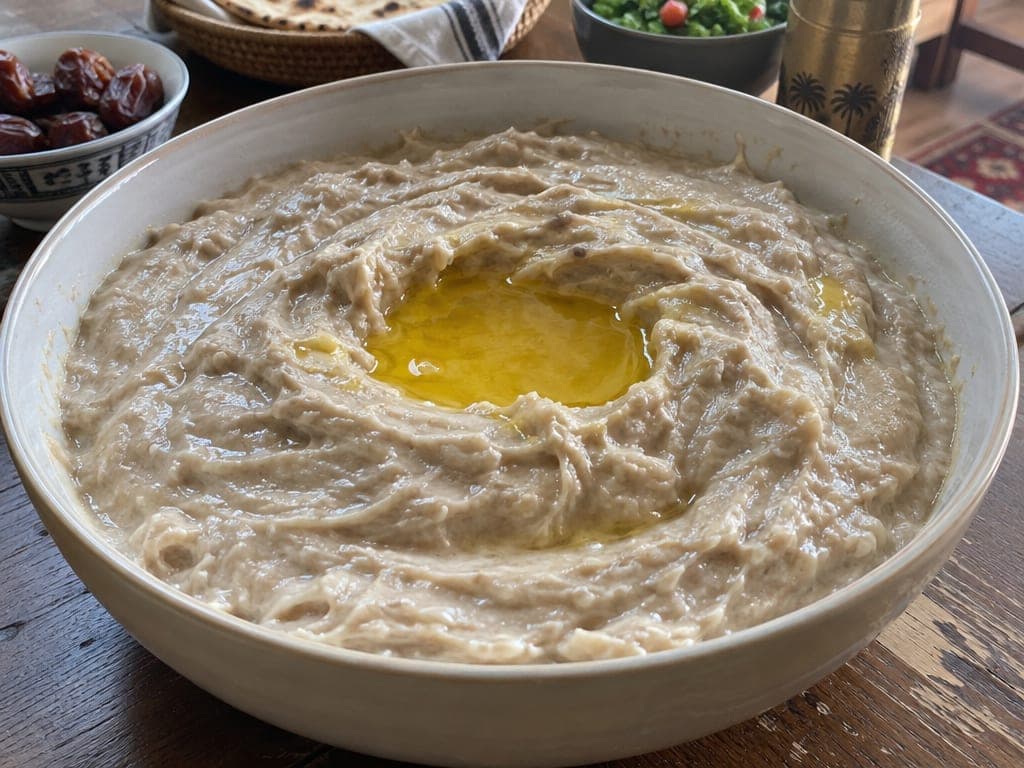
Whole wheat and lamb cooked slowly for hours with cinnamon until the grains burst, then beaten until smooth and stretchy and served with a pool of hot ghee. Harees is the dish of Ramadan and Eid across the Gulf.
- Prep:
- 15 minutes
- Cook:
- 3 hours and 30 minutes
- Waiting:
- 8 hours (Soak the wheat in water overnight, at least 8 hours.)
Method
Read the full method before starting. Cooking times are guides; check texture and doneness as you cook.
Shows the steps one at a time, with a timer for each timed step.
Saucepan or pot, Sharp knife and board
Measure, cut, and arrange every ingredient in order of use. Read the full method and keep finishing ingredients separate.
- 01
Soaking
8 hoursRinse the wheat and soak it in plenty of water overnight, at least 8 hours. Drain.
Success cueSwollen, soft grains.
- 02
Boiling
15 minutesHigh heatPut the lamb in a large heavy pot with the water and cinnamon sticks, bring to a boil and skim for 10 minutes.
Success cueA clear, gently boiling broth.
- 03
Slow cooking
3 hoursLow heatAdd the wheat and black pepper, cover and cook on the lowest heat for 3 hours, stirring every 30 minutes and adding hot water if it starts to catch.
Success cueBurst grains and meat falling off the bone.
Watch outStir to the bottom each time; harees burns easily.
- 04
Beating
15 minutesLow heatTake out the bones and cinnamon sticks, add the salt and beat the pot hard with a wooden spoon or a potato masher for 15 minutes until smooth and stretchy, with no whole grains left.
Success cueA smooth, elastic porridge that stretches from the spoon.
- 05
Serving
2 minutesSpoon the harees into bowls, make a well in the middle and fill it with hot ghee.
Success cueA pale porridge with a pool of golden ghee.
PlateMap is still in testing. Quantities and results may vary with ingredients and equipment. Please check food safety yourself, especially with meat and poultry.
Cooking tips
The long beating at the end, called madhrab in the Emirates, breaks the wheat and meat into one stretchy texture; it is not a step to rush.
- • A heat diffuser under the pot stops the bottom burning over the long cook.
- • Beat while it is hot; harees gets harder to smooth as it cools.
Common mistakes
- • Skipping the soak, so the wheat never fully bursts.
- • Cooking on medium heat, which burns the bottom long before the grains soften.
- • Salting at the start, which slows the wheat from softening.
Substitutions
- • Instead of lamb: bone-in chicken pieces, cooked for 2 hours
- • Instead of whole wheat grains: pearled wheat, soaked for 4 hours
Serving ideasServe hot with a sprinkle of sugar or cinnamon for those who like it, next to thareed and luqaimat.
Estimated nutrition per serving
Calculated estimate per serving from the listed quantities. Product choice and retained cooking fat affect the result; this is not a laboratory analysis.
- Calories
- ≈ 490
- Protein
- 24.2g
- Carbs
- 42.4g
- Fat
- 26.1g
Calculation source and assumptions
Values use USDA data and linked product labels, adjusted for edible quantities and base servings. Brands, ingredient varieties, and cooking methods can change the result.
Wheat / gluten, Milk
Compound ingredients vary by product; check labels and possible cross-contact.
Frequently Asked Questions
Is harees on the UNESCO list?
Yes. In 2023 the knowledge, customs and practices of harees were inscribed on UNESCO's intangible heritage list for the Emirates, Oman and Saudi Arabia.
Can I use a pressure cooker?
Yes. Cook the soaked wheat and lamb for 60 minutes under pressure, then beat as usual; the taste is a little lighter than the slow pot.
How is it different from jareesh?
Jareesh uses cracked wheat cooked with yogurt or broth into a soft, grainy porridge. Harees uses whole wheat beaten with meat until smooth and stretchy.
You May Also Love