 French
 Classic Crème Brûlée
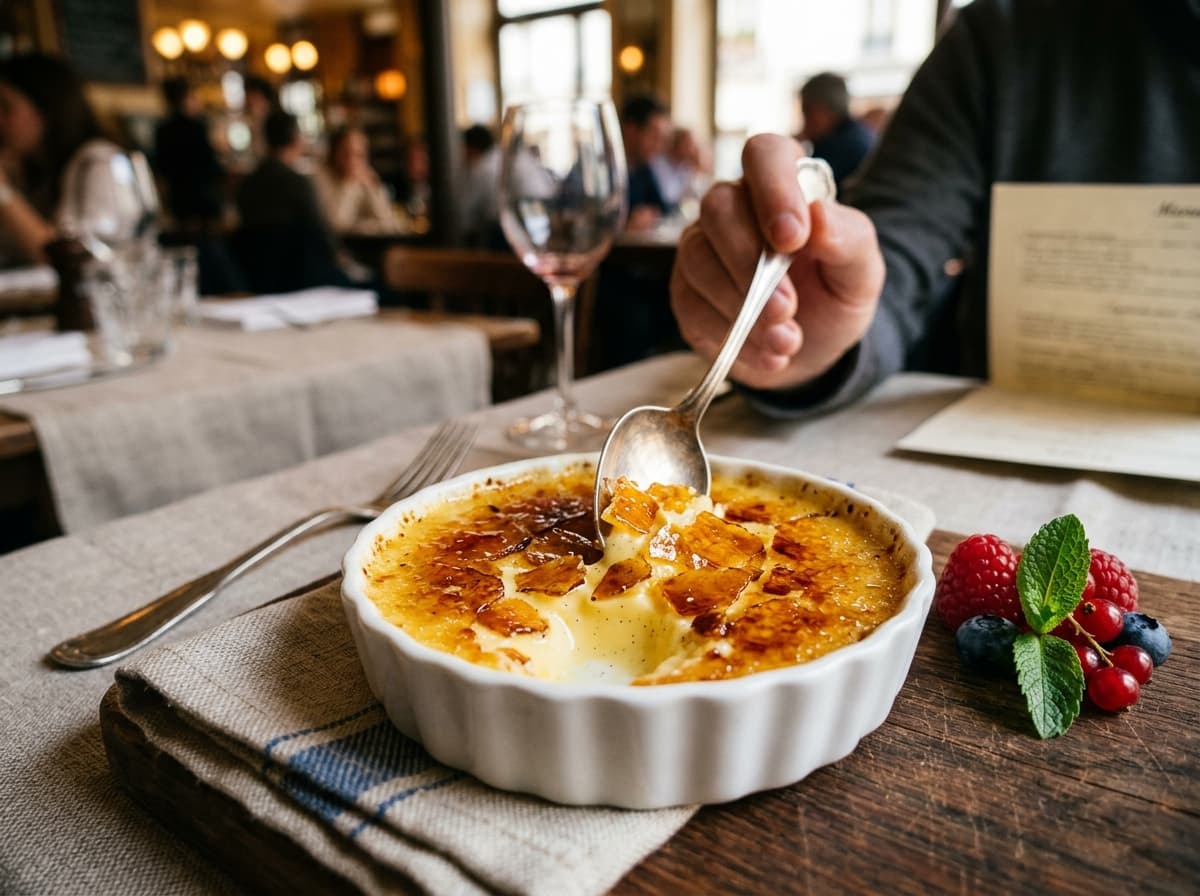
A chilled vanilla custard baked gently in a water bath and topped with a thin layer of sugar caramelised with a torch until it cracks under the spoon.
Makes: 4 shallow ramekins, about 150 ml each
- Prep:
- 20 minutes
- Cook:
- 50 minutes
- Waiting:
- 4 hours (chilling, 4 hours)
Method
Read the full method before starting. Cooking times are guides; check texture and doneness as you cook.
Shows the steps one at a time, with a timer for each timed step.
Heavy skillet, Oven and tray, Sharp knife and board
Measure, cut, and arrange every ingredient in order of use. Read the full method and keep finishing ingredients separate.
- 01
Infusing
19 minutesMedium heatSplit the vanilla bean, scrape the seeds into the cream and heat over medium heat for 4 minutes. Take it off the heat and leave for 15 minutes.
Success cueSmall bubbles appear at the edge, but it does not boil.
- 02
Oven
10 minutesOven heatHeat the oven to 150°C and boil a kettle of water.
Success cueThe oven is hot and the water is boiling.
- 03
Yolks
2 minutesWhisk the egg yolks with the sugar gently, without making foam.
Success cueThe sugar has dissolved and there is no foam.
- 04
Custard
3 minutesPour the warm cream slowly into the yolks while whisking gently, then strain through a fine sieve.
Success cueThe custard is smooth with no bubbles.
- 05
Water bath
3 minutesPour into shallow ramekins set in a baking pan and add boiling water to come halfway up their sides.
Success cueThe water reaches halfway up the ramekins.
- 06
Baking
32 minutesOven heatBake for 30 to 35 minutes.
Success cueThe edges are set and the center wobbles slightly.
- 07
Chilling
4 hoursLet cool, then refrigerate for 4 hours.
Success cueThe custard is cold and set.
- 08
Caramelizing
2 minutesSprinkle a thin layer of turbinado sugar over each custard and caramelize with a kitchen torch.
Success cueThe sugar has turned into a deep amber, glassy crust.
Watch outKeep the flame moving so the sugar does not burn.
PlateMap is still in testing. Quantities and results may vary with ingredients and equipment. Please check food safety yourself, especially with meat and poultry.
Cooking tips
Torch the sugar just before serving; the caramel softens as it sits on the cold custard.
- • Whisk gently without making froth; air bubbles leave the custard spongy instead of smooth.
Common mistakes
- • Whisking the yolks into a foam, which leaves bubbles on top.
- • Overbaking until the center is firm.
- • Burning the sugar hours before serving, so it turns soft.
Substitutions
- • Instead of vanilla bean: 1 teaspoon of vanilla paste or vanilla powder
- • Instead of turbinado sugar: fine white sugar, spread in a very thin layer
Serving ideasServe within 30 minutes of burning the sugar, with a few fresh berries on the side.
Estimated nutrition per serving
Calculated estimate per serving from the listed quantities. Product choice and retained cooking fat affect the result; this is not a laboratory analysis.
- Calories
- ≈ 605
- Protein
- 7.5g
- Carbs
- 29.4g
- Fat
- 51.7g
Calculation source and assumptions
Values use USDA data and linked product labels, adjusted for edible quantities and base servings. Brands, ingredient varieties, and cooking methods can change the result.
Milk, Egg
Compound ingredients vary by product; check labels and possible cross-contact.
Frequently Asked Questions
Can I make crème brûlée ahead?
Yes. The baked custards keep for up to 3 days, covered, in the fridge. Add and burn the sugar only just before serving.
Can I caramelize the sugar without a torch?
Yes. Put the very cold custards under the oven grill on its highest setting, close to the element, for 1 to 3 minutes and watch them closely.
Why is my custard runny or grainy?
Runny means it was underbaked: the center should wobble like jelly, not slosh. Grainy means the oven was too hot or the water bath was missing.
Why bake in a water bath?
The water keeps the heat around the ramekins gentle and even, so the custard sets smooth instead of curdling at the edges.
You May Also Love