 Levantine
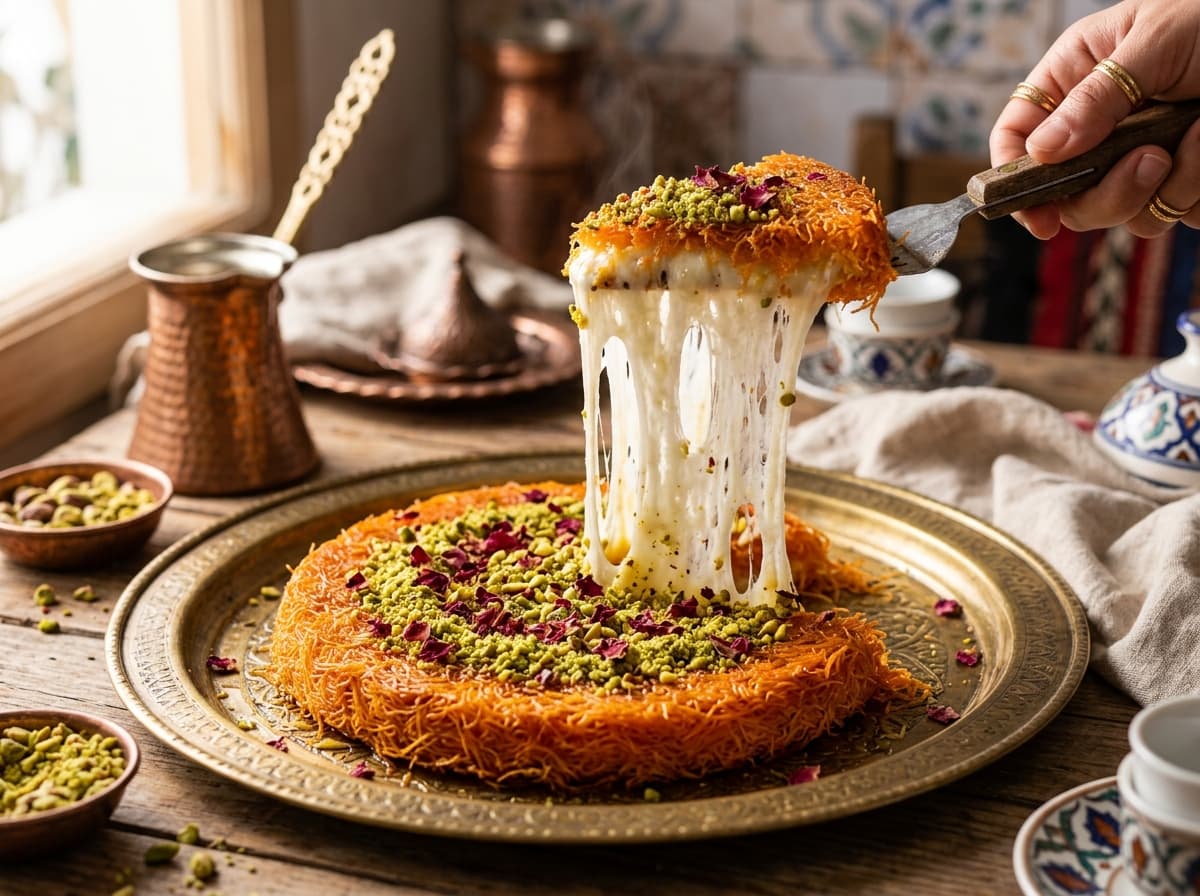
Golden Kunafa Nabulsia with Sweet Cheese
Nablus-style pastry: crisp golden kataifi baked in ghee over melted sweet Akkawi cheese, soaked in orange blossom syrup and topped with pistachios.
- Prep:
- 20 minutes
- Cook:
- 35 minutes
- Waiting:
- 6 hours (desalting the cheese, 6 hours)
Method
Read the full method before starting. Cooking times are guides; check texture and doneness as you cook.
Shows the steps one at a time, with a timer for each timed step.
Heavy skillet, Oven and tray, Sharp knife and board
Measure, cut, and arrange every ingredient in order of use. Read the full method and keep finishing ingredients separate.
- 01
Syrup
10 minutesGentle simmerBoil the sugar and water, then simmer over medium-low heat for 8 to 10 minutes, adding the lemon juice in the last 2 minutes. Off the heat, stir in the orange blossom water and let it cool completely.
Success cueThe syrup is slightly thick and coats a spoon.
- 02
Desalting
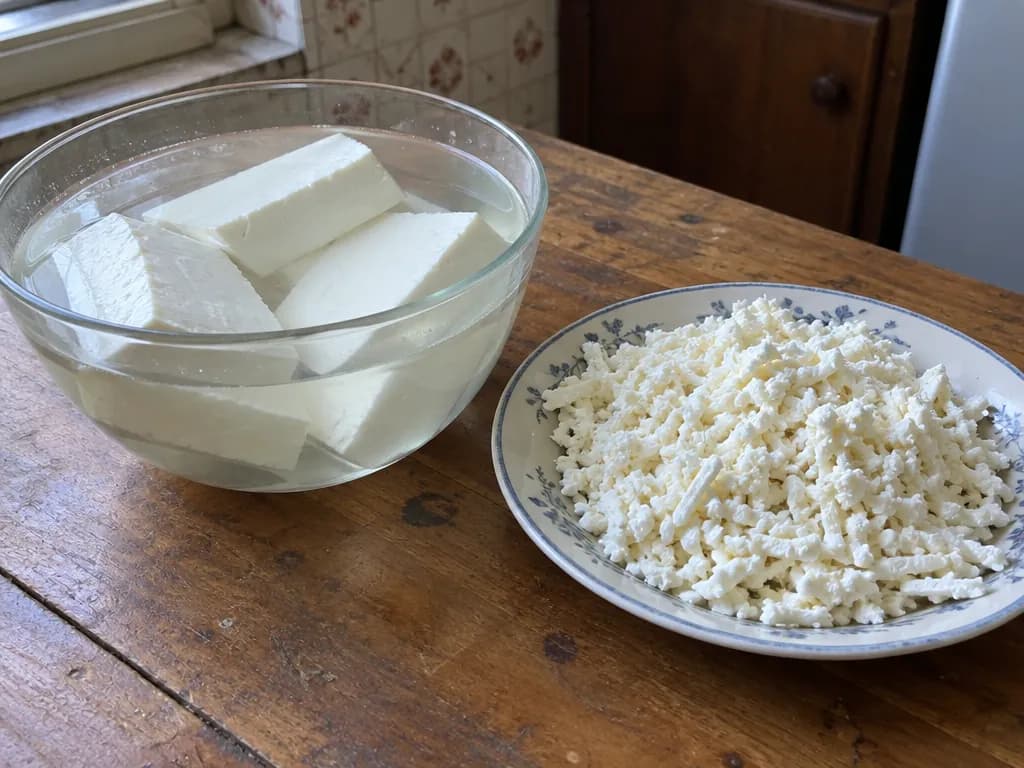
6 hoursSlice the cheese and soak it in cold water for 6 hours, changing the water every hour. Drain, pat dry and shred.
Show photoHide photo
 Success cue
The cheese tastes mild, not salty.
- 03
Kataifi
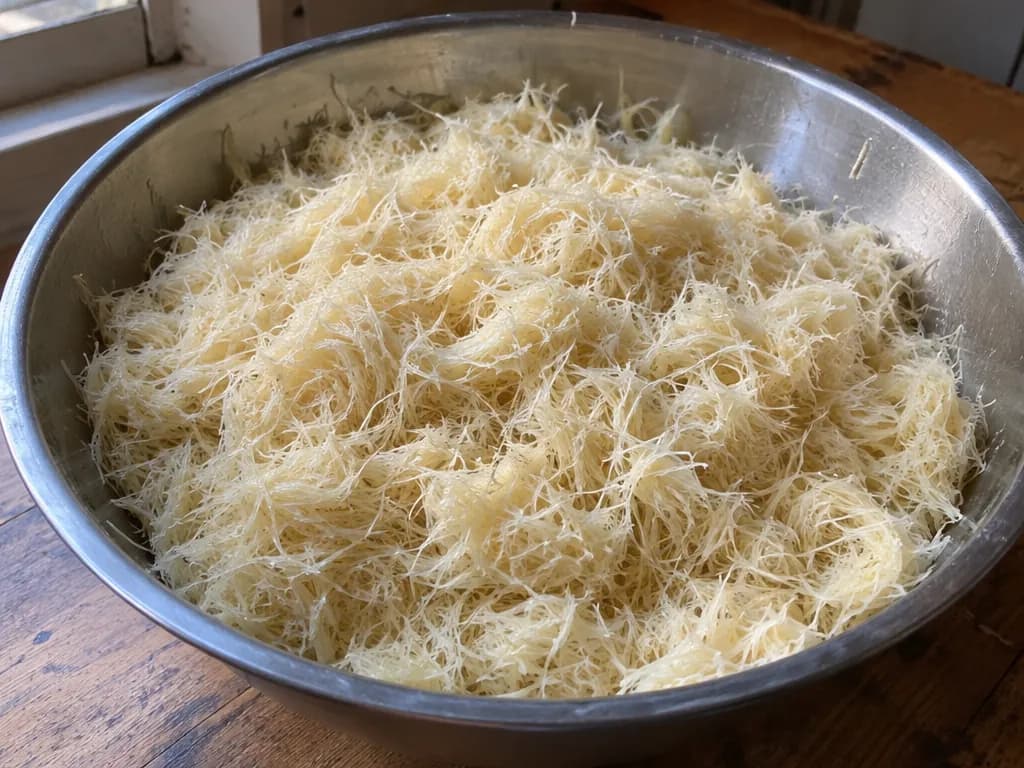
5 minutesChop the kataifi finely and rub it with the melted ghee, keeping 2 tablespoons for the pan, until every strand is coated.
Show photoHide photo
 Success cue
Every strand is shiny with ghee.
- 04
Layers
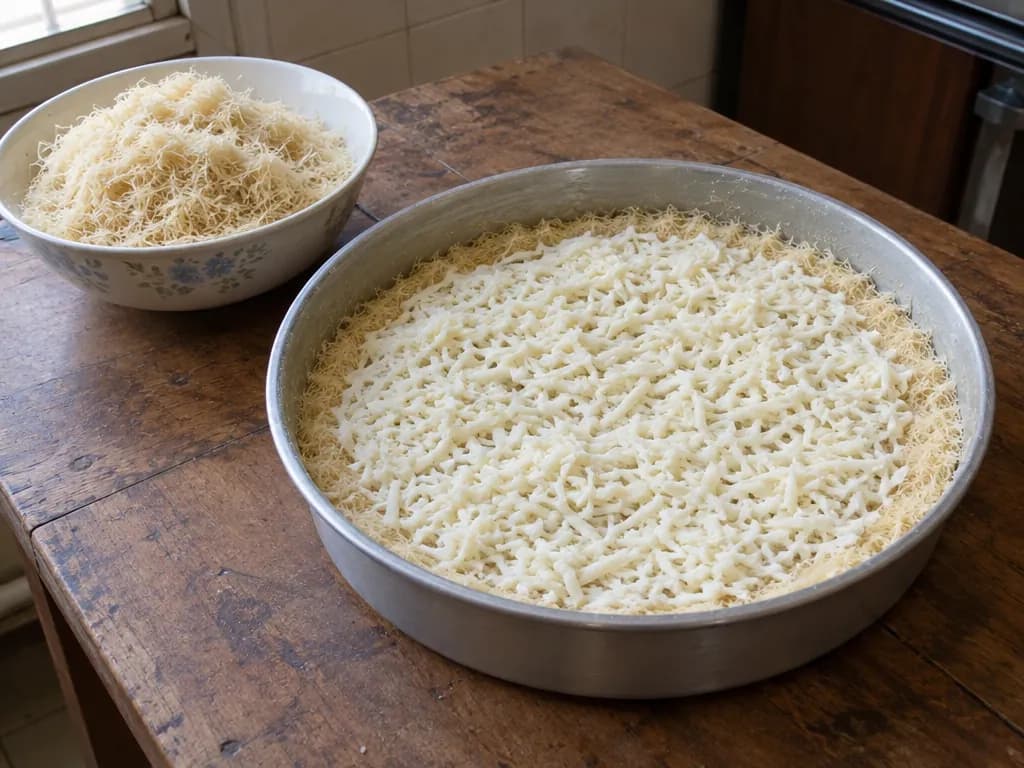
5 minutesGrease a round pan with the kept ghee and press two thirds of the kataifi firmly into it. Spread the cheese, leaving 1 cm free at the edge, then cover with the rest of the kataifi and press lightly.
Show photoHide photo
 Success cue
The layers are even and firmly pressed.
- 05
Baking
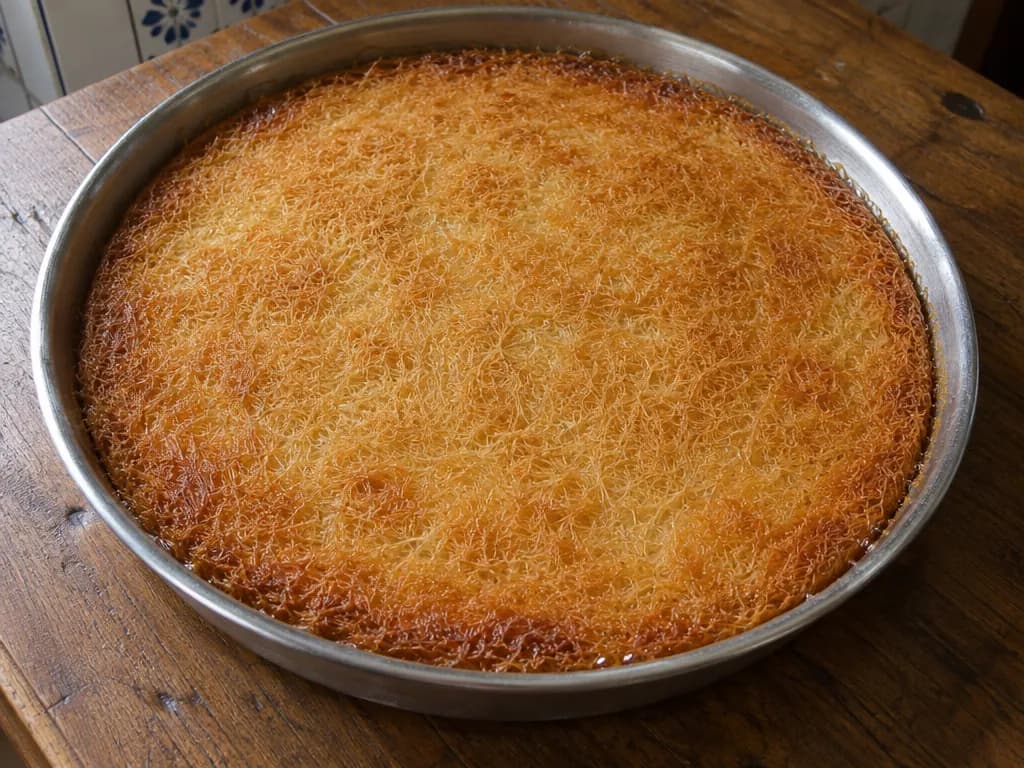
25 minutesOven heatBake at 200°C for 25 minutes.
Show photoHide photo
 Success cue
The edges are deep golden and pull away from the pan.
- 06
Serve
2 minutesTurn the kunafa onto a serving plate straight away, pour two thirds of the cool syrup over it while it is hot, and sprinkle with the pistachios. Serve the rest of the syrup on the side.
Success cueThe syrup sizzles and is absorbed quickly.
PlateMap is still in testing. Quantities and results may vary with ingredients and equipment. Please check food safety yourself, especially with meat and poultry.
Cooking tips
Press the bottom layer firmly and evenly: once the kunafa is turned out it becomes the top, and a well-pressed layer bakes into the smooth golden crust Nablus kunafa is known for.
- • Soak the cheese until the salt is gone completely; that is what keeps it mild and soft once it melts.
Common mistakes
- • Pouring hot syrup over the hot kunafa, which makes it soggy; the syrup must be cool.
- • Leaving the soaked cheese wet; dry it well on a towel, or the water turns the bottom layer soggy.
- • Leaving some kataifi without ghee, so it bakes pale in patches.
- • Spreading the cheese right to the edge, where it leaks and burns.
Substitutions
- • Instead of akkawi cheese: fresh mozzarella mixed half and half with ricotta; it is not salty, so skip the 6-hour soak
- • Instead of orange blossom water: rose water, or leave it out
Serving ideasServe warm, within 15 minutes of baking, with the rest of the syrup on the side and unsweetened Arabic coffee or tea.
Estimated nutrition per serving
Calculated estimate per serving from the listed quantities. Product choice and retained cooking fat affect the result; this is not a laboratory analysis.
- Calories
- ≈ 790
- Protein
- 20.9g
- Carbs
- 72.3g
- Fat
- 45.4g
Calculation source and assumptions
Values use USDA data and linked product labels, adjusted for edible quantities and base servings. Brands, ingredient varieties, and cooking methods can change the result.
Milk, Wheat / gluten, Tree nuts
Compound ingredients vary by product; check labels and possible cross-contact.
Frequently Asked Questions
Which cheese is traditional for kunafa nabulsia?
In Nablus the classic choice is Nabulsi cheese, a white brined cheese boiled with mahlab and mastic. Akkawi is the usual alternative outside Nablus. Both are salty and must be soaked; what matters is a cheese that melts and stretches once the salt is out.
What is the difference between khishneh and na'meh kunafa?
Khishneh (coarse) uses shredded kataifi, as in this recipe, and bakes into a crunchy, stranded crust. Na'meh (fine) uses the dough ground to fine crumbs, which bakes into a smooth, even layer. The cheese and syrup stay the same.
Why is bakery kunafa bright orange?
Most bakeries add a few drops of orange food colouring to the ghee. At home the colour comes from baking in ghee until deep golden; add colouring only if you want the bakery look.
Can I make kunafa ahead?
Assemble it up to the baking stage, cover and refrigerate for up to 1 day, then bake it for 5 minutes longer. Baked kunafa is best warm on the day; leftovers keep 2 days in the fridge and should be reheated in a 180°C oven for 10 minutes so the cheese melts again.
Why is my kunafa salty or the cheese rubbery?
The cheese was not soaked long enough or the water was not changed. After soaking, taste a piece: it should taste mild, not salty.
You May Also Love