 Asian
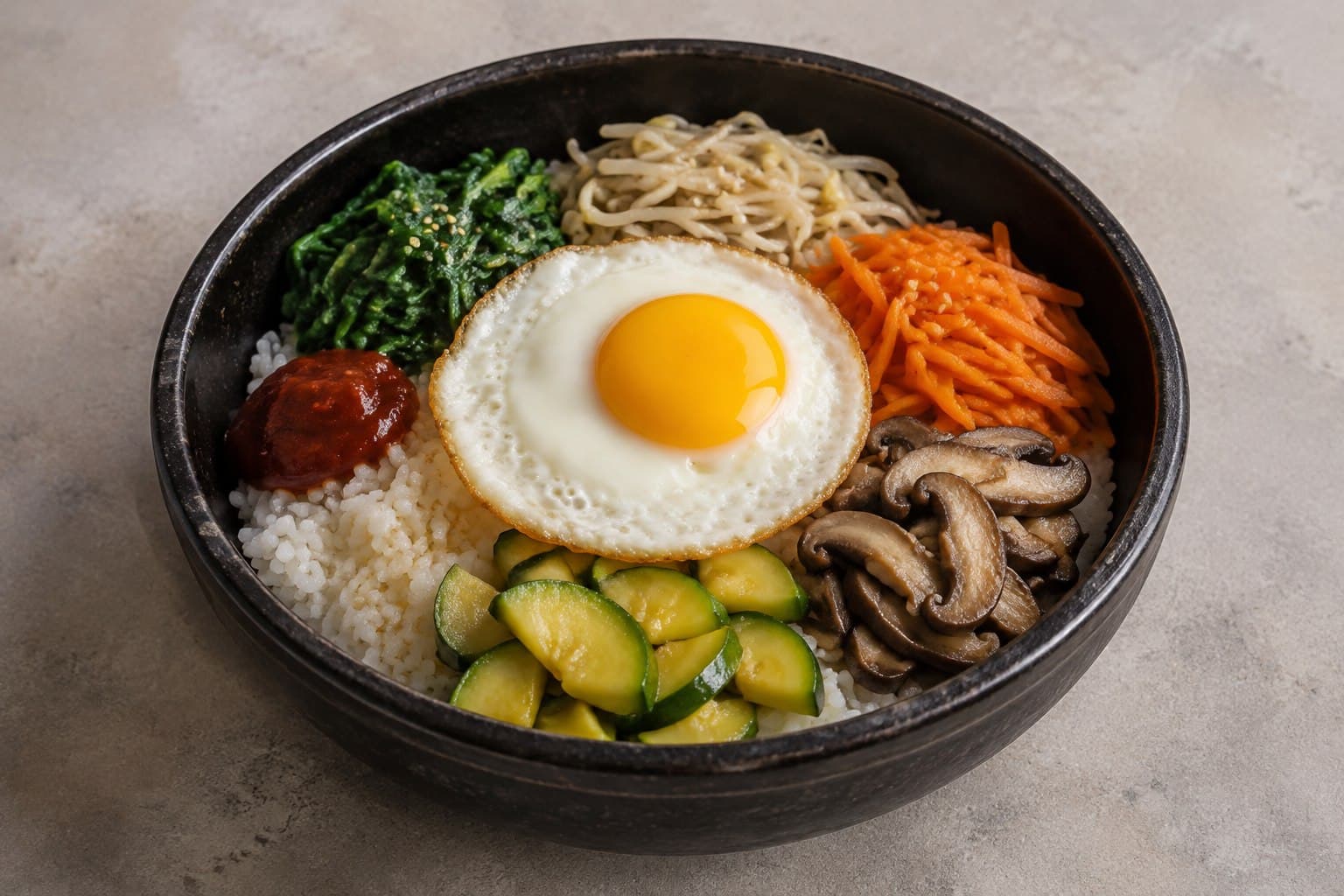
Korean Stone-Bowl Bibimbap
Steaming rice topped with individually seasoned vegetables, mushrooms, a fried egg and spicy-sweet gochujang, mixed at the table.
Method
Read the full method before starting. Cooking times are guides; check texture and doneness as you cook.
Shows the steps one at a time, with a timer for each timed step.
Heavy skillet, Sharp knife and board
Measure, cut, and arrange every ingredient in order of use. Read the full method and keep finishing ingredients separate.
- 01
Rice
25 minutesLow heatRinse the rice until the water is nearly clear. Bring it to a boil with 400 ml of the water, cover and cook on low heat for 15 minutes, then rest covered for 10 minutes.
Success cueThe water is absorbed and the grains are tender and sticky.
- 02
Sauce
2 minutesMix the gochujang with 1 tablespoon of the sesame oil, the rice vinegar, the sugar and 1 tablespoon of water.
Success cueThe sauce is smooth and spoonable.
- 03
Blanching
6 minutesHigh heatBlanch the bean sprouts for 3 minutes and the spinach for 30 seconds in boiling salted water. Squeeze dry and season each separately with a little sesame oil and salt.
Success cueThe sprouts are tender but crisp and the spinach is bright green.
- 04
Vegetables
6 minutesHigh heatCut the carrot and zucchini into thin sticks and stir-fry each separately in a little oil over medium-high heat for 2 to 3 minutes. Season with salt.
Success cueThey are tender but keep their color.
- 05
Mushrooms
4 minutesHigh heatSlice the shiitake mushrooms and brown them in a little oil for 4 minutes.
Success cueThe mushrooms are browned at the edges.
- 06
Crisp rice
5 minutesMedium heatBrush a stone bowl or heavy pan with the remaining sesame oil, press in the hot rice and cook over medium heat for 5 minutes without stirring.
Success cueThe rice crackles and a golden crust forms underneath.
- 07
Eggs
3 minutesMedium heatMeanwhile, fry the eggs in a little oil over medium heat for 3 minutes.
Success cueThe whites are set and the yolks runny.
- 08
Assembly
3 minutesArrange the vegetables and mushrooms over the rice in separate sections, top with the eggs and serve with the sauce. Mix everything just before eating.
Success cueEach topping sits in its own section.
PlateMap is still in testing. Quantities and results may vary with ingredients and equipment. Please check food safety yourself, especially with meat and poultry.
Cooking tips
A spoonful of water in the gochujang sauce helps it coat every grain instead of sitting in one spicy clump.
- • Season every vegetable separately so each keeps its own taste.
- • Leave the rice untouched while its crust forms.
Common mistakes
- • Leaving water in the blanched spinach and bean sprouts, which waters down the bowl.
- • Stirring the rice in the hot bowl, so the crisp crust never forms.
- • Overcooking the egg; the runny yolk is part of the sauce when everything is mixed.
Substitutions
- • Instead of gochujang: chili paste or sriracha with a little miso and sugar
- • Instead of shiitake mushrooms: any brown mushrooms
Serving ideasServe with kimchi and the gochujang sauce on the side, and mix everything at the table.
Estimated nutrition per serving
Calculated estimate per serving from the listed quantities. Product choice and retained cooking fat affect the result; this is not a laboratory analysis.
- Calories
- ≈ 525
- Protein
- 16.8g
- Carbs
- 84.9g
- Fat
- 13.4g
Calculation source and assumptions
Values use USDA data and linked product labels, adjusted for edible quantities and base servings. Brands, ingredient varieties, and cooking methods can change the result.
Egg, Wheat / gluten, Soy, Sesame
Compound ingredients vary by product; check labels and possible cross-contact.
Frequently Asked Questions
Do I need a stone bowl?
No. The stone bowl (dolsot) makes the crisp rice crust at the bottom; a heavy cast-iron pan does the same. Without either, serve the rice in plain bowls; it is still bibimbap, just without the crust.
How spicy is gochujang?
It is a fermented chili paste that is both spicy and slightly sweet. Heat varies by brand, from mild to very hot, so add the sauce at the table to taste.
Can I add meat?
Yes. Thinly sliced beef marinated in soy sauce, sugar, garlic and sesame oil and stir-fried for 2 to 3 minutes is the classic addition.
Why season each vegetable separately?
Each one keeps its own taste and texture, so every mouthful changes. Cooking them together would turn everything the same colour and flavour.
You May Also Love