 Asian
Indonesian Slow-Cooked Beef Rendang
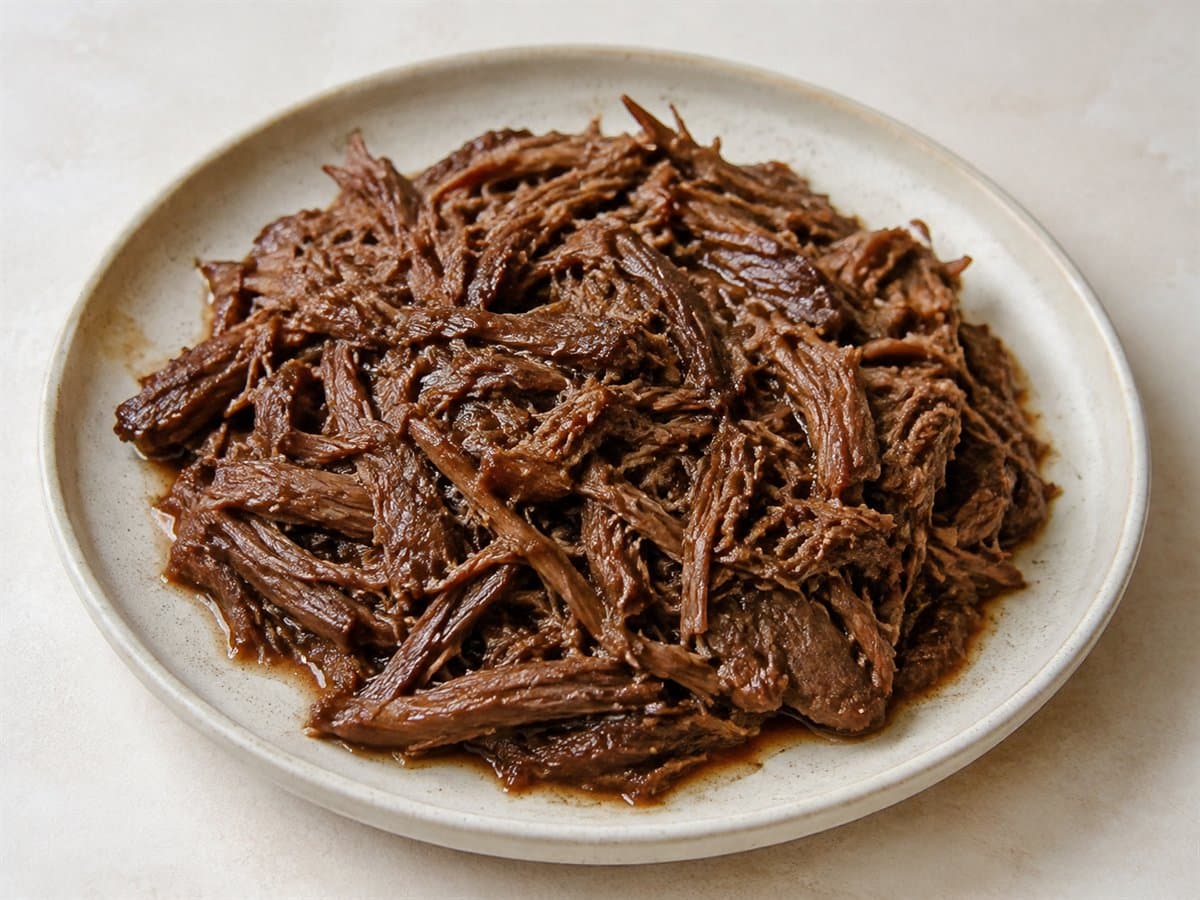
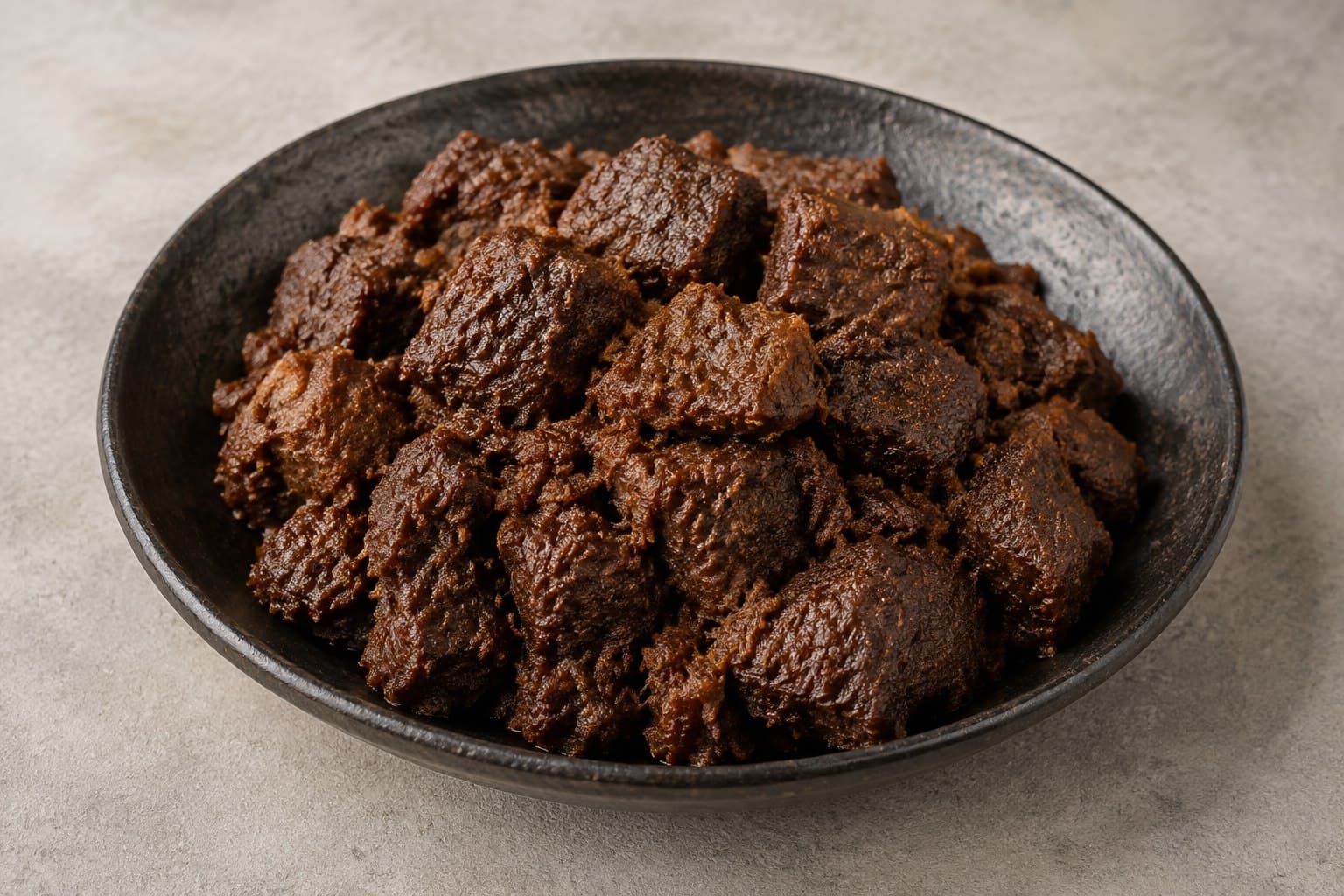
Beef slowly reduced in coconut milk and fresh spice paste until the liquid disappears and every piece is coated in dark caramelized seasoning.
- Prep:
- 25 minutes
- Cook:
- 2 hours and 50 minutes
- Waiting:
- 20 minutes (resting before serving, 20 minutes)
Method
Read the full method before starting. Cooking times are guides; check texture and doneness as you cook.
Shows the steps one at a time, with a timer for each timed step.
Saucepan or pot, Sharp knife and board
Measure, cut, and arrange every ingredient in order of use. Read the full method and keep finishing ingredients separate.
- 01
Spice paste
10 minutesBlend the chilies, shallots, garlic, galangal and ginger with the water, the turmeric and the ground coriander into a smooth paste.
Success cueSmooth, with no large pieces.
- 02
Aromatics
8 minutesMedium heatHeat the oil in a wide heavy pot over medium heat and fry the paste with the bruised lemongrass, the lime leaves, the cinnamon stick, the star anise and 4 cloves for 8 minutes.
Success cueThe raw smell is gone and the paste darkens.
- 03
Simmering
1 hour and 30 minutesGentle simmerAdd the beef, coconut milk, toasted coconut, tamarind, palm sugar and salt, bring just to a simmer and cook uncovered for 90 minutes, stirring now and then.
Success cueThe beef is tender and the sauce has reduced by half.
- 04
Reducing
30 minutesLow heatLower the heat and keep cooking for about 30 minutes, stirring more often as the sauce thickens.
Success cueThe sauce is thick and the coconut solids start to brown.
- 05
Frying stage
42 minutesLow heatStir constantly for 35 to 50 minutes until the oil separates and the paste fries onto the beef.
Success cueDeep brown and nearly dry, with oil around the pieces.
Watch outIt catches easily now; do not leave the pot.
- 06
Resting
20 minutesTaste and adjust the salt, remove the lemongrass, lime leaves, cinnamon stick and star anise, and rest for 20 minutes.
Success cueThe coating clings to every piece.
PlateMap is still in testing. Quantities and results may vary with ingredients and equipment. Please check food safety yourself, especially with meat and poultry.
Cooking tips
Rendang is done after the sauce becomes a coating; stopping while it is still a curry misses its toasted flavor.
- • Use a wide pot so the liquid evaporates evenly.
- • Stir constantly only in the final dry stage, when the paste starts to fry.
Common mistakes
- • Covering the pot, which stops the liquid evaporating.
- • Walking away in the last stage, when the paste can burn within minutes.
- • Stopping while the sauce is still wet, which leaves a curry without rendang's toasted flavour.
Substitutions
- • Instead of galangal: extra ginger; the taste is warmer and less citrusy
- • Instead of shallots: red onion
Serving ideasServe at room temperature or warm with steamed rice, cucumber slices and sambal.
Estimated nutrition per serving
Calculated estimate per serving from the listed quantities. Product choice and retained cooking fat affect the result; this is not a laboratory analysis.
- Calories
- ≈ 880
- Protein
- 44.8g
- Carbs
- 25.8g
- Fat
- 70.7g
Calculation source and assumptions
Values use USDA data and linked product labels, adjusted for edible quantities and base servings. Brands, ingredient varieties, and cooking methods can change the result.
Check ingredient labels
Compound ingredients vary by product; check labels and possible cross-contact.
Frequently Asked Questions
Is rendang a curry?
It starts like one but ends dry. Rendang comes from the Minangkabau people of West Sumatra, and the beef is cooked until the coconut milk evaporates and the paste fries onto the meat. Wetter versions are called kalio.
Why does it take so long?
The coconut milk has to reduce completely and its oil has to separate before the spices can fry and darken. Rushing it on high heat burns the paste before the beef is tender.
How spicy is rendang?
Medium to hot, depending on the chilies. For a milder version, seed half of them before blending.
How long does rendang keep?
Because it is cooked dry, it keeps well: up to 5 days in the fridge and 3 months in the freezer. Its flavour deepens after a day.
Can I use ready-made rendang paste?
Yes, but check the label: some brands add shrimp paste, fish sauce or candlenuts, which this homemade paste does not have. The recipe as written contains no fish, shellfish, dairy or nuts.
You May Also Love