 Middle Eastern
Saudi Hininy (Dates with Crumbled Wheat Bread and Butter)
Thin whole wheat breads cooked on a griddle, crumbled and cooked slowly with soft dates, butter and cardamom until they bind into a warm, sweet, crumbly dish. A Najdi favourite for winter mornings and Ramadan.
Method
Read the full method before starting. Cooking times are guides; check texture and doneness as you cook.
Shows the steps one at a time, with a timer for each timed step.
Heavy skillet, Saucepan or pot, Blender or processor, Sharp knife and board
Measure, cut, and arrange every ingredient in order of use. Read the full method and keep finishing ingredients separate.
- 01
Dough
12 minutesMix the flour and salt with the water and knead for 5 minutes into a firm dough. Divide it into 4 pieces and roll each into a 3 mm disc.
Success cueFour thin, even discs.
- 02
Breads
28 minutesMedium heatCook the discs one at a time in a dry pan over medium heat, 3 to 4 minutes per side, until dry and spotted brown.
Success cueDry breads with brown spots.
- 03
Crumbs
5 minutesBreak the breads up and pulse them in a food processor into coarse crumbs.
Success cueCoarse, even crumbs.
- 04
Dates
5 minutesLow heatMelt half of the butter in a wide pan over low heat, add the chopped dates and mash them for 5 minutes into a soft paste.
Success cueA soft, glossy date paste.
- 05
Cooking
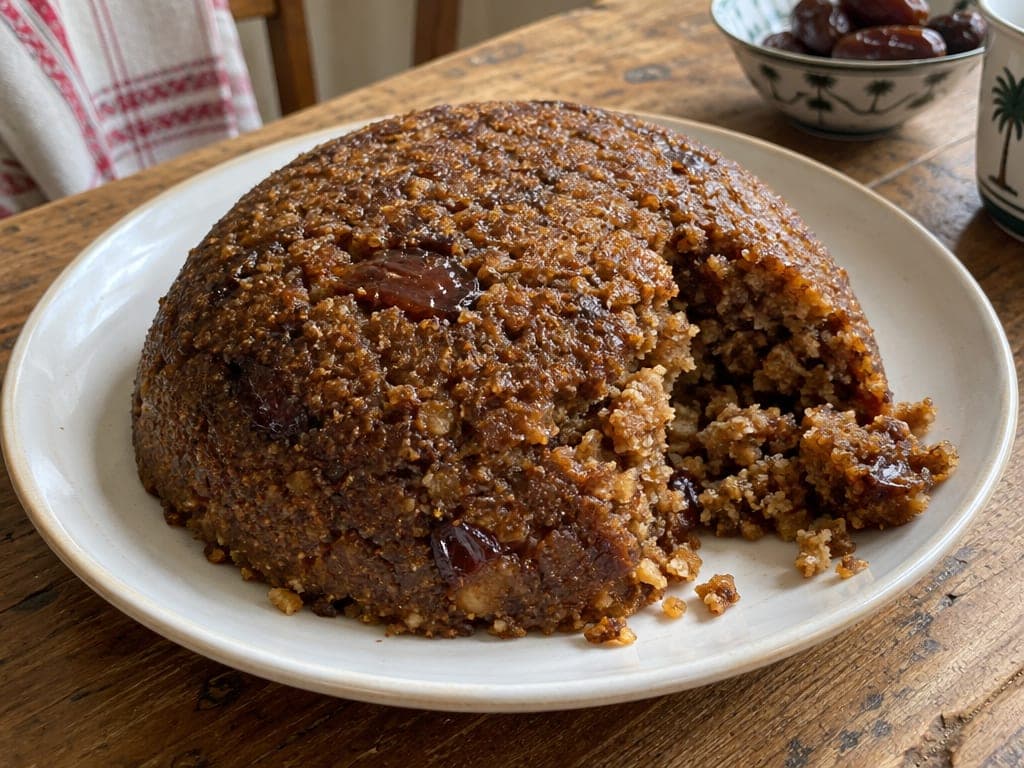
30 minutesLow heatAdd the crumbs, the cardamom and the rest of the butter and cook on the lowest heat for 30 minutes, stirring and pressing every 5 minutes, until everything binds and smells of toasted bread.
Success cueMoist crumbs that hold together when pressed.
- 06
Serving
2 minutesPress the hininy into a bowl, turn it out onto a plate and serve warm.
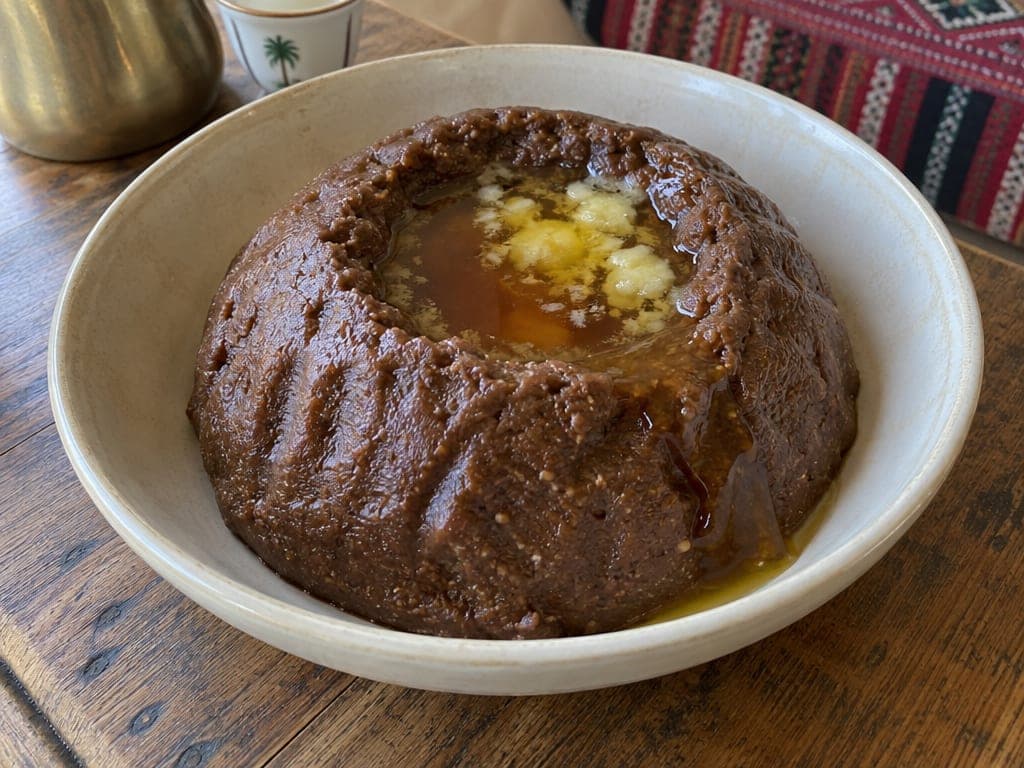
Success cueA warm, dark dome that holds its shape.
PlateMap is still in testing. Quantities and results may vary with ingredients and equipment. Please check food safety yourself, especially with meat and poultry.
Cooking tips
Cooking the breads until really dry gives crumbs that drink up the butter and dates without turning to paste.
- • Use the softest dates you have; dry dates will not melt into the crumbs.
- • Keep the heat at its lowest so the butter browns slowly without burning.
Common mistakes
- • Cooking on medium heat, so the dates scorch.
- • Grinding the bread to a fine powder, which makes a heavy paste.
Substitutions
- • Instead of butter: ghee
- • Instead of whole wheat flour: ready-made thin whole wheat bread, dried in the oven
Serving ideasServe warm with milk, laban or Arabic coffee.
Estimated nutrition per serving
Calculated estimate per serving from the listed quantities. Product choice and retained cooking fat affect the result; this is not a laboratory analysis.
- Calories
- ≈ 360
- Protein
- 7.0g
- Carbs
- 60.7g
- Fat
- 12.4g
Calculation source and assumptions
Values use USDA data and linked product labels, adjusted for edible quantities and base servings. Brands, ingredient varieties, and cooking methods can change the result.
Wheat / gluten, Milk
Compound ingredients vary by product; check labels and possible cross-contact.
Frequently Asked Questions
When is hininy eaten?
It is a Najdi winter dish, eaten warm at breakfast or after iftar in Ramadan, often with a glass of milk or yogurt.
Can I add saffron or fennel?
Yes. Some families add a pinch of saffron or ground fennel with the cardamom; keep the amounts small so the dates lead.
How is it different from areeka?
Hininy stays as moist crumbs bound with dates, while areeka is kneaded into a smooth dough and served with a well of ghee and honey.