 American
Cast Iron Ribeye Steak with Garlic Herb Butter
A thick ribeye seared in cast iron until deeply browned, then basted with foaming garlic, rosemary and thyme butter.
- Prep:
- 5 minutes
- Cook:
- 20 minutes
- Waiting:
- 45 minutes (bringing the steak to room temperature, 45 minutes)
Method
Read the full method before starting. Cooking times are guides; check texture and doneness as you cook.
Shows the steps one at a time, with a timer for each timed step.
Heavy skillet, Tongs and thermometer, Sharp knife and board
Measure, cut, and arrange every ingredient in order of use. Read the full method and keep finishing ingredients separate.
- 01
Tempering
45 minutesTake the steak out of the fridge 45 minutes before cooking. Pat it dry and season generously with the coarse salt and black pepper.
Success cueThe surface is dry and the steak no longer feels cold.
- 02
Heating
5 minutesHigh heatHeat a cast-iron pan with 1 teaspoon of oil over high heat for 4 to 5 minutes.
Success cueA wisp of smoke rises from the pan.
- 03
Searing
5 minutesHigh heatSear the steak for 2½ minutes per side without moving it.
Success cueA deep brown crust covers both sides.
- 04
Butter
1 minuteMedium heatLower the heat to medium and add the cold butter, the crushed garlic cloves, the rosemary and the thyme.
Success cueThe butter melts and foams.
- 05
Basting
2 minutesMedium heatTilt the pan and spoon the foaming butter over the steak for 2 minutes.
Success cueThe center reaches 52°C for medium rare or 57°C for medium.
Watch outIf the butter turns dark brown, lower the heat.
- 06
Serve
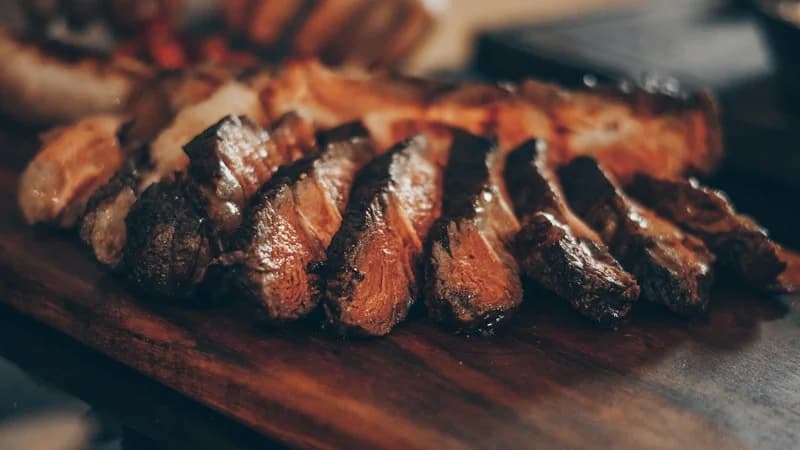
7 minutesRest the steak on a board for 7 minutes, then slice it across the grain.
Success cueOnly a little juice runs onto the board when you slice.
PlateMap is still in testing. Quantities and results may vary with ingredients and equipment. Please check food safety yourself, especially with meat and poultry.
Cooking tips
Basting with foaming butter browns its milk solids for a nutty flavour and gently cooks the top of the steak while the bottom sears. It does not 'seal in' the juices; resting does more for that.
- • Rest the cooked steak for 7 minutes so the juices settle and less runs out when you slice it.
Common mistakes
- • Searing a wet steak, so no crust forms.
- • Moving the steak during the first sear.
- • Slicing it straight away or along the grain.
Substitutions
- • Instead of ribeye: sirloin (strip) or rump steak of the same thickness
- • Instead of butter: ghee, which burns less at high heat
Serving ideasServe with roasted potatoes or a green salad, and spoon the garlic butter from the pan over the slices.
Estimated nutrition per serving
Calculated estimate per serving from the listed quantities. Product choice and retained cooking fat affect the result; this is not a laboratory analysis.
- Calories
- ≈ 925
- Protein
- 57.3g
- Carbs
- 6.0g
- Fat
- 75.9g
Calculation source and assumptions
Values use USDA data and linked product labels, adjusted for edible quantities and base servings. Brands, ingredient varieties, and cooking methods can change the result.
Milk
Compound ingredients vary by product; check labels and possible cross-contact.
Frequently Asked Questions
How do I know when it is done?
Use a thermometer in the thickest part after resting: 50°C for rare, 55°C for medium rare and 60°C for medium. The times here give medium rare for a 2.5 cm steak.
My steak is thicker. What changes?
Add about 1 minute per side for each extra centimetre, and check with the thermometer.
How do I store leftover steak?
Refrigerate for up to 3 days. Slice it cold for sandwiches or warm it for a minute in a hot pan.
You May Also Love