 Levantine
Jordanian Shrak (Thin Bread on an Upturned Wok)
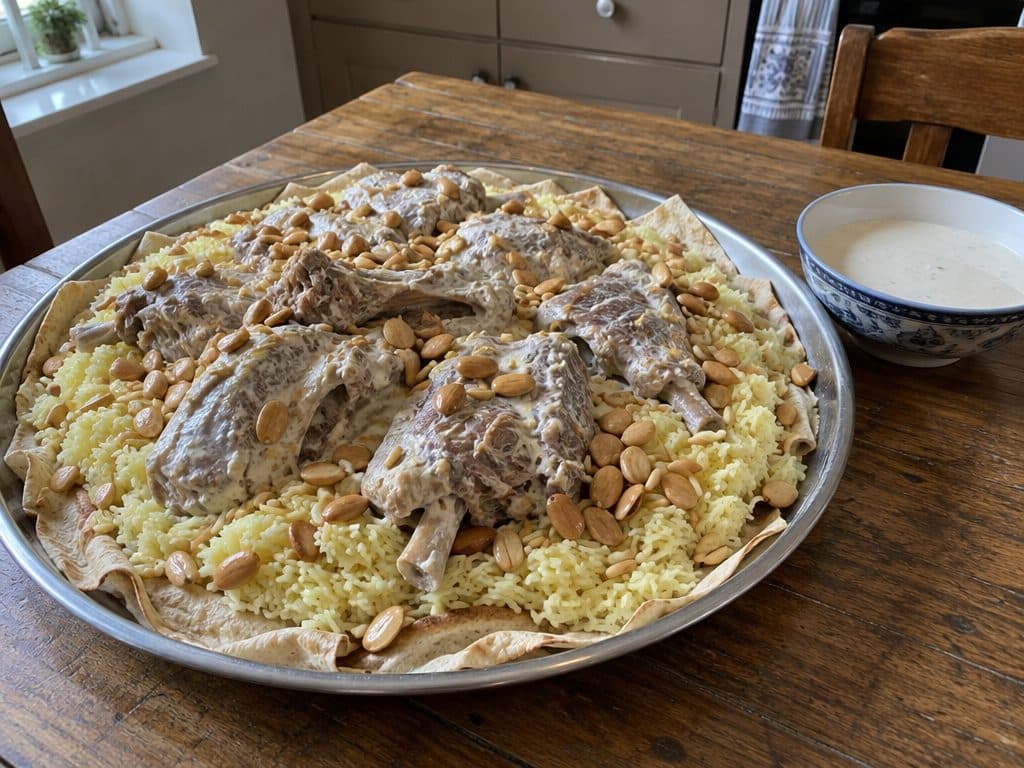
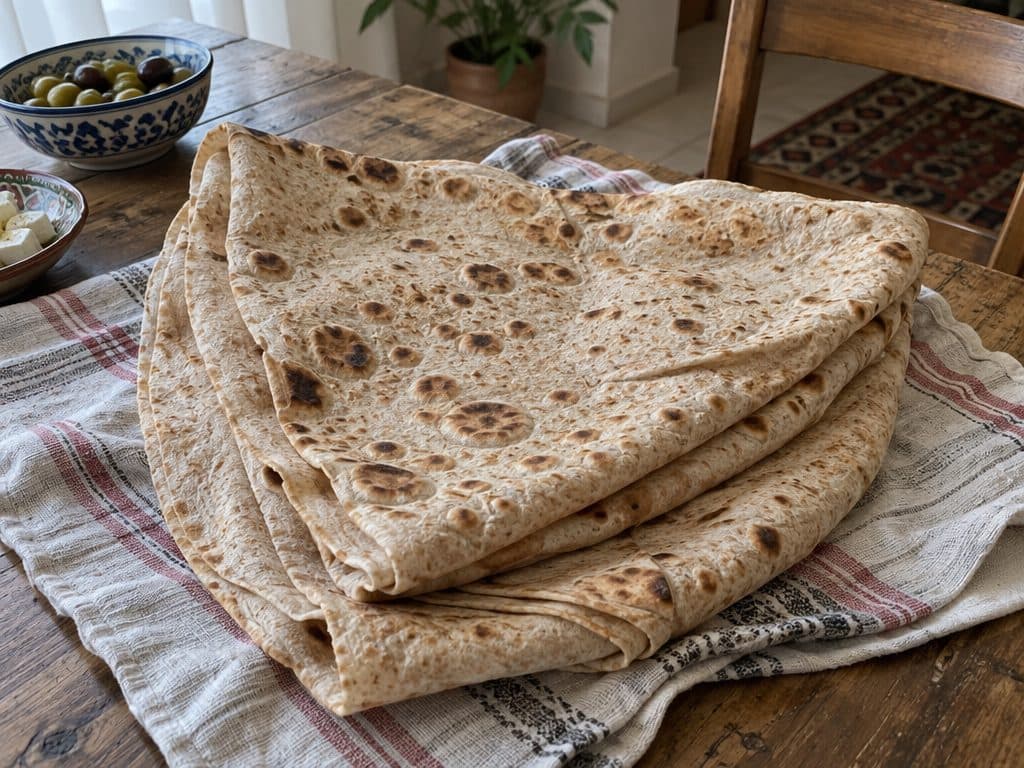
Large, thin rounds of wholemeal dough stretched over the hands and cooked on one side on a hot domed saj or an upturned wok. Shrak is the bread laid under mansaf and torn at every Jordanian meal.
Makes: 8 large breads
- Prep:
- 30 minutes
- Cook:
- 25 minutes
- Waiting:
- 2 hours (Two rises of 1 hour)
Method
Read the full method before starting. Cooking times are guides; check texture and doneness as you cook.
Shows the steps one at a time, with a timer for each timed step.
Saucepan or pot, Sharp knife and board
Measure, cut, and arrange every ingredient in order of use. Read the full method and keep finishing ingredients separate.
- 01
Dough
1 hour and 5 minutesMix the whole wheat flour, flour, yeast and salt. Add the honey, olive oil and most of the warm water and knead for 5 minutes into a soft dough, adding the rest of the water if it feels stiff. Cover and leave to rise for 1 hour.
Success cueA soft dough doubled in size.
- 02
Second rise
1 hourDivide into 8 balls, cover and leave for 1 more hour.
Success cuePuffy, relaxed balls.
- 03
Stretching
10 minutesHigh heatTurn a large wok upside down over a high flame and heat it for 5 minutes. On a floured counter, roll a ball out thin, then lift it and stretch it over the backs of your hands until it is about 40 cm wide and almost see-through.
Success cueA large, thin round with no holes.
Watch outThe wok is very hot; use a cloth to steady it.
- 04
Baking
25 minutesHigh heatLay each round over the hot dome and cook it for 2 to 3 minutes without turning until it dries, bubbles and shows brown spots underneath. Fold it in four and stack under a cloth while you cook the rest.
Success cueDry, flexible bread with brown spots.
PlateMap is still in testing. Quantities and results may vary with ingredients and equipment. Please check food safety yourself, especially with meat and poultry.
Cooking tips
Wholemeal flour gives shrak its nutty taste and helps it soak up mansaf broth without falling apart.
- • Keep the cooked bread under a cloth so it stays soft and foldable.
- • If the dough springs back, cover it for 5 minutes and try again.
Common mistakes
- • Using a lukewarm wok, so the bread dries out before it browns.
- • Stretching straight after shaping; rested dough stretches without tearing.
Substitutions
- • Instead of whole wheat flour: all plain flour, for a whiter, softer bread
- • Instead of honey: sugar
Serving ideasServe warm with mansaf, hummus or labneh and olive oil.
Estimated nutrition per serving
Calculated estimate per serving from the listed quantities. Product choice and retained cooking fat affect the result; this is not a laboratory analysis.
- Calories
- ≈ 290
- Protein
- 7.7g
- Carbs
- 48.1g
- Fat
- 8.0g
Calculation source and assumptions
Values use USDA data and linked product labels, adjusted for edible quantities and base servings. Brands, ingredient varieties, and cooking methods can change the result.
Wheat / gluten
Compound ingredients vary by product; check labels and possible cross-contact.
Frequently Asked Questions
Is shrak always made with yeast?
No. The oldest shrak is flour, water and salt only. Many home cooks now add a little yeast, as here, because it makes the dough easier to stretch.
Can I cook shrak without a saj?
Yes. An upturned wok over a gas flame works well. A large dry frying pan also works, though the bread will be smaller.
Is shrak the same as markook?
They are the same thin saj bread. Shrak is the Jordanian and Palestinian name; markook is used more in Lebanon and Syria.
You May Also Love