 Middle Eastern
Hijazi Dibyazah (Eid Apricot Paste Pudding with Dried Fruit and Nuts)
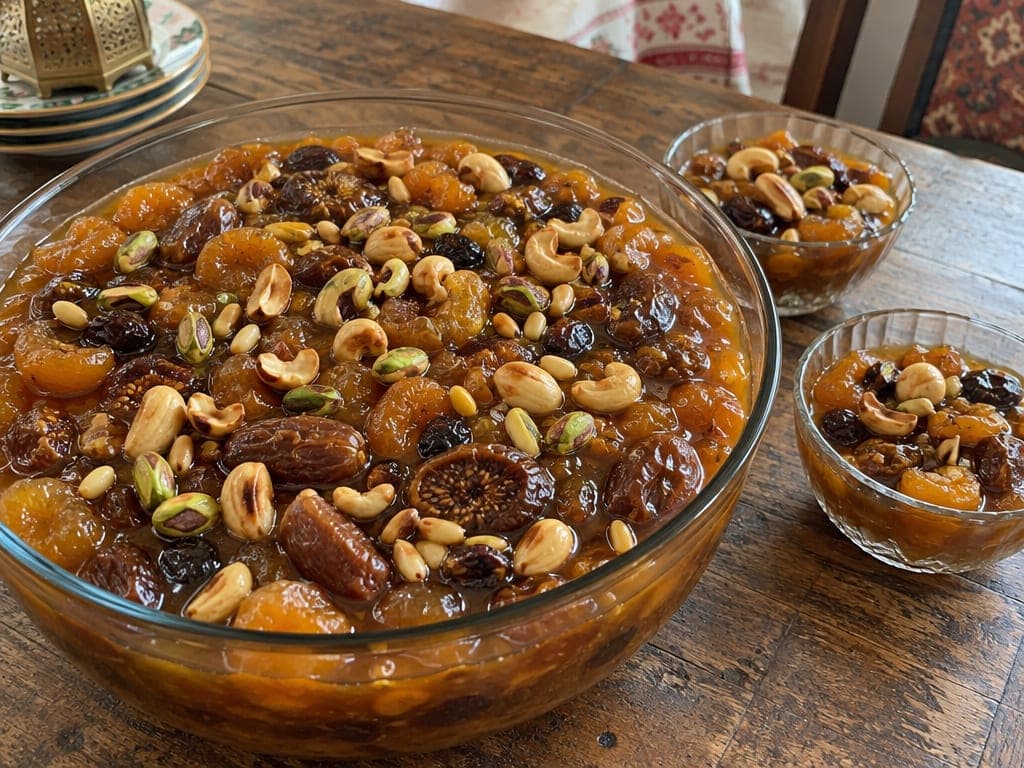
Apricot paste melted and cooked with sugar into a thick, glossy pudding, then filled with dates, dried apricots, figs and raisins and finished with nuts toasted in ghee. The dish of the first morning of Eid in Makkah and Madinah.
Makes: About 1.2 kg, 10 small bowls
- Prep:
- 20 minutes
- Cook:
- 45 minutes
- Waiting:
- 2 hours (Soak the qamar el-din in hot water for 2 hours.)
Method
Read the full method before starting. Cooking times are guides; check texture and doneness as you cook.
Shows the steps one at a time, with a timer for each timed step.
Heavy skillet, Sharp knife and board
Measure, cut, and arrange every ingredient in order of use. Read the full method and keep finishing ingredients separate.
- 01
Soaking
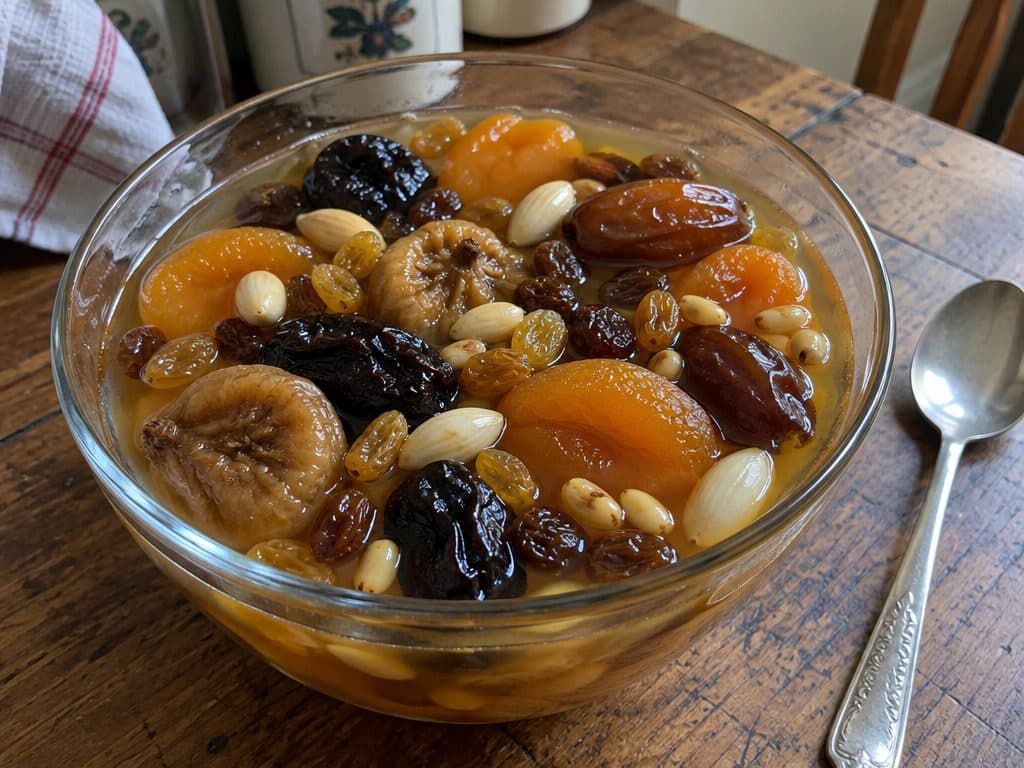
2 hoursCut the qamar el-din into small pieces and soak it in the hot water for 2 hours, then stir or blend until smooth.
Success cueA smooth, thick orange liquid.
- 02
Cooking
15 minutesLow heatCook it with the sugar in a heavy pan over medium-low heat for 15 minutes, stirring, until it thickens.
Success cueA thick, glossy orange paste.
Watch outIt spits as it thickens; stir with a long spoon.
- 03
Nuts
4 minutesMedium heatToast the almonds, cashews, pistachios, pine nuts and hazelnuts in the ghee for 4 minutes until golden and lift them out, keeping the ghee.
Success cueGolden, fragrant nuts.
- 04
Fruit
15 minutesLow heatAdd the chopped dates, dried apricots, dried figs and raisins with the ground cardamom and cloves to the pan and cook on low heat for 15 minutes, stirring, until the fruit is soft and the pudding coats the spoon thickly.
Success cueSoft fruit in a thick, jammy pudding.
- 05
Finishing
5 minutesLow heatStir in the ghee and most of the nuts and cook for 5 minutes more. Serve warm or cold, topped with the rest of the nuts.
Success cueA glossy pudding studded with nuts.
PlateMap is still in testing. Quantities and results may vary with ingredients and equipment. Please check food safety yourself, especially with meat and poultry.
Cooking tips
Toasting the nuts in the ghee and then stirring that ghee into the pudding carries their taste through every spoonful.
- • Choose soft, sweet-sour qamar el-din; very dry sheets need a longer soak.
- • It keeps for a week in the fridge, so families make it on the last days of Ramadan.
Common mistakes
- • Cooking on high heat, so the sugar catches and turns bitter.
- • Adding the nuts too early, so they go soft.
Substitutions
- • Instead of qamar el-din: dried apricots soaked overnight and blended
- • Instead of ghee: butter
Serving ideasServe in small bowls with Arabic coffee and the other Eid sweets.
Estimated nutrition per serving
Calculated estimate per serving from the listed quantities. Product choice and retained cooking fat affect the result; this is not a laboratory analysis.
- Calories
- ≈ 455
- Protein
- 5.5g
- Carbs
- 78.8g
- Fat
- 17.2g
Calculation source and assumptions
Values use USDA data and linked product labels, adjusted for edible quantities and base servings. Brands, ingredient varieties, and cooking methods can change the result.
Tree nuts, Milk
Compound ingredients vary by product; check labels and possible cross-contact.
Frequently Asked Questions
When is dibyazah eaten?
On the morning of Eid al-Fitr and Eid al-Adha in Makkah and Madinah, on the Eid breakfast table with other sweets; it is made in the last days of Ramadan.
Should it be served hot or cold?
Both are traditional. Warm it is soft and spoonable; cold from the fridge it sets firmer, almost like a thick jam.
Can I use fewer kinds of nuts?
Yes. Almonds and pistachios alone work well; keep the total to about 130 g.
You May Also Love