 French
 Duck Leg Confit
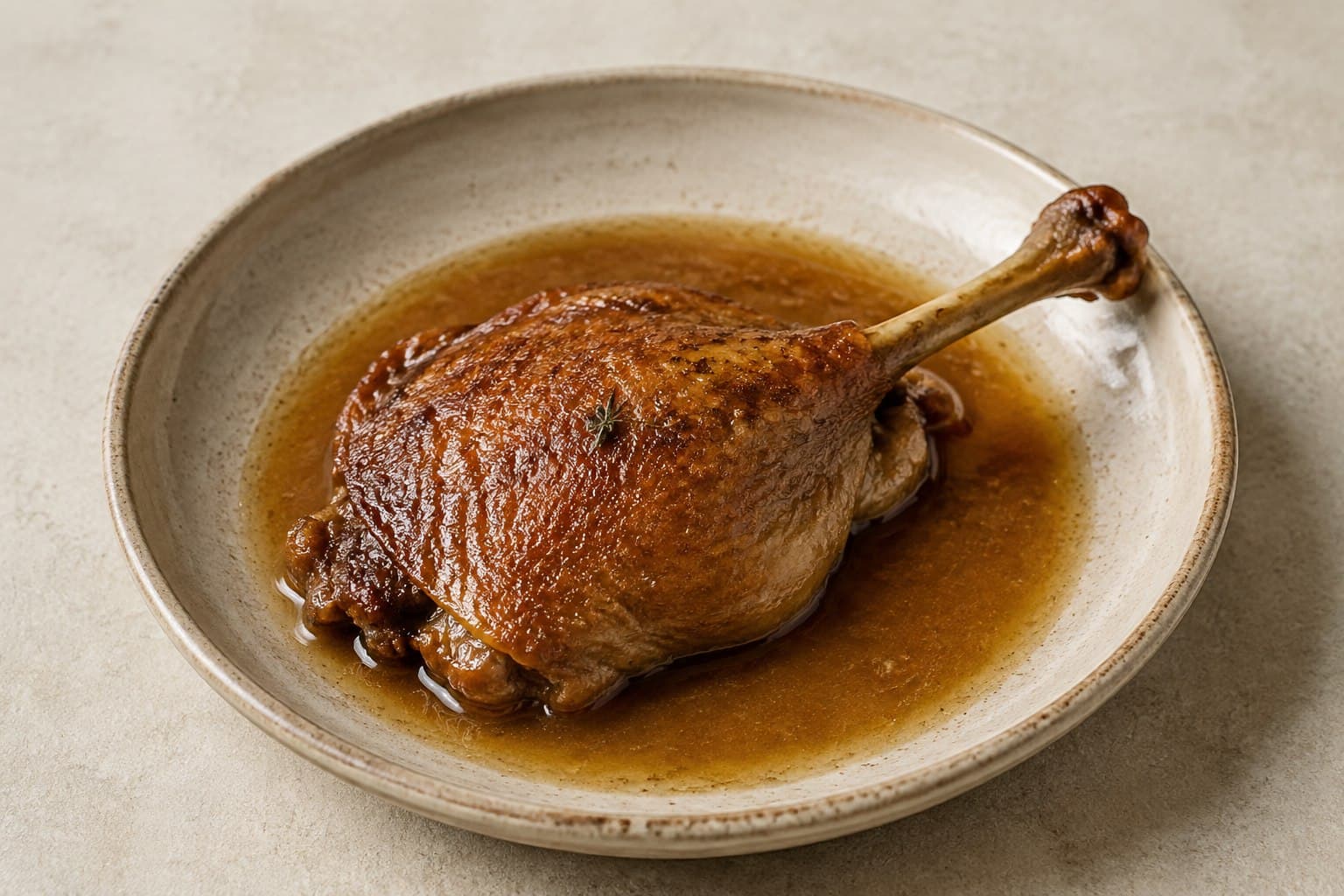
Duck legs salt-cured with aromatics, slowly poached in their own fat until spoon-tender, then crisped skin-side down.
- Prep:
- 30 minutes
- Cook:
- 3 hours and 10 minutes
- Waiting:
- 9 hours and 30 minutes (curing the duck legs, 8 to 12 hours)
Method
Read the full method before starting. Cooking times are guides; check texture and doneness as you cook.
Shows the steps one at a time, with a timer for each timed step.
Heavy skillet, Saucepan or pot, Oven and tray, Sharp knife and board
Measure, cut, and arrange every ingredient in order of use. Read the full method and keep finishing ingredients separate.
- 01
Curing
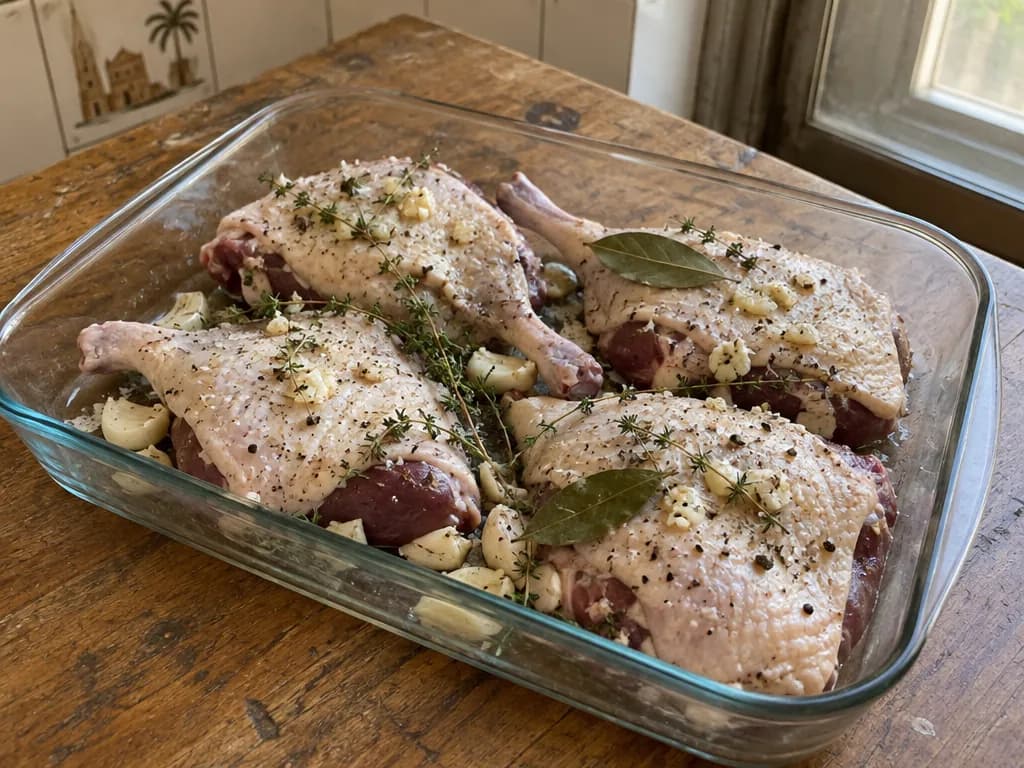
9 hours and 30 minutesRub the duck legs with the coarse salt, crushed garlic, thyme, bay leaf and pepper, cover and refrigerate for 8 to 12 hours.
Show photoHide photo
 Success cue
The meat feels firmer and looks darker.
- 02
Rinsing
10 minutesBrush off the cure, rinse quickly and dry every surface well with towels.
Success cueThe skin is completely dry.
- 03
Submerging
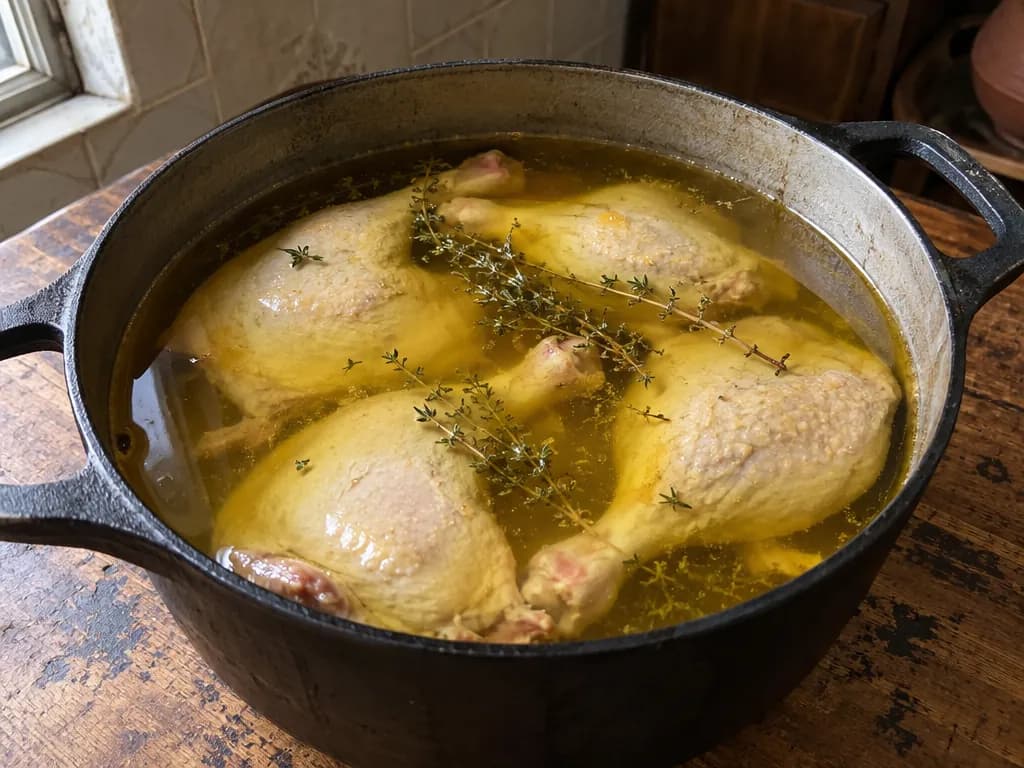
10 minutesLow heatHeat the oven to 120°C. Melt the duck fat, pack the legs snugly in a heavy pot and cover them completely with the fat.
Show photoHide photo
 Success cue
The legs are fully under the fat.
- 04
Slow cooking
2 hours and 45 minutesOven heatCook in the oven for 2½ to 3 hours.
Success cueA skewer enters the thigh with almost no resistance.
Watch outThe fat should only bubble gently, never fry.
- 05
Lifting
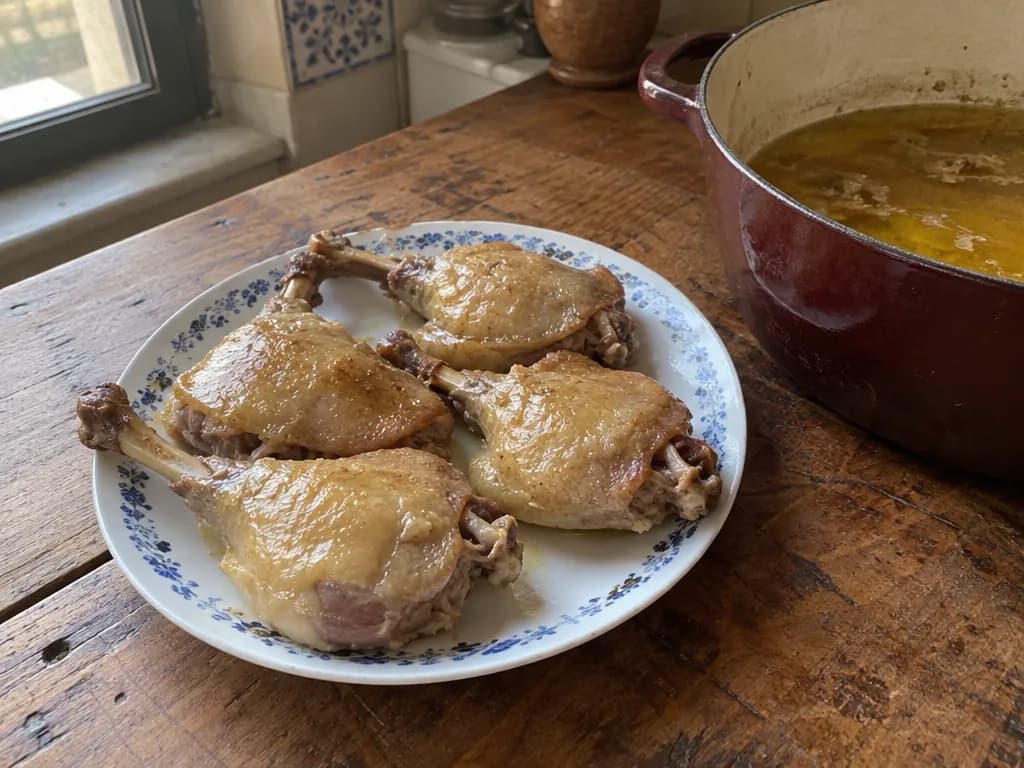
5 minutesLift the legs out carefully. To keep them, cover with the strained fat and refrigerate promptly.
Show photoHide photo
 Success cue
The legs come out whole without falling apart.
- 06
Crisping
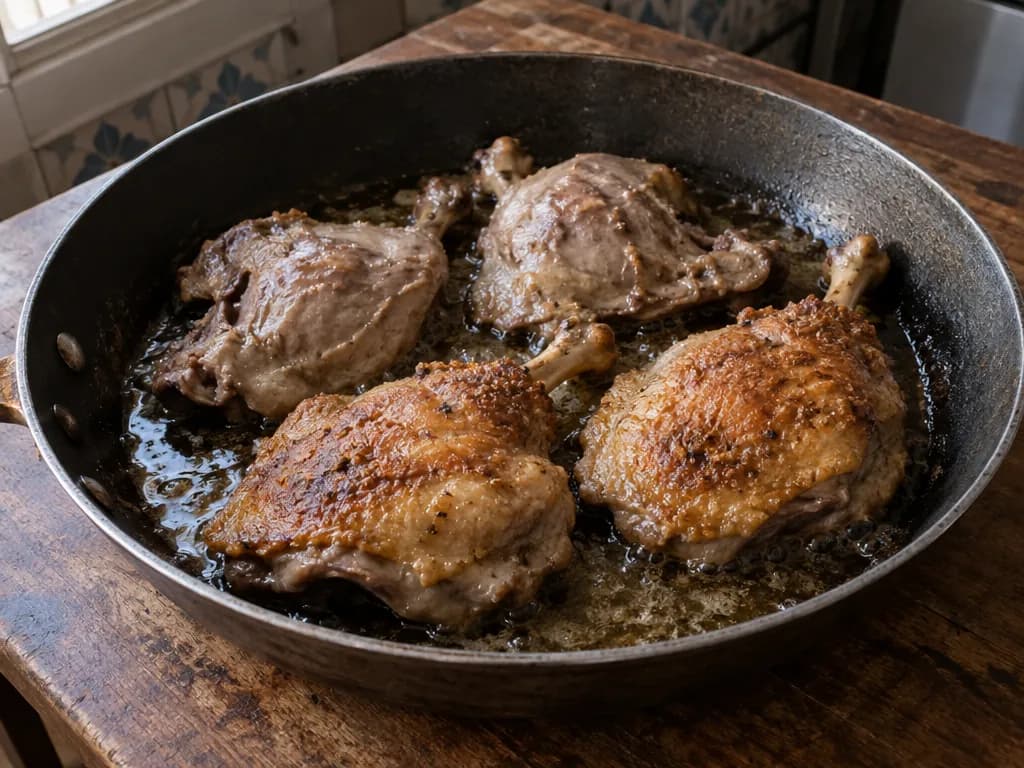
9 minutesMedium heatPlace the legs skin side down in a cold pan, then heat to medium and cook for 8 to 10 minutes without moving them.
Show photoHide photo
 Success cue
The skin is golden and crisp and the meat is hot through.
PlateMap is still in testing. Quantities and results may vary with ingredients and equipment. Please check food safety yourself, especially with meat and poultry.
Cooking tips
The fat must never bubble hard; true confit cooks below a fry so the meat stays silky.
- • Weigh the curing salt instead of judging by eye; too much makes the legs too salty to enjoy.
- • Start crisping in a cold pan so the fat under the skin renders evenly.
Common mistakes
- • Curing the legs for much longer than 12 hours, so the meat turns firm and salty.
- • Letting the fat bubble; at frying heat the meat tightens and dries instead of turning tender.
- • Not drying the legs well after rinsing, so they spit in the fat and the skin never crisps.
- • Moving the legs in the pan before the skin has rendered and released, so it tears and stays soft.
Substitutions
- • Instead of duck fat: olive oil or a neutral oil, alone or to top up the fat (the flavour is lighter)
- • Instead of fresh thyme: dried thyme, about a third of the amount
Serving ideasServe with potatoes roasted in some of the duck fat, a sharp green salad, or white beans; confit is also the meat in a traditional cassoulet.
Estimated nutrition per serving
Calculated estimate per serving from the listed quantities. Product choice and retained cooking fat affect the result; this is not a laboratory analysis.
- Calories
- ≈ 835
- Protein
- 21.4g
- Carbs
- 4.1g
- Fat
- 80.9g
Calculation source and assumptions
Values use USDA data and linked product labels, adjusted for edible quantities and base servings. Brands, ingredient varieties, and cooking methods can change the result.
Check ingredient labels
Compound ingredients vary by product; check labels and possible cross-contact.
Frequently Asked Questions
Do I really need that much duck fat?
The legs must stay fully under fat, so the amount depends on the pot: pack them snugly in a small, deep pot and you need much less. You can top up with olive oil or a neutral oil, and the fat is strained and reused afterwards.
How long does duck confit keep?
Fully submerged in its strained fat, in a covered container in the fridge, it keeps for up to 1 month. Leave out the meaty juices that settle under the fat; they spoil much faster.
Why rinse off the cure?
Salt left on the skin keeps drawing out moisture and makes the meat too salty. A quick rinse and a thorough dry stop the curing at the right point and help the skin crisp later.
What do I do with the leftover fat?
Strain it, keep it in a jar in the fridge and use it for roasting potatoes. Potatoes fried in duck fat with garlic and parsley (pommes sarladaises) are the classic side for confit in south-west France.
Can I cook it on the stove instead of the oven?
Yes, on the lowest heat, with the fat barely trembling. The oven is easier because its heat stays steady for 3 hours.
You May Also Love