 Levantine
Date Maamoul (Semolina Cookies Filled with Dates)
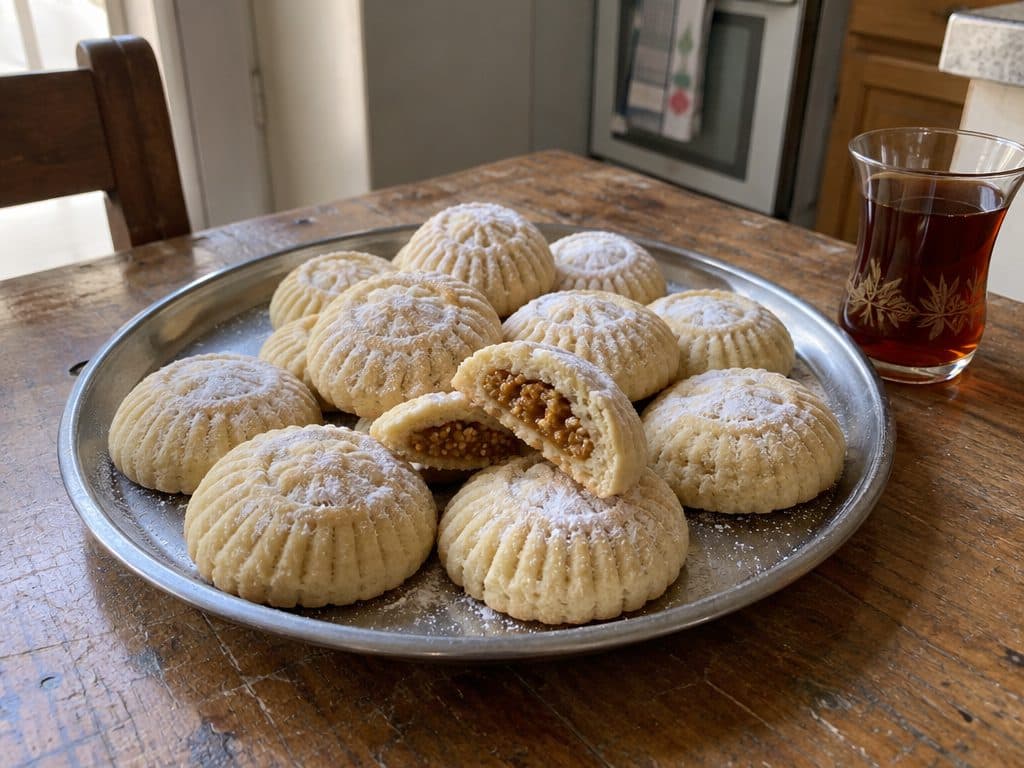
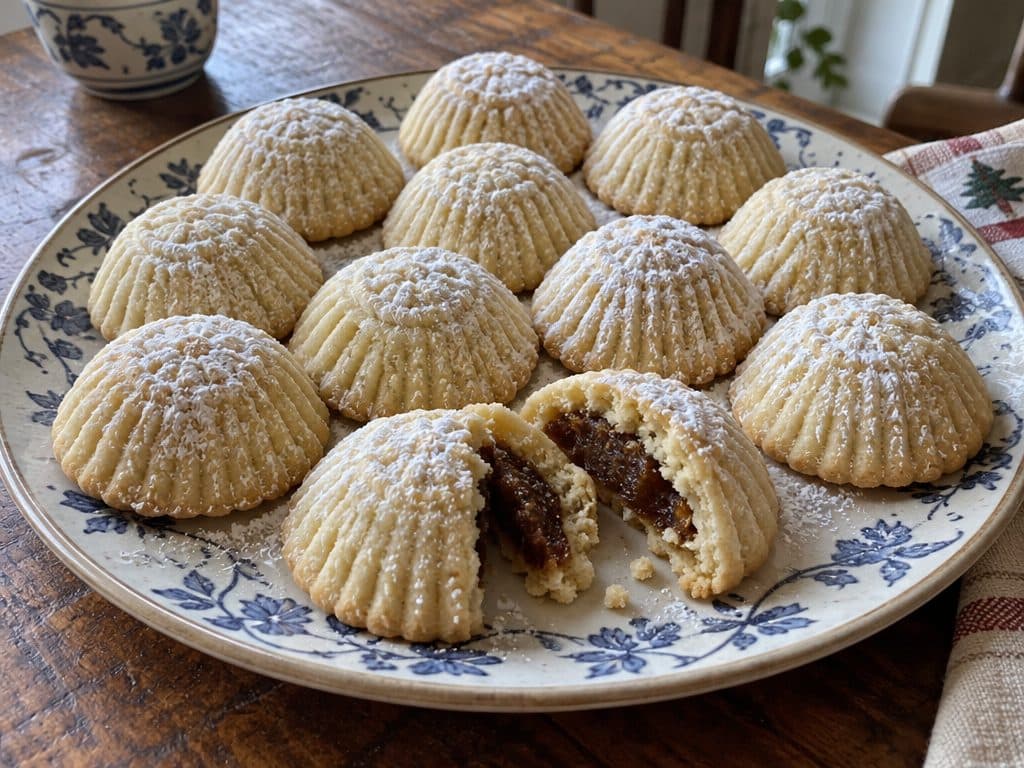
Crumbly semolina and ghee cookies wrapped around a soft date filling with cinnamon and cardamom, pressed into wooden moulds and baked until just golden. Levantine families bake maamoul by the trayful for Eid.
Makes: About 45 small cookies
Jump to ingredients & methodMethod
Read the full method before starting. Cooking times are guides; check texture and doneness as you cook.
Shows the steps one at a time, with a timer for each timed step.
Oven and tray, Sharp knife and board
Measure, cut, and arrange every ingredient in order of use. Read the full method and keep finishing ingredients separate.
- 01
Dough
8 minutesMix the semolina, flour, sugar and baking powder with a wooden spoon. Add the ghee for the dough and work it in with the spoon until crumbly, then add the milk 2 tablespoons at a time until the dough holds together when shaped.
Success cueA soft dough that holds a ball without cracking.
Watch outUse the spoon, not warm hands; heat makes the dough oily.
- 02
Filling
10 minutesMix the date paste with 7 g of the ghee, the cinnamon and the cardamom. With greased palms, roll it into 45 small balls.
Success cueSmooth, shiny date balls.
- 03
Portioning
5 minutesHeat the oven to 175°C and line a tray with baking paper. Divide the dough into 45 balls.
Success cueEven balls of dough.
- 04
Shaping
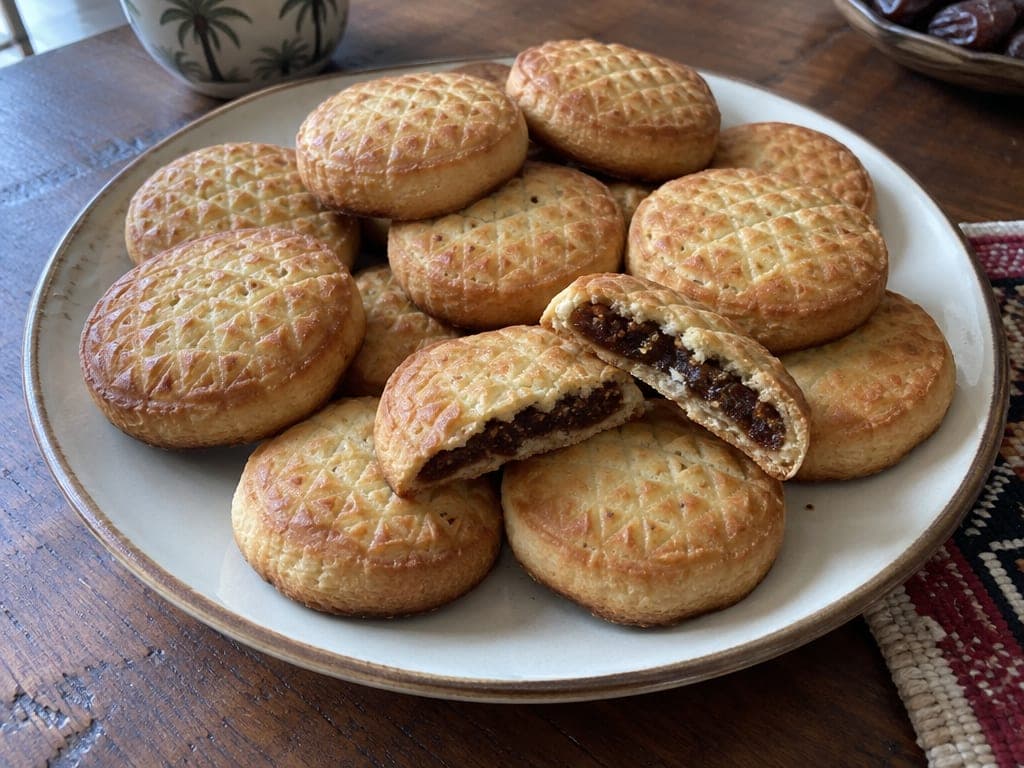
20 minutesFlatten a dough ball in your palm, set a date ball in the middle and close the dough around it. Press it into a maamoul mould, tap it out and set it on the tray. Without a mould, flatten it to 1 cm and mark it with a fork.
Success cueNeatly patterned cookies with no filling showing.
- 05
Baking
20 minutesOven heatBake for 18 to 20 minutes until the edges are lightly golden. Cool completely on the tray and dust with the powdered sugar.
Success cuePale cookies with lightly golden edges.
Watch outMaamoul is fragile while warm; move it only once cool.
PlateMap is still in testing. Quantities and results may vary with ingredients and equipment. Please check food safety yourself, especially with meat and poultry.
Cooking tips
Taking the cookies out while still pale keeps them tender; golden all over means dry.
- • Many families rest the semolina and ghee overnight before adding the milk; it gives a more crumbly cookie.
- • Store in a closed tin for up to 2 weeks.
Common mistakes
- • Kneading with warm hands, which makes the dough oily and the cookies hard.
- • Baking until brown, which dries out the semolina.
Substitutions
- • Instead of milk: orange blossom water and rose water mixed half and half
- • Instead of ghee: melted butter
Serving ideasServe with Arabic coffee or tea on Eid mornings.
Estimated nutrition per serving
Calculated estimate per serving from the listed quantities. Product choice and retained cooking fat affect the result; this is not a laboratory analysis.
- Calories
- ≈ 245
- Protein
- 3.9g
- Carbs
- 34.5g
- Fat
- 10.6g
Calculation source and assumptions
Values use USDA data and linked product labels, adjusted for edible quantities and base servings. Brands, ingredient varieties, and cooking methods can change the result.
Wheat / gluten, Milk
Compound ingredients vary by product; check labels and possible cross-contact.
Frequently Asked Questions
When is maamoul made?
It is the cookie of Eid al-Fitr and Eid al-Adha across the Levant, and Christian families bake it for Easter too.
How is maamoul different from Egyptian kahk?
Maamoul is made mainly with semolina and pressed in a deep wooden mould. Kahk uses flour, is often filled with agameya or nuts and is decorated with tweezers.
Can I fill maamoul with nuts?
Yes. Walnut with sugar and pistachio with rose water are the other classic fillings; each usually has its own mould shape.
You May Also Love